
Category · 4 materials
Soil and Fill
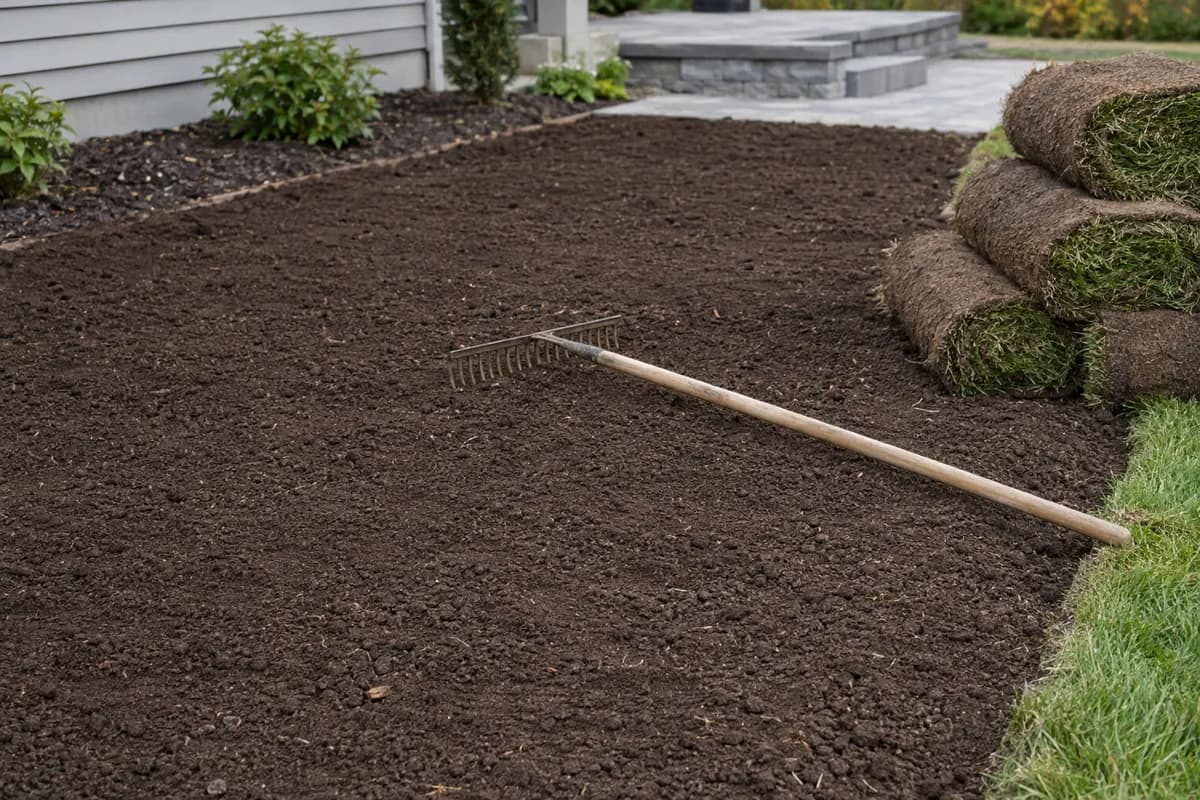
Four materials cover every job from raising a low corner of the yard to filling a raised bed. Fill Dirt builds grade, Topsoil makes the layer a lawn grows in, Garden Soil fills beds that need rich, loose ground, and Compost feeds the soil you already have. Gravel Valet delivers the three soils by the ton and Compost by the yard.
 From$4282 ton delivered
Topsoil
Soil and Fill- Size
- Screened
- Weight
- 2,200 lb/yd³
- Color
- Dark brown
 From$4172 ton delivered
Garden Soil
Soil and Fill- Size
- Blended
- Weight
- 2,000 lb/yd³
- Color
- Dark brown
 From$4162 ton delivered
Fill Dirt
Soil and Fill- Size
- Unscreened
- Weight
- 2,400 lb/yd³
- Color
- Brown
 From$4152 yd delivered
Compost
Soil and Fill- Size
- Screened
- Weight
- 1,200 lb/yd³
- Color
- Dark brown
What this category covers
The four materials in this group differ in what they hold and what they are for. Fill Dirt is unscreened brown subsoil, with clay, sand and the odd stone and little organic matter. That lean mix is what makes it useful for building up ground, because it compacts and stays put. Topsoil is screened and dark brown, the upper layer of the earth with its roots, rocks and clods sifted out, so it spreads evenly and gives grass and plants a loose layer to root in.[1]
Garden Soil is a blended, dark brown mix built for growing. It pairs screened soil with organic matter so it holds moisture and stays loose in a bed. Compost is screened, dark brown, decomposed organic matter, made from yard waste and similar material. It is an amendment that you mix into soil or spread thin on top, not a soil to plant in on its own. The weight per cubic yard falls as the organic share rises: 2,400 lb for Fill Dirt, 2,200 lb for Topsoil, 2,000 lb for Garden Soil and 1,200 lb for Compost.[1]
The jobs here run from the ground up: filling holes and raising grade, backfilling a wall or a foundation, leveling and seeding a lawn, filling raised beds and planters, and building up tired garden ground. This group does not hold a base for pavers or a driveway. Soil stays soft and moves with moisture, so anything that carries a load needs crushed stone below it.[1]
When to use which soil material
For building up ground, choose Fill Dirt. It fills holes left by a removed tree or a pool, raises a low corner where water collects, builds a slope away from a foundation and backfills behind a wall. Because it is unscreened and lean, it packs firm in layers and does not shrink the way soil rich in organic matter does. It is a poor choice for the top layer, since grass and plants struggle in it.[1]
For a lawn, choose Topsoil. A new lawn needs a layer of screened soil to seed or sod into, and Topsoil spreads and rakes level without clods. It is also the material for top dressing a bumpy lawn, filling the low spots so a mower runs smooth. Spread it over Fill Dirt when you raise grade, so the fill does the bulk and the Topsoil feeds the grass.[1]
For raised beds, planters and vegetable gardens, choose Garden Soil. The blend is loose and rich, so roots spread fast and the bed drains well while it still holds moisture between waterings. It takes more work to make than plain Topsoil, and that work pays off in a bed where you want strong growth from the first season. For a large, open planting area, many growers mix Topsoil with Compost instead.[1]
For improving soil you already have, choose Compost. Spread a thin layer over a bed and turn it in, or rake a fine layer over a lawn after aerating. It adds organic matter, loosens heavy clay, helps sandy ground hold water and feeds soil life. Compost alone is too rich and too light to fill a bed, since it shrinks as it breaks down.[1]
Soil math for beds, lawns and grading
Measure the area in square feet by multiplying length and width, then choose the depth. The coverage figures give the amount for 100 square feet at 2, 3, 4 and 6 inches. For each further hundred square feet, add the same amount again. Fill Dirt, Topsoil and Garden Soil are measured in tons, and Compost is measured in cubic yards, so keep the rows apart when you add them up.[1]
For a new lawn, Topsoil at 4 inches takes 1.36 tons for 100 square feet, and at 6 inches it takes 2.04 tons. A top dressing over an existing lawn is thin, and the 2 inch row, 0.68 tons, leaves plenty for working into the low spots. For grading, Fill Dirt at 4 inches takes 1.48 tons for 100 square feet and at 6 inches takes 2.22 tons. Stack the 6 inch row for each further 6 inches of fill.[1]
A raised bed is the area of its floor times its depth. Garden Soil at 6 inches takes 1.85 tons for 100 square feet of bed, and at 4 inches it takes 1.23 tons. A deeper bed adds the 6 inch row for each extra 6 inches. Garden Soil is lighter than Topsoil, at 2,000 lb per cubic yard against 2,200 lb, so its tonnage rows run a little lower for the same space.[1]
Compost goes on thin. A 2 inch layer worked into a bed takes 0.62 cubic yards for 100 square feet, and a 3 inch layer takes 0.93 cubic yards. Because Compost weighs only 1,200 lb per cubic yard, it is light work to spread by hand.[1]
Pricing and tonnage
Topsoil, Garden Soil and Fill Dirt are sold by the ton, and Compost is sold by the yard. The soils are dense enough that weight is the fair measure, while Compost is so light that volume tells you more about how much ground it will cover. Read each material in the unit it is sold in, and your coverage figure becomes your order.[1]
Weight decides what one truck can carry. Fill Dirt is the heaviest material here, so a truck reaches its weight limit with fewer cubic yards of it on board, and a big grading job can take several loads. Moisture matters too. Soil that has taken rain weighs more than the same soil dry, so a load after a wet week carries a little less ground. Compost is the opposite case: it is so light that a truck fills its bed long before it reaches a weight limit.[1]
Three things move the delivered price. Distance from the source yard to your site comes first, since each load is a round trip. Load size comes next, because a full truck spreads the trip over more material. The material is the third. Fill Dirt goes out unscreened, Topsoil is screened, Garden Soil is screened and blended, and Compost is cured and screened over time, so each step of handling shows up. The table below this section lists what each one runs in your area.[1]
| Material | Sold by | Delivered from (2 units) | Cities priced |
|---|---|---|---|
| Topsoil | the ton | $428 to $702 | 361 |
| Garden Soil | the ton | $417 to $731 | 364 |
| Fill Dirt | the ton | $416 to $512 | 365 |
| Compost | the yard | $415 to $814 | 363 |
Installation patterns that fail
Planting straight into Fill Dirt is the classic failure. Grass seeded on bare fill comes up thin and patchy, since the lean subsoil holds few nutrients and packs hard. Cap fill with a layer of Topsoil before you seed or sod, and loosen the top of the fill so roots can pass from one layer to the next.[1]
Fill placed in one deep pass settles for months. Spread Fill Dirt in layers a few inches thick and compact each one, most of all where a patio, a shed or a walkway will sit on top. Grade the finished surface so it falls away from the house, or the new fill can send water toward the foundation.[1]
Raised beds filled with pure Compost sink and burn plants. Compost breaks down and shrinks, and its rich mix can be too strong for young roots. Fill beds with Garden Soil, or with Topsoil mixed with a share of Compost, and top up with Compost each year as the bed settles.[1]
Two smaller mistakes round out the list. Spreading soil when it is soaked squeezes out the air and leaves a dense crust, so wait for a drier day. Dumping a thick layer of Topsoil over a living lawn smothers it, so strip the old turf or keep a top dressing thin enough that the grass blades still show.[1]
Frequently Asked Questions
What is the difference between Topsoil and Garden Soil?
Topsoil is screened, dark brown soil from the upper layer of the ground, suited to lawns, leveling and general planting. Garden Soil is a blend of screened soil and organic matter, made for raised beds, planters and vegetable gardens where roots need loose, rich ground. Garden Soil weighs 2,000 lb per cubic yard and Topsoil weighs 2,200 lb.
Can I grow grass in Fill Dirt?
Grass grows poorly in Fill Dirt alone. Fill Dirt is unscreened subsoil with little organic matter, so it packs hard and holds few nutrients. Use it to build grade, then spread Topsoil on top before you seed or lay sod. At 4 inches, Topsoil takes 1.36 tons for 100 square feet.
How much Garden Soil do I need for a raised bed?
Measure the floor of the bed in square feet and its depth in inches. For each 100 square feet, Garden Soil takes 1.23 tons at 4 inches and 1.85 tons at 6 inches. For a deeper bed, add the 6 inch figure for each further 6 inches. Order a little extra, since the soil settles after the first watering.
Why is Compost sold by the yard and soil by the ton?
Compost is light, at 1,200 lb per cubic yard, so its volume tells you more about how much ground it will cover than its weight does. Topsoil, Garden Soil and Fill Dirt are much heavier, so weight is the fairer measure. Read each coverage row in its own unit and keep the two apart when you plan.
How much Compost should I add to a garden bed?
A layer of 2 to 3 inches, turned into the top of the bed, is a common amendment. For 100 square feet, that takes 0.62 cubic yards at 2 inches and 0.93 cubic yards at 3 inches. Mix it in rather than leaving a thick layer on top, and repeat each season as the organic matter breaks down.
What dirt should I use to fill a hole or low spot?
Use Fill Dirt. It is unscreened and lean, so it packs firm and does not shrink much as it ages. Place it in layers, compact each one, and finish with a layer of Topsoil if grass or plants will grow on top. For 100 square feet, Fill Dirt takes 1.48 tons at 4 inches and 2.22 tons at 6 inches.
Where we deliver
Soil and Fill delivery coverage across the US
ARArkansas2 cities
AZArizona15 cities
CACalifornia70 cities
- American Canyon
- Anaheim
- Antioch
- Bakersfield
- Berkeley
- Burbank
- Carlsbad
- Chico
- Chula Vista
- Clovis
- Concord
- Corona
- Costa Mesa
- Daly City
- Downey
- El Cajon
- El Monte
- Elk Grove
- Fairfield
- Fremont
- Fresno
- Fullerton
- Garden Grove
- Glendale
- Hayward
- Hollister
- Huntington Beach
- Imperial Beach
- Inglewood
- Irvine
- Lancaster
- Lemoore
- Long Beach
- Los Angeles
- Modesto
- Oakland
- Oceanside
- Ontario
- Orange
- Oxnard
- Palm Desert
- Palmdale
- Pasadena
- Pomona
- Richmond
- Riverside
- Roseville
- Sacramento
- Salinas
- San Diego
- San Francisco
- San Jose
- San Mateo
- Santa Ana
- Santa Clara
- Santa Maria
- Santa Rosa
- Simi Valley
- Stockton
- Sunnyvale
- Temecula
- Thousand Oaks
- Torrance
- Tracy
- Turlock
- Vacaville
- Vallejo
- Ventura
- Visalia
- West Covina
COColorado12 cities
DCDistrict of Columbia1 city
FLFlorida32 cities
- Boca Raton
- Brandon
- Cape Coral
- Clearwater
- Coral Springs
- Davie
- Deltona
- Fort Lauderdale
- Gainesville
- Hialeah
- Hollywood
- Jacksonville
- Kissimmee
- Lakeland
- Lehigh Acres
- Miami
- Miami Gardens
- Miramar
- Orlando
- Palm Bay
- Palm Coast
- Pembroke Pines
- Pompano Beach
- Port Saint Lucie
- Saint Petersburg
- Sanford
- Sarasota
- Spring Hill
- Sunrise
- Tallahassee
- Tampa
- West Palm Beach
GAGeorgia14 cities
IAIowa3 cities
ILIllinois4 cities
MNMinnesota2 cities
MSMississippi3 cities
NCNorth Carolina19 cities
NDNorth Dakota1 city
NHNew Hampshire1 city
RIRhode Island1 city
SCSouth Carolina8 cities
SDSouth Dakota1 city
TXTexas42 cities
- Abilene
- Allen
- Amarillo
- Anna
- Arlington
- Austin
- Beaumont
- Brownsville
- Carrollton
- College Station
- Corpus Christi
- Dallas
- Del Rio
- Denton
- Edinburg
- El Paso
- Fort Worth
- Frisco
- Garland
- Georgetown
- Grand Prairie
- Houston
- Irving
- Killeen
- Laredo
- Lewisville
- Lubbock
- McAllen
- McKinney
- Mesquite
- Midland
- Odessa
- Pasadena
- Pearland
- Plano
- Richardson
- Round Rock
- San Angelo
- San Antonio
- Tyler
- Waco
- Wichita Falls