
Best picks
Best Aggregate for a Pool Deck: 2026 Picks
Stone around a pool gets walked on barefoot, splashed all summer and stared at from the lounge chairs. That rules out anything sharp, dusty or dull. Our pick is Pea Gravel, a 3/8 inch rounded stone in mixed tan and brown. Read on for why it suits a pool surround, where three other materials do better and how much to order.
Pea Gravel
decorative · size 3/8 inch · 2,600 lb/yd³ · sold by the ton

Bottom line: Pea Gravel for aggregate for a pool deck
Our top pick: Pea Gravel
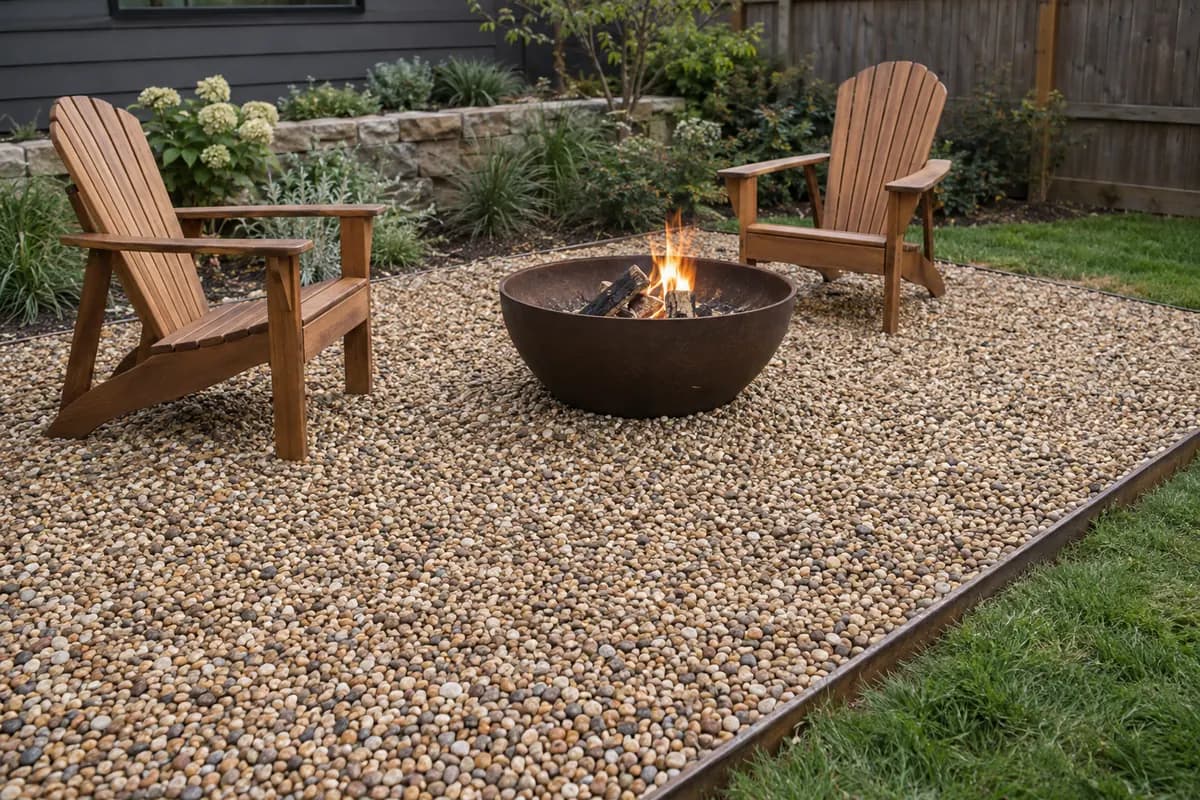
Pea Gravel is small, rounded stone about 3/8 inch across. Water and tumbling wore the edges off each piece long before it reached a delivery truck, so the surface feels smooth when you step on it. On a pool deck, where people walk from the water to a towel without shoes, that comfort is the first thing that matters.[1]
The color is a mix of tan and brown with lighter and darker pebbles scattered through. Against blue pool water and green planting, those warm tones look natural and relaxed. A bed of mixed stone also hides wet footprints, leaves and the odd fleck of dirt far better than a solid pale surface.[1]
Pea Gravel is sold by the ton, and a cubic yard weighs about 2,600 lb. The small pieces shift a little underfoot and then settle back into place, which gives the deck a soft, beach-like feel. Rain and splash water drain down through the stone at once, so puddles do not linger after a swim.[1]
Think about how the stone ties into the rest of the yard. If the house has a tan stucco wall, a sandstone path or a wood fence, the warm mix in Pea Gravel picks up those colors and makes the pool area feel like part of the garden. A cooler gray stone would look more formal and stand apart from those finishes.[1]
Why Pea Gravel fits a pool deck
A pool surround asks for odd things from a stone. It must be gentle on bare skin, cool enough to cross on a sunny day, quick to drain and pleasant to look at for hours. Pea Gravel handles each of those. Its rounded shape avoids the jagged points of crushed stone, and its loose bed lets water vanish instead of pooling on a hard slab.[1]
Heat is a real concern with any deck. Dark stone and some paving can get uncomfortable in strong sun. The tan and brown mix of Pea Gravel sits in the middle of the range, and the gaps between pebbles let air move through the top layer. Owners still keep sandals nearby on the hottest afternoons, but the stone stays easier to cross than many dark surfaces.[1]
Loose stone does bring one honest drawback near water. Feet and toys can kick pebbles onto the coping and into the pool. Layout solves it. Keep a band of pavers or concrete right at the pool edge, wide enough for a step or two, and start the Pea Gravel beyond it. Steel or stone edging on the outer border keeps the bed tidy.[1]
Good bed design also keeps the deck comfortable. Lay landscape fabric over leveled, packed soil so weeds stay out, then spread the stone. A firm layer underneath stops chairs and lounger legs from sinking, and a shallow top layer of pebbles keeps walking easy. Deep loose gravel feels like soft sand and tires the legs quickly.[1]
Pool water itself is no problem for the stone. Chlorine or salt splashed onto Pea Gravel does not stain or soften it, and the pebbles rinse clean with a hose. Leaves and blossoms that blow onto the deck are the bigger chore. A leaf blower on a low setting lifts debris off the top without scattering the stone, and a quick pass after windy days keeps the surface looking fresh.[1]
Worth considering
River Rock suits the planted edges around a pool rather than the walking zone. Its larger, smooth stones make a handsome border around palms, grasses and boulders, and they stay put when the pool is splashed. Walking on them barefoot is lumpy, so use River Rock where people look and Pea Gravel where people step.[1]
Decomposed Granite wins when you want a firm surface that feels close to a patio. It is fine, gritty granite that packs down hard when wet and rolled. Chairs and tables sit level on it, and it reads as a warm, earthy floor. The tradeoff is grit. Fine particles can stick to wet feet and ride into the pool, so keep it a few steps away from the water.[1]
Walkway Gravel is the pick for the paths leading to the pool area. It is made for foot traffic and stays steadier underfoot than loose pebbles. Use it for the route from the house or the gate, then switch to Pea Gravel in the lounging zone where a softer feel is welcome.[1]
Some owners mix two of these in one bed, such as Pea Gravel with a scatter of River Rock. Mixing tends to look muddled after a season, because the small pebbles sink between the larger stones. Separate zones with a clear edge between them hold their look much longer.[1]
 From$4582 ton delivered
River Rock
Driveway and Landscaping- Size
- 1 to 3 inches
- Weight
- 2,600 lb/yd³
- Color
- Mixed earth tones
 From$4702 ton delivered
Decomposed Granite
Driveway and Landscaping- Size
- 1/4 inch and fines
- Weight
- 2,500 lb/yd³
- Color
- Gold to tan
 From$4242 ton delivered
Walkway Gravel
Driveway and Landscaping- Size
- 3/8 inch
- Weight
- 2,600 lb/yd³
- Color
- Mixed
How much to order
Measure each area of the deck you plan to cover in stone and multiply length by width for square feet. Leave out the paver band at the pool edge and any planting beds you plan to finish in River Rock. The area calculator turns square feet into tons, or you can use the coverage figures here.[1]
For a lounging area over a packed, fabric-lined base, 2 inches of Pea Gravel takes about 0.80 tons per 100 square feet. That depth is enough to hide the fabric and stay comfortable to walk on. A 3 inch layer takes about 1.20 tons per 100 square feet and suits spots where you want a deeper, softer feel.[1]
Save deeper layers for planters and fill zones. At 4 inches, Pea Gravel needs about 1.60 tons per 100 square feet, and at 6 inches about 2.41 tons. Those depths can make sense in a sunken bed or a play corner for older kids, but a walking deck that deep feels like sand.[1]
Pebbles drift over a season, especially near steps and gates. Order a small extra amount and keep it in bags or a covered corner for top ups. A rake pass every few weeks during swim season pulls stone back from the edges and keeps the surface level.[1]
| Project size | 3 inch depth | 4 inch depth |
|---|---|---|
| 100 sq ft | 0.9 cu yd / 1.2 tons | 1.2 cu yd / 1.6 tons |
| 300 sq ft | 2.8 cu yd / 3.6 tons | 3.7 cu yd / 4.8 tons |
| 600 sq ft | 5.6 cu yd / 7.2 tons | 7.4 cu yd / 9.6 tons |
Top picks side by side
| Material | Spec | Fit and price |
|---|---|---|
| Pea GravelTop pick | 3/8 inch, mixed tan and brown, 2,600 lb/yd³, by the ton | from $416 delivered, 2 tons |
| River Rock | 1 to 3 inches, mixed earth tones, 2,600 lb/yd³, by the ton | from $458 delivered, 2 tons |
| Decomposed Granite | 1/4 inch and fines, gold to tan, 2,500 lb/yd³, by the ton | from $470 delivered, 2 tons |
| Walkway Gravel | 3/8 inch, mixed, 2,600 lb/yd³, by the ton | from $424 delivered, 2 tons |
Verdict
Pea Gravel is the best loose aggregate for a pool deck. The 3/8 inch rounded pebbles are kind to bare feet, drain splash water at once and bring a warm tan and brown tone to the yard. Pair them with a solid band at the coping and firm edging on the outside, and the deck stays neat all summer.[1]
Use River Rock for the planted borders, Decomposed Granite for a dining or seating pad set back from the water, and Walkway Gravel for the paths that lead in. That mix gives each zone the surface it needs while Pea Gravel stays the heart of the pool deck.[1]
Get a delivered quote for Pea Gravel
Tell us your project and we price Pea Gravel delivered to your ZIP, no obligation.
Frequently Asked Questions
Is pea gravel good around a pool?
Yes, for the lounging zone. Pea Gravel is small and smooth, so it feels comfortable under bare feet and drains splash water quickly. Keep a band of pavers right at the pool edge so pebbles do not get kicked into the water.
Will gravel get into the pool?
Some will if loose stone runs right up to the coping. A solid strip of pavers or concrete at the edge stops most of it. Starting the Pea Gravel a step or two back from the water and keeping the layer shallow also helps a lot.
What goes under pea gravel on a pool deck?
Level and pack the soil, then lay landscape fabric to block weeds. Some owners add a thin firm base under the fabric so chairs do not sink. Spread the Pea Gravel on top in a shallow, even layer.
How deep should pea gravel be on a pool deck?
About 2 inches suits most walking areas. It hides the fabric and feels soft without being loose like sand. At that depth Pea Gravel takes about 0.80 tons per 100 square feet. Go deeper only in planters or play corners.
Is decomposed granite better than pea gravel for a pool deck?
It depends on the use. Decomposed Granite packs into a firm surface that holds tables and chairs level, but its fine grit sticks to wet feet. Pea Gravel feels softer and drains faster. Many decks use both in separate zones.
Does pea gravel get hot in the sun?
All stone warms in strong sun. The mixed tan and brown color of Pea Gravel stays more comfortable than dark surfaces, and air moves through the gaps in the top layer. Keep sandals handy on the hottest days.