
Soil and Fill · Dark brown
Garden Soil Delivered in Bulk
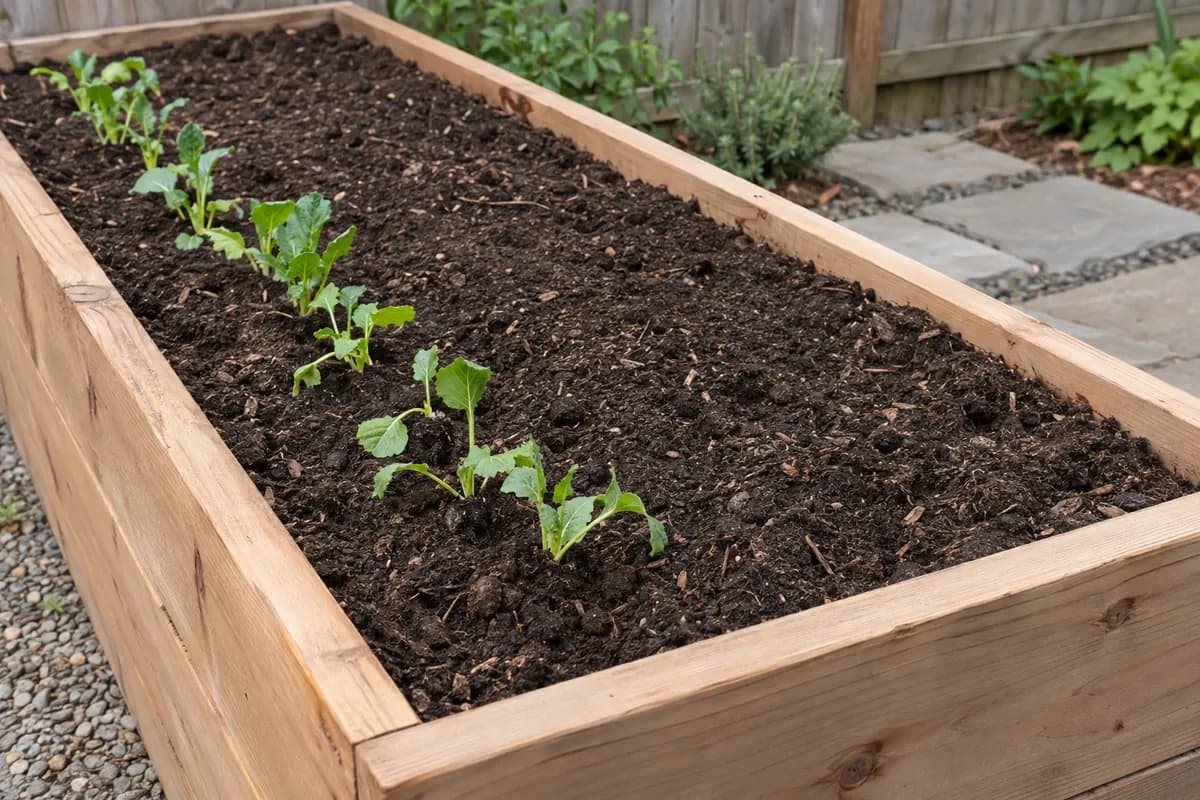
Garden Soil is a blended mix of topsoil and finished compost, dark brown and loose enough to dig with bare hands. Gravel Valet brings it by the ton for raised beds, vegetable plots, new flower borders and planting holes that need richer ground than the yard can give.
- From
- $417 delivered
- Size
- Blended
- Weight
- 2,000 lb/yd³
- Sold by
- the ton
See local Garden Soil pricing for your ZIP
Checking your saved delivery area.
- US cities served
- 368
- From, 2 tons delivered
- $417
- Weight
- 2,000 lb/yd³
- Size
- Blended

About Garden Soil
Garden Soil starts as screened topsoil, the mineral layer that sits near the surface of good open ground. The yard then mixes in finished compost until the blend turns a deep, dark brown. The mineral part gives roots something firm to anchor in and holds moisture between waterings. The compost part feeds the worms and microbes in the soil and loosens heavy grains, which gives the mix the crumbly feel a gardener looks for when squeezing a handful.[1]
Because Garden Soil is a blend, the exact recipe shifts a little from one yard to the next. The goal stays the same. A good batch drains after a heavy watering, keeps enough moisture for young roots and does not bake into a crust on a hot afternoon. A cubic yard weighs about 2,000 lb as it leaves the yard, and more after a soaking rain. It is sold by the ton, so the scale at the yard sets the amount on your ticket.[1]
Garden Soil is Blended, dark brown, about 2,000 lb per cubic yard, sold by the ton with a 2 ton minimum.
Specifications
| Material | Garden Soil |
|---|---|
| Category | soil |
| Typical size | Blended |
| Color | Dark brown |
| Weight | 2,000 lb/yd³, about 1.00 tons per cubic yard |
| Sold by | the ton |
| Order minimum | 2 tons per delivery |
| Online order steps | half tons, up to 40 per order; more by quote |
Coverage: how much Garden Soil do you need?
Square feet one ton of Garden Soil covers at common spread depths. For exact tonnage, use the calculator.
- 162
- sq ft at 2" deep
- Top dressing, beds
- 108
- sq ft at 3" deep
- Paths, patios, drainage
- 81
- sq ft at 4" deep
- Driveways, base layers
Best uses for Garden Soil
Raised beds are the most common home for this blend. A new frame filled with plain yard dirt can pack down hard by midsummer, while a compost mix stays open and lets roots reach the corners of the box. Tomatoes, peppers, squash and leafy greens grow well in that loose, fed ground. Herbs and cut flowers do too.[1]
In the ground, Garden Soil works as a fresh top layer over a tired bed. Spread it over the old soil, fork the two together, and the planting zone becomes deeper and darker. When you set a shrub or a young fruit tree, the blend fills the planting hole. The root ball then sits in a soft collar of good earth while new roots grow out into the native ground around it.[1]
Smaller jobs add up over a season. Gardeners use the blend to top up large planters, build a low berm for a flower border, fill sunken corners of a vegetable plot and patch a bare strip along a fence where nothing would take. For a lawn, Topsoil or Compost on its own is the usual pick, because a bed mix is richer than turf needs and can encourage weeds in thin grass.[1]
How to install Garden Soil
Clear the spot before the truck arrives. Pull weeds out by the root, slice off sod or smother it under plain cardboard, and loosen the ground below with a fork or a tiller. A sharp line between two different soils can hold water like a shallow bowl, so mixing the top few inches of old and new is worth the extra hour of work.[1]
For a top dressing over an existing bed, 2 inches of Garden Soil uses about 0.62 tons per 100 square feet, and 3 inches uses about 0.93 tons. That much refreshes a bed each spring and works easily into the surface with a rake. A new bed for annual flowers or salad greens wants more depth: 4 inches takes about 1.23 tons per 100 square feet.[1]
Deep rooted crops and tall raised boxes call for 6 inches or more, which is about 1.85 tons per 100 square feet at 6 inches. A tall frame needs a larger order than its size suggests, since fresh soil settles after the first few waterings. Fill the box in layers. Wet each layer lightly and firm it with the back of a rake before adding the next one.[1]
Let the bed rest for a day or two, then plant. Water deeply after planting so the soil closes around each root. A thin cover of shredded mulch over the surface slows drying in summer and keeps weed seeds in the dark, and it can be pulled back each spring when you add a fresh layer of the blend.[1]
Comparable materials
Topsoil is the base of the blend without the added compost. It is the better buy for leveling a lawn, filling behind a garden wall or building up a wide area that will be seeded with grass. For vegetables and flowers it can run low on organic matter, so many gardeners either work compost into it in the bed or order Garden Soil ready mixed.[1]
Fill Dirt is a different product altogether. It comes unscreened, with clay, sand and stones left in, and it is meant for filling holes, raising a grade or backing up a retaining wall. It packs hard and holds a shape. Plants struggle in it, so keep it below the root zone and cap it with a planting soil.[1]
Compost is the other half of the blend. On its own it is rich and light, and it does its best work mixed into existing ground or spread thin over a lawn. A bed filled with pure compost can sink as the organic matter breaks down. Garden Soil gives a bed the benefit of compost with enough mineral body to hold its level from one year to the next.[1]
 From$4282 ton delivered
Topsoil
Soil and Fill- Size
- Screened
- Weight
- 2,200 lb/yd³
- Color
- Dark brown
 From$4162 ton delivered
Fill Dirt
Soil and Fill- Size
- Unscreened
- Weight
- 2,400 lb/yd³
- Color
- Brown
 From$4152 yd delivered
Compost
Soil and Fill- Size
- Screened
- Weight
- 1,200 lb/yd³
- Color
- Dark brown
Where we source Garden Soil
Gravel Valet buys Garden Soil from landscape supply yards and soil blenders close to each delivery address. These yards screen topsoil stripped from nearby building sites and open land, then mix it with compost made from leaves, grass clippings and tree trimmings. The finished blend is turned and stored in tall piles until a loader fills the truck.[1]
Since the mineral part is local, texture follows the region. A blend from a sandy area may feel loose and gritty, while one from a river valley can feel smooth and silty in the hand. The dark brown color comes mostly from the compost, so it looks much the same from place to place. If texture matters for your project, note it with your order.[1]
Why bulk delivery saves money
Bagged soil comes in small sacks, and much of what a shopper pays for is plastic, packing and space on a store shelf. Buying by the ton cuts those steps out. A load travels straight from the yard to your driveway, so the soil is handled once instead of several times along the way.[1]
Bulk soil saves labor as well. One delivery replaces a string of trips to a garden center and many heavy lifts into the back of a car. There is no stack of empty bags to throw away. For a set of raised beds or a long border, the savings grow with every box you fill, and loose soil from a working yard tends to be fresher than a bag that sat on a pallet all winter.[1]
Ordering the full amount at once helps too. A second small load later repeats the trip and the handling. One well measured load covers the whole job and leaves a little extra for top ups during the season.[1]
Ordering Garden Soil from Gravel Valet
Measure the length and width of each bed and decide on a depth. Multiply length by width to get square feet, then use the coverage figures above or the area calculator to turn that into tons. Add the beds together so one truck brings everything.[1]
Pick a drop spot the truck can reach on firm ground, close to the beds and off the lawn if you can. A tarp under the pile makes cleanup easier and keeps the soil off a paved drive. The driver tips the load where you ask when the spot is safe to reach, and from there a wheelbarrow and a shovel move it into the beds.[1]
Enter your ZIP in the order box to see the delivered amount for your area. Gravel Valet then confirms the delivery date with you before the truck leaves the yard.[1]
FAQ: Garden Soil
Is Garden Soil the same as Topsoil?
No. Topsoil is the screened mineral layer on its own. Garden Soil is that same kind of soil blended with finished compost, which makes it darker, looser and richer in organic matter. Topsoil suits lawns and grading work. Garden Soil is made for beds where vegetables, flowers and shrubs will root.
How much Garden Soil do I need for a raised bed?
Multiply the length and width of the bed to get square feet, then pick a depth. At 6 inches the blend takes about 1.85 tons per 100 square feet. Tall boxes need more, and fresh soil settles a bit after watering, so round up rather than down when you place the order.
Can I plant right after the soil is delivered?
You can, though a short wait helps. Spread the soil, water it lightly and let it settle for a day or two. That closes air pockets and shows you where the bed sank, so you can top it up before the plants go in and avoid roots sitting in a low spot.
Should I mix Garden Soil with the soil already in my bed?
Yes, for in-ground beds. Loosen the old soil with a fork and blend the top few inches with the new layer. A sharp boundary between two soils can trap water or stop roots from going deeper. Mixing the two lets moisture and roots move freely down into the native ground.
Does Garden Soil need to be refreshed each year?
The compost in the blend breaks down over time and the bed slowly sinks. Many gardeners spread a fresh layer each spring. At 2 inches that is about 0.62 tons per 100 square feet, which brings the level back up and adds new organic matter for the coming season.
Why is Garden Soil sold by the ton and not the bag?
Bulk soil is weighed on the yard scale as it is loaded, so the ton is the natural unit. A cubic yard weighs about 2,000 lb, so a ton is roughly a cubic yard. Buying by weight skips the bagging step and lets one truck carry enough for a whole garden.
Order Garden Soil today
Enter your ZIP for the delivered price, or send the job and we quote it by hand.
By state
Garden Soil by state
- Garden Soil in Alaska
- Garden Soil in Alabama
- Garden Soil in Arkansas
- Garden Soil in Arizona
- Garden Soil in California
- Garden Soil in Colorado
- Garden Soil in Connecticut
- Garden Soil in District of Columbia
- Garden Soil in Florida
- Garden Soil in Georgia
- Garden Soil in Hawaii
- Garden Soil in Iowa
- Garden Soil in Idaho
- Garden Soil in Illinois
- Garden Soil in Indiana
- Garden Soil in Kansas
- Garden Soil in Kentucky
- Garden Soil in Louisiana
- Garden Soil in Massachusetts
- Garden Soil in Maryland
- Garden Soil in Michigan
- Garden Soil in Minnesota
- Garden Soil in Missouri
- Garden Soil in Mississippi
- Garden Soil in Montana
- Garden Soil in North Carolina
- Garden Soil in North Dakota
- Garden Soil in Nebraska
- Garden Soil in New Hampshire
- Garden Soil in New Jersey
- Garden Soil in New Mexico
- Garden Soil in Nevada
- Garden Soil in New York
- Garden Soil in Ohio
- Garden Soil in Oklahoma
- Garden Soil in Oregon
- Garden Soil in Pennsylvania
- Garden Soil in Rhode Island
- Garden Soil in South Carolina
- Garden Soil in South Dakota
- Garden Soil in Tennessee
- Garden Soil in Texas
- Garden Soil in Utah
- Garden Soil in Virginia
- Garden Soil in Washington
- Garden Soil in Wisconsin