
Gravel and Crushed Stone · Gray
Railroad Ballast Delivered in Bulk
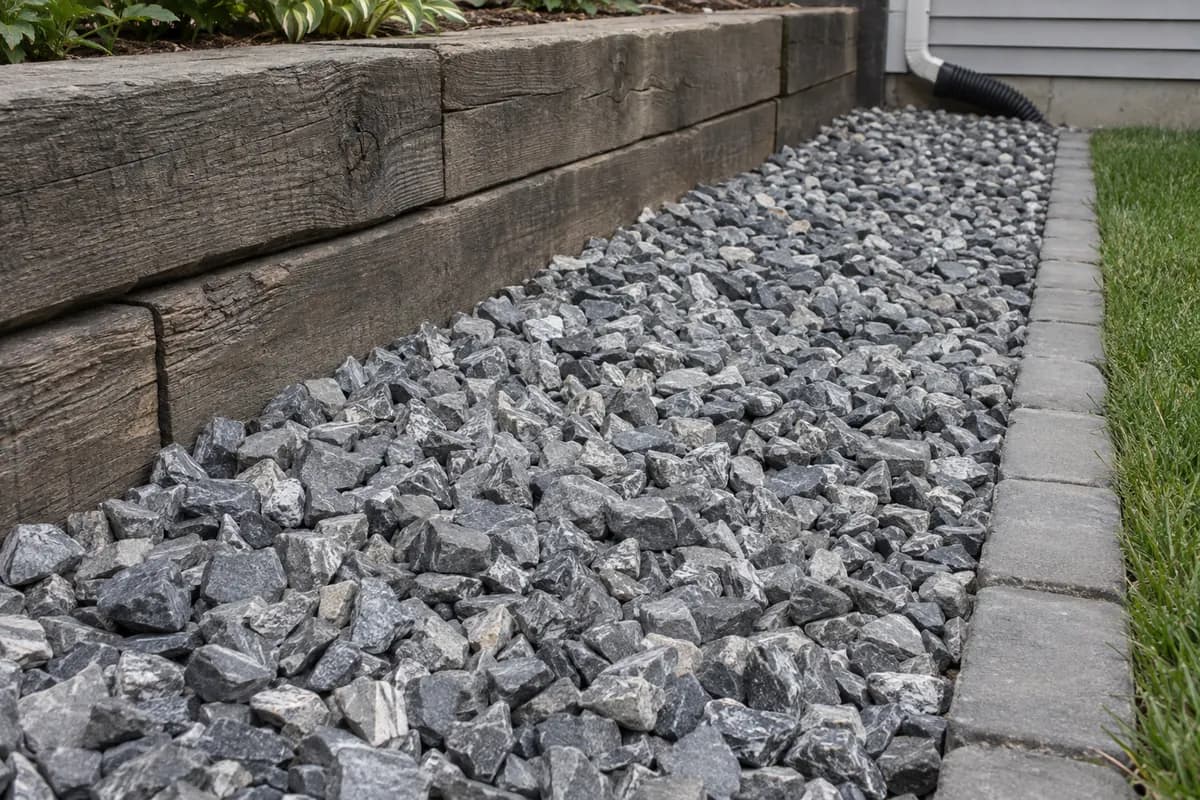
Railroad Ballast is heavy, angular gray stone from 1-1/2 to 2-1/2 inches. It is built to carry weight, shed water and stay locked under pounding loads. Gravel Valet delivers it by the ton for rail beds, heavy equipment pads, construction entrances, ditch linings and erosion control.
- From
- $635 delivered
- Size
- 1-1/2 to 2-1/2 inches
- Weight
- 2,700 lb/yd³
- Sold by
- the ton
See local Railroad Ballast pricing for your ZIP
Checking your saved delivery area.
- US cities served
- 368
- From, 2 tons delivered
- $635
- Weight
- 2,700 lb/yd³
- Size
- 1-1/2 to 2-1/2 inches

About Railroad Ballast
On a railway, ballast is the bed of stone that the ties sit in. It spreads the weight of each passing train into the ground, holds the ties from sliding sideways and lets rain drain away from the track at once. The stone that does that job has to be hard, sharp and clean, and that same stone serves well far from any rail line.[1]
Gravel Valet's Railroad Ballast is crushed to 1-1/2 to 2-1/2 inches with fractured faces on every side. The pieces wedge into each other and resist rolling, so a layer keeps its shape under heavy wheels and vibration. It is gray, it weighs about 2,700 lb per cubic yard, and it is sold by the ton. The fines are screened out, so water drains straight through.[1]
Hardness is the trait that sets ballast apart from ordinary crushed stone. Soft rock rounds off and grinds into dust under years of heavy traffic, and that dust fills the gaps and holds water. Ballast-grade rock keeps its sharp edges much longer, so the layer stays open, drained and locked even under steady loads from trucks, tractors and tracked machines.[1]
Railroad Ballast is 1-1/2 to 2-1/2 inches, gray, about 2,700 lb per cubic yard, sold by the ton with a 2 ton minimum.
Specifications
| Material | Railroad Ballast |
|---|---|
| Category | crushed stone |
| Typical size | 1-1/2 to 2-1/2 inches |
| Color | Gray |
| Weight | 2,700 lb/yd³, about 1.35 tons per cubic yard |
| Sold by | the ton |
| Order minimum | 2 tons per delivery |
| Online order steps | half tons, up to 40 per order; more by quote |
Coverage: how much Railroad Ballast do you need?
Square feet one ton of Railroad Ballast covers at common spread depths. For exact tonnage, use the calculator.
- 120
- sq ft at 2" deep
- Top dressing, beds
- 80
- sq ft at 3" deep
- Paths, patios, drainage
- 60
- sq ft at 4" deep
- Driveways, base layers
Best uses for Railroad Ballast
Private rail spurs, garden railways and the track beds of rail yards use it for its original purpose. Outside of rail, the most common job is a construction entrance: a pad of large angular stone where trucks leave a muddy site, which knocks mud off tires before they reach the street and keeps the gate from turning into a bog.[1]
Heavy equipment pads, crane mats, farm lanes that carry tractors, and the turnaround at a logging or a well site all benefit from its strength. Ditch linings and culvert outlets use it to slow water and keep the soil from scouring. Under a layer of finer stone, it makes a stable bottom course for a drive over soft, wet ground. Some property owners also use it as a rugged border where mowers and foot traffic do not reach.[1]
Drainage jobs that face strong flows use it too. A French drain outlet that empties onto a slope, the bottom of a swale that runs hard after storms and the base of a gabion basket can all take it. The stones are heavy enough that moderate runoff does not push them downhill, which lighter gravel cannot claim.[1]
It is a poor surface for walking or for cars with low clearance. The stones are big and sharp, and they can be hard on shoes, tires and bare knees. Cap it with smaller stone wherever people walk or park.[1]
How to install Railroad Ballast
Clear the area of topsoil, roots and soft material, then grade it so water runs off the pad rather than pooling in the middle. On clay, wet ground or a site with heavy trucks, lay a strong woven geotextile first. The fabric stops the large stones from being pushed into the mud and keeps soil from rising into the voids.[1]
Dump the Railroad Ballast and spread it with a loader or a skid steer. Hand raking stones this size is slow work. Lay it at least twice as thick as the largest stone, so the pieces can interlock instead of sitting in a single row. A 6 inch layer meets that mark and uses about 2.50 tons per 100 square feet. Run a heavy roller or the machine's tracks over it to seat the stones.[1]
Thinner covers of 2, 3 or 4 inches, about 0.83, 1.25 and 1.67 tons per 100 square feet, only make sense as a top-up over an existing ballast bed or as a scattered armor layer in a shallow ditch. For a construction entrance, build the pad long enough that a truck turns its wheels a few times on the stone before it reaches pavement, and add fresh stone when mud fills the gaps.[1]
Comparable materials
#4 Crushed Stone covers a similar size range and goes into the same entrances and heavy pads. The two can trade places on most jobs, with Railroad Ballast chosen when the stone must be extra hard and angular. #57 Crushed Stone and 3/4" Crushed Stone are smaller and suit drainage, a top course over ballast or a general base where the loads are lighter.[1]
#67 Stone and #89 Crushed Stone are smaller again. #67 Stone works as a fill and a setting bed, and #89 Crushed Stone, at 3/8 inch, fits paver joints, a fine top dressing and mixes. A common build stacks them: Railroad Ballast at the bottom for strength over soft ground, then a smaller crushed stone on top for a surface that wheels and feet can use.[1]
 From$4242 ton delivered
#57 Crushed Stone
Gravel and Crushed Stone- Size
- 3/4 to 1 inch
- Weight
- 2,700 lb/yd³
- Color
- Gray
 From$4372 ton delivered
#67 Stone
Gravel and Crushed Stone- Size
- 3/4 inch and under
- Weight
- 2,700 lb/yd³
- Color
- Gray
 From$4252 ton delivered
#89 Crushed Stone
Gravel and Crushed Stone- Size
- 3/8 inch
- Weight
- 2,700 lb/yd³
- Color
- Gray
 From$4452 ton delivered
#4 Crushed Stone
Gravel and Crushed Stone- Size
- 1-1/2 to 2-1/2 inches
- Weight
- 2,700 lb/yd³
- Color
- Gray
 From$4272 ton delivered
3/4" Crushed Stone
Gravel and Crushed Stone- Size
- 3/4 inch
- Weight
- 2,700 lb/yd³
- Color
- Gray
 From$4272 ton delivered
3/8" Crushed Stone
Gravel and Crushed Stone- Size
- 3/8 inch
- Weight
- 2,700 lb/yd³
- Color
- Gray
Where we source Railroad Ballast
Railroad Ballast comes from local quarries that crush hard rock such as granite, trap rock or dense limestone. The stone is crushed in stages, screened to the 1-1/2 to 2-1/2 inch band and cleaned of dust. Quarries that make ballast for rail work hold it to a hard, durable standard, so the stone resists breaking down under repeated loads.[1]
Gravel Valet buys from the quarry or yard closest to the job. A ballast order is heavy and usually large, so the length of the haul makes a real difference to how a job runs. The gray shade depends on the local rock, which matters little for a pad or a ditch that is about strength and water.[1]
Why bulk delivery saves money
Nobody buys stone this size in bags, and for good reason. A single equipment pad can take many tons, and Railroad Ballast is heavy and awkward to handle by hand. A bulk load comes off the truck in one dump, measured by the ton, and goes straight to the machine that spreads it.[1]
Ordering the whole job in one go also keeps a site moving. Crews do not wait on partial loads, and the stone lands where the loader can reach it. Fewer trips and no packaging mean the money goes into stone and hauling alone, which is the reason contractors buy base and ballast loose.[1]
Ordering Railroad Ballast from Gravel Valet
Measure the pad or trench and choose a depth, keeping in mind that large stone needs a thick layer to lock together. The calculator converts your area and depth into tons using about 2,700 lb per cubic yard. Add some extra for soft ground, where the first stones press into the soil before the layer firms up.[1]
Enter your ZIP to see the delivered total, choose your tons and check out. Tell us about site access: gates, grades, soft spots and where the loader will work. Our team confirms the delivery day and the drop point by phone or email.[1]
FAQ: Railroad Ballast
What size is Railroad Ballast?
Gravel Valet's Railroad Ballast is 1-1/2 to 2-1/2 inch crushed gray stone with sharp, fractured faces. The large, angular pieces lock together under load and leave open gaps so water drains through. It weighs about 2,700 lb per cubic yard and is sold by the ton.
Can I use Railroad Ballast for a driveway?
It makes a strong bottom layer for a drive over soft or wet ground, especially on a farm or a work site. On its own it is rough on tires and uncomfortable to walk on. Cap it with a smaller crushed stone so cars and people get a smoother, tighter surface.
How thick should a construction entrance be?
Build it thick enough for the stones to interlock, and longer than a truck's wheels need to turn a few times. A 6 inch layer of Railroad Ballast uses about 2.50 tons per 100 square feet. Lay a woven fabric underneath on soft ground and top it up when mud fills the gaps.
Is Railroad Ballast the same as #4 Crushed Stone?
They cover a similar size range, 1-1/2 to 2-1/2 inches, and share many uses, such as site entrances and heavy pads. Pick Railroad Ballast when the stone must be extra hard and sharply angular. For most home and farm jobs either one works well.
Do I need fabric under Railroad Ballast?
On firm, rocky ground you can skip it. On clay, silt or wet soil, a strong woven geotextile keeps the big stones from sinking into the mud and keeps soil out of the gaps. That keeps the pad drained and firm for much longer under heavy loads.
How heavy is Railroad Ballast?
A cubic yard of Gravel Valet's Railroad Ballast weighs about 2,700 lb. It is sold by the ton, and the calculator uses that weight to turn your area and depth into tons. Order a little extra for soft ground, where the first stones press down before the layer firms up.
Order Railroad Ballast today
Enter your ZIP for the delivered price, or send the job and we quote it by hand.
By state
Railroad Ballast by state
- Railroad Ballast in Alaska
- Railroad Ballast in Alabama
- Railroad Ballast in Arkansas
- Railroad Ballast in Arizona
- Railroad Ballast in California
- Railroad Ballast in Colorado
- Railroad Ballast in Connecticut
- Railroad Ballast in District of Columbia
- Railroad Ballast in Florida
- Railroad Ballast in Georgia
- Railroad Ballast in Hawaii
- Railroad Ballast in Iowa
- Railroad Ballast in Idaho
- Railroad Ballast in Illinois
- Railroad Ballast in Indiana
- Railroad Ballast in Kansas
- Railroad Ballast in Kentucky
- Railroad Ballast in Louisiana
- Railroad Ballast in Massachusetts
- Railroad Ballast in Maryland
- Railroad Ballast in Michigan
- Railroad Ballast in Minnesota
- Railroad Ballast in Missouri
- Railroad Ballast in Mississippi
- Railroad Ballast in Montana
- Railroad Ballast in North Carolina
- Railroad Ballast in North Dakota
- Railroad Ballast in Nebraska
- Railroad Ballast in New Hampshire
- Railroad Ballast in New Jersey
- Railroad Ballast in New Mexico
- Railroad Ballast in Nevada
- Railroad Ballast in New York
- Railroad Ballast in Ohio
- Railroad Ballast in Oklahoma
- Railroad Ballast in Oregon
- Railroad Ballast in Pennsylvania
- Railroad Ballast in Rhode Island
- Railroad Ballast in South Carolina
- Railroad Ballast in South Dakota
- Railroad Ballast in Tennessee
- Railroad Ballast in Texas
- Railroad Ballast in Utah
- Railroad Ballast in Virginia
- Railroad Ballast in Washington
- Railroad Ballast in Wisconsin