
Soil and Fill · Dark brown
Compost Delivered in Bulk
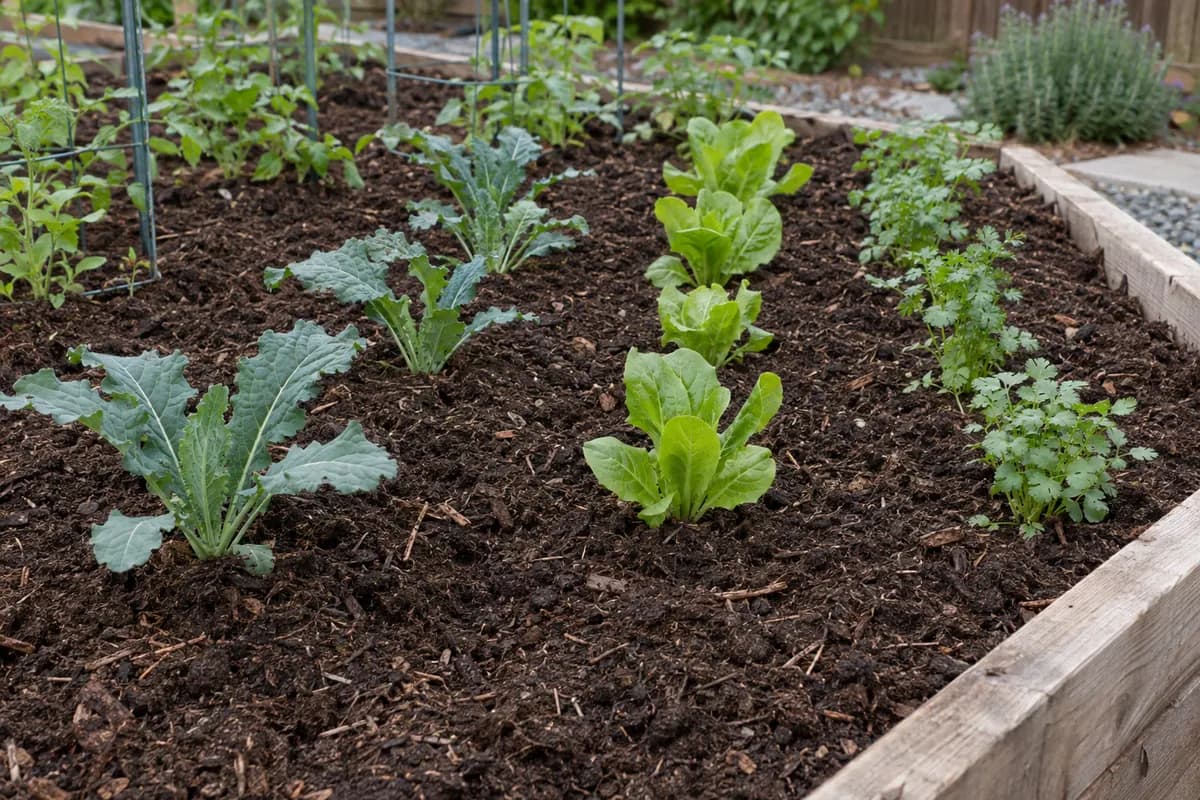
Compost is decayed plant matter, screened to a fine, dark brown crumb that smells like a forest floor. Worked into a bed or raked over a lawn, it feeds soil life and helps ground hold water. Gravel Valet delivers it by the cubic yard for gardens, new lawns and tired planting areas.
- From
- $415 delivered
- Size
- Screened
- Weight
- 1,200 lb/yd³
- Sold by
- the yard
See local Compost pricing for your ZIP
Checking your saved delivery area.
- US cities served
- 368
- From, 2 yd delivered
- $415
- Weight
- 1,200 lb/yd³
- Size
- Screened

About Compost
Compost begins as leaves, grass clippings, wood trimmings and other plant waste. At a compost yard those materials sit in long rows that are turned again and again. Heat builds inside the piles as microbes break the matter down, and after months of turning the rows cool into a stable, earthy material. The finished product is screened so that sticks and clumps are removed and only a fine crumb is left.[1]
The color is dark brown, close to the shade of rich forest soil. Screened Compost is light for its bulk, at about 1,200 lb per cubic yard, a little over half the weight of a typical planting soil. That lightness makes it easy to spread by shovel or by rake. It is sold by the cubic yard because volume describes it better than weight does, and the moisture in a pile can change its weight from day to day.[1]
Compost is Screened, dark brown, about 1,200 lb per cubic yard, sold by the cubic yard with a 2 cubic yard minimum.
Specifications
| Material | Compost |
|---|---|
| Category | soil |
| Typical size | Screened |
| Color | Dark brown |
| Weight | 1,200 lb/yd³, about 0.60 tons per cubic yard |
| Sold by | the yard |
| Order minimum | 2 cubic yards per delivery |
| Online order steps | half yards, up to 40 per order; more by quote |
Coverage: how much Compost do you need?
Square feet one cubic yard of Compost covers at common spread depths. For exact yardage, use the calculator.
- 162
- sq ft at 2" deep
- Top dressing, beds
- 108
- sq ft at 3" deep
- Paths, patios, drainage
- 81
- sq ft at 4" deep
- Driveways, base layers
Best uses for Compost
Amending garden beds is the main job. Clay soils become looser and drain better when Compost is mixed in, and sandy soils hold water longer. Vegetable gardeners add a fresh layer each spring before planting and turn it into the top of the bed. Flower borders and shrub beds respond the same way.[1]
Top dressing a lawn is the second big use. A thin layer raked over the grass after core aeration falls into the holes and feeds the root zone. Over a season the turf thickens and the soil below turns darker. Before seeding a new lawn, many crews till Compost into the top of the ground so young grass gets a strong start.[1]
Smaller uses fill out the list. A shovel of Compost in each planting hole gives new trees and shrubs a richer collar of soil. It perks up tired container mixes, revives a bare corner where little grows, and makes a good bottom layer under a bark mulch in a perennial bed.[1]
How to install Compost
For a bed, spread an even layer over the surface and turn it into the top several inches of soil with a fork, a spade or a tiller. A layer of 2 inches uses about 0.62 cubic yards per 100 square feet, which suits a yearly refresh. A first time amendment on heavy clay or poor fill can take 3 inches, at about 0.93 cubic yards per 100 square feet.[1]
Building a new bed from scratch on bare ground calls for more. Mix 4 inches of Compost, about 1.23 cubic yards per 100 square feet, into the native soil. For a deep vegetable plot over poor, lifeless ground, some gardeners go to 6 inches at about 1.85 cubic yards per 100 square feet, blended well with the earth below so the bed does not sink as the organic matter breaks down.[1]
Lawn top dressing uses far less. After aerating, scatter a thin layer with a shovel and work it across the grass with the back of a rake or a drag mat until the blades poke through. The goal is to fill the aeration holes and leave a light dusting on top, never a layer thick enough to smother the turf.[1]
Water the area after any application. Moisture helps Compost settle into place and starts the soil life working. Spread it on a calm day, since dry Compost is light and a strong breeze can carry fine particles off the bed.[1]
Comparable materials
Topsoil is mostly mineral, with some organic matter. It is the base you build a lawn or a bed on, while Compost is the improvement you mix into that base. For a new lawn, a common plan is Topsoil to reach the right grade and Compost worked into the top to feed the seed.[1]
Garden Soil is a ready made blend of the two. It saves the mixing step when you fill raised beds or new borders, and it holds its level better than pure Compost. If you already have decent soil in place, Compost alone is the leaner choice, because you only need the organic part.[1]
Fill Dirt sits at the far end of the range. It is unscreened subsoil for filling and grading, with almost no organic matter. Compost and Fill Dirt rarely meet in the same layer. The one exception is a fill area that will become a planting bed, where Compost goes into the Topsoil cap above the packed fill.[1]
 From$4282 ton delivered
Topsoil
Soil and Fill- Size
- Screened
- Weight
- 2,200 lb/yd³
- Color
- Dark brown
 From$4172 ton delivered
Garden Soil
Soil and Fill- Size
- Blended
- Weight
- 2,000 lb/yd³
- Color
- Dark brown
 From$4162 ton delivered
Fill Dirt
Soil and Fill- Size
- Unscreened
- Weight
- 2,400 lb/yd³
- Color
- Brown
Where we source Compost
Gravel Valet buys Compost from composting yards and landscape suppliers close to the delivery address. Most of these yards take in leaves, brush and grass from tree crews, landscapers and town yard waste programs. They grind the material, build long piles and turn them on a schedule while temperature and moisture are watched.[1]
The plant waste a region produces shapes its compost. A yard in a wooded area may turn out a blend rich in leaf and bark matter, while one near farm country may work in more crop waste. Every batch is screened before sale, so the texture stays fine and even. The dark brown color and earthy smell are signs of a finished, cured product.[1]
Why bulk delivery saves money
A small bag of Compost covers a small patch of ground, and a garden or a lawn can need dozens of them. Each bag carries the plastic, the filling line and the store markup with it. Bulk Compost skips the packaging, the warehouse and the shelf, and goes straight from the curing pile to your yard.[1]
Bulk delivery also makes better gardening practical. A gardener paying by the bag may spread a thin, uneven layer to stretch each sack. With a full load on hand, the beds get the depth they need and the lawn gets an even top dressing in one afternoon.[1]
Time is the last factor. One truck replaces many trips to a garden center, and there are no empty bags to bundle for the trash.[1]
Ordering Compost from Gravel Valet
Measure the beds or lawn area in square feet and choose a depth from the coverage figures above, or let the area calculator do the math. Compost is sold by the cubic yard. If you are amending several beds, add them up so one delivery covers the whole garden.[1]
Choose a firm, flat drop spot near the work, on a driveway or a hard patch of ground. Compost is light, but a loaded truck is not. A tarp under the pile protects paving and makes the last of the pile easy to scoop up. Cover the pile if rain is on the way and you cannot spread it right away.[1]
Enter your ZIP in the order box to see the delivered amount for your area. Gravel Valet confirms the delivery date with you ahead of time so you can plan the spreading.[1]
FAQ: Compost
How much Compost should I add to my garden each year?
A yearly layer of 2 inches works for most established beds. That uses about 0.62 cubic yards per 100 square feet. Turn it into the top of the soil before planting. Beds with heavy clay or loose sandy soil can take more in the first year while the ground improves.
Can I plant directly into pure Compost?
It is better mixed with soil. Pure Compost is rich and light, and a bed made only of it can sink as it breaks down and can dry out fast in summer. Blend it into the native ground or into Topsoil, or buy Garden Soil, which is already mixed for planting.
Is Compost good for top dressing a lawn?
Yes. After core aeration, rake a thin layer across the grass so it drops into the holes. It feeds the roots and improves the soil over time. Keep the layer light enough that the grass blades still show through, so the turf is not smothered.
Why is Compost sold by the yard instead of the ton?
Compost is light, about 1,200 lb per cubic yard, and its weight changes with moisture. A wet pile weighs far more than a dry one with the same amount of material. Selling by volume keeps the amount you receive steady no matter the weather at the yard.
Does Compost smell bad?
Finished Compost should smell earthy, like damp woods. A sour or rotten smell means the material was not fully cured. Screened Compost from a working yard has been turned for months and cooled, so a fresh load smells mild and fades soon after it is spread.
When is the best time to spread Compost?
Spring and fall both work. In spring, mix it into beds a few weeks before planting. In fall, spread it over beds and lawns so winter moisture works it in. Any time of year, water it after spreading and avoid windy days, since dry Compost blows around.
Order Compost today
Enter your ZIP for the delivered price, or send the job and we quote it by hand.
By state
Compost by state
- Compost in Alaska
- Compost in Alabama
- Compost in Arkansas
- Compost in Arizona
- Compost in California
- Compost in Colorado
- Compost in Connecticut
- Compost in District of Columbia
- Compost in Florida
- Compost in Georgia
- Compost in Hawaii
- Compost in Iowa
- Compost in Idaho
- Compost in Illinois
- Compost in Indiana
- Compost in Kansas
- Compost in Kentucky
- Compost in Louisiana
- Compost in Massachusetts
- Compost in Maryland
- Compost in Michigan
- Compost in Minnesota
- Compost in Missouri
- Compost in Mississippi
- Compost in Montana
- Compost in North Carolina
- Compost in North Dakota
- Compost in Nebraska
- Compost in New Hampshire
- Compost in New Jersey
- Compost in New Mexico
- Compost in Nevada
- Compost in New York
- Compost in Ohio
- Compost in Oklahoma
- Compost in Oregon
- Compost in Pennsylvania
- Compost in Rhode Island
- Compost in South Carolina
- Compost in South Dakota
- Compost in Tennessee
- Compost in Texas
- Compost in Utah
- Compost in Virginia
- Compost in Washington
- Compost in Wisconsin