
Drainage and Base · Gray
Stone Dust Screenings Delivered by the Ton
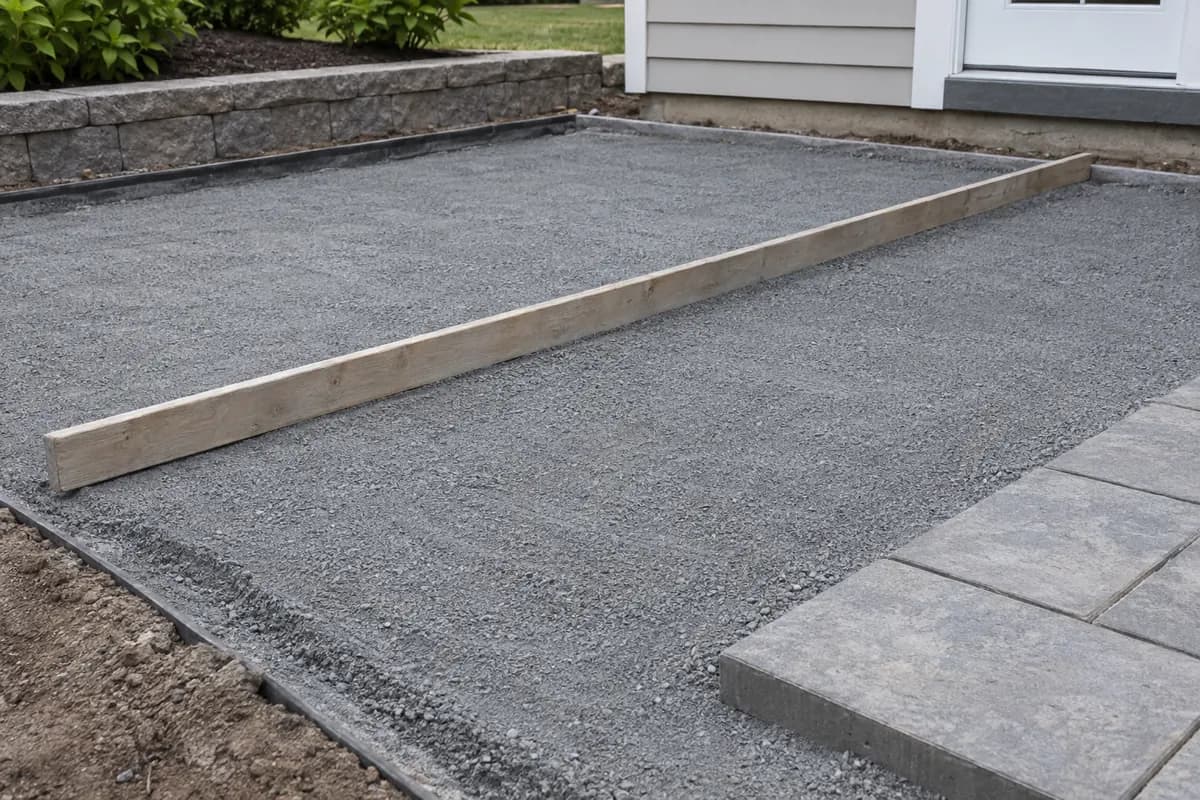
Stone Dust Screenings are the fine leftovers of crushing rock at a quarry: chips of 1/4 inch and smaller mixed with powder. Raked flat and tamped, they form a smooth, firm bed for pavers and flagstone and a quiet surface for garden paths. Gravel Valet sells them by the ton and delivers in bulk.
- From
- $446 delivered
- Size
- 1/4 inch and fines
- Weight
- 2,800 lb/yd³
- Sold by
- the ton
See local Stone Dust Screenings pricing for your ZIP
Checking your saved delivery area.
- US cities served
- 368
- From, 2 tons delivered
- $446
- Weight
- 2,800 lb/yd³
- Size
- 1/4 inch and fines

About Stone Dust Screenings
Every time a quarry crushes rock into gravel, the crusher also makes a pile of tiny chips and powder that falls through the finest screen. Quarries call that pile screenings, and many homeowners call it stone dust. The product runs 1/4 inch and fines, so it feels like coarse, gritty flour with small sharp chips in it. Because the chips are freshly broken, they have flat faces and sharp corners that bite into one another once pressed.[1]
The color is Gray, a little darker when damp and close to white on a dry, sunny day. Screenings are dense. A cubic yard weighs about 2,800 lb, and Gravel Valet sells them by the ton. Add water and a hand tamper or plate compactor, and the loose pile turns into a layer firm enough to stand a paver on without rocking. People buy it for that change from loose to locked.[1]
Stone Dust Screenings is 1/4 inch and fines, gray, about 2,800 lb per cubic yard, sold by the ton with a 2 ton minimum.
Specifications
| Material | Stone Dust Screenings |
|---|---|
| Category | base |
| Typical size | 1/4 inch and fines |
| Color | Gray |
| Weight | 2,800 lb/yd³, about 1.40 tons per cubic yard |
| Sold by | the ton |
| Order minimum | 2 tons per delivery |
| Online order steps | half tons, up to 40 per order; more by quote |
Coverage: how much Stone Dust Screenings do you need?
Square feet one ton of Stone Dust Screenings covers at common spread depths. For exact tonnage, use the calculator.
- 116
- sq ft at 2" deep
- Top dressing, beds
- 77
- sq ft at 3" deep
- Paths, patios, drainage
- 58
- sq ft at 4" deep
- Driveways, base layers
Best uses for Stone Dust Screenings
The top job is the leveling bed under pavers, brick and natural flagstone. A screeded layer of screenings over a compacted stone base lets you set each unit flat and tap it to height. The fine grit fills the tiny low spots under a stone so it sits fully supported. Many installers also sweep it into the wide joints of a flagstone patio, where it packs down and slows weeds.[1]
Garden paths are the other big use. A path surfaced with screenings packs into a smooth, Gray walking surface that wheelbarrows and strollers roll over with ease, unlike loose round stone. Screenings work well as a level pad under a rain barrel or a stepping stone, as the base of a horseshoe pit, and as a bed under an above-ground pool liner where a smooth floor matters. Avoid it in low, soggy spots. Fines hold moisture, so a wet path can turn soft and track onto shoes.[1]
How to install Stone Dust Screenings
For a patio, screenings go on top of a compacted base of a coarser stone such as Road Base, never straight on soil. Once that base is firm and graded with a gentle slope for runoff, spread the screenings and pull a straight board across two rails to strike them flat. A leveling bed is meant to be thin, about 1 inch, so set the rails before you dump any material.[1]
Paths take a deeper layer of screenings over a lighter base. A 2 inch top, about 0.86 tons per 100 square feet, suits a garden walk over firm ground. A 3 inch top, about 1.30 tons per 100 square feet, gives more body for a busy path. Mist the surface, then tamp or roll it. Repeat the misting and tamping until a footprint barely shows.[1]
Where screenings fill a whole pad, such as under a shed or a pool, build it in two passes. A 4 inch pad takes about 1.73 tons per 100 square feet, and a 6 inch pad about 2.59 tons per 100 square feet. Set metal or timber edging along a path first so the fine material does not creep into the lawn. Crown the center slightly so water runs to the sides instead of pooling on top.[1]
Comparable materials
Road Base is the coarser cousin. It mixes larger crushed stone with fines and makes a strong structural layer under a driveway or patio. Screenings sit on top of it rather than replacing it. Use Road Base for the thick bottom layer that carries weight, and screenings for the thin, smooth layer that a paver or a foot meets.[1]
Driveway Gravel is a clean, larger stone with few fines, so it drains fast and stays loose. That suits a drive where tires need grip and water must run through, and it is a poor choice for leveling a paver. Concrete Sand is the main rival for the bedding layer. Sand is easier to screed and lets water through, while screenings lock tighter and resist washing out of joints. Decomposed Granite is the warmer, tan pick for a path when you want a softer color than Gray.[1]


Where we source Stone Dust Screenings
Screenings come from the same crushed stone quarries that make gravel for roads and concrete. As blasted rock moves through the crushers and screen decks, the finest fraction drops out at the bottom and ends up in its own stockpile. Limestone, granite and trap rock quarries all produce it, and each gives a slightly different shade and feel. Sand and gravel yards and landscape supply yards stock it too.[1]
Gravel Valet buys screenings from quarries and yards close to each delivery address. Local rock keeps the trip short, and it means the Gray tone of your path will look at home next to stone used on nearby roads and walls. Each yard screens to the same 1/4 inch and fines range, though the share of powder to chips can vary a little between pits.[1]
Why bulk delivery saves money
Paver sand and leveling dust are sold in small bags at home stores, and a patio eats them by the pallet. Each bag means lifting, cutting, emptying and disposing of plastic, plus repeat trips when you run short. Ordering by the ton puts the whole bed in one pile on your driveway, and you shovel straight from the pile into the wheelbarrow.[1]
Screenings are heavy, about 2,800 lb per cubic yard, which is hard on a car and slow to move in bags. A dump truck handles that weight in one visit. Buying enough for the base, the bed and the joint fill in one delivery also keeps the shade consistent, because the whole job comes from one stockpile.[1]
Ordering Stone Dust Screenings from Gravel Valet
Measure the patio or path in square feet and decide on the depth of each layer. Use the calculator for the tonnage, and use the coverage figures above as a check: a 3 inch path top takes about 1.30 tons per 100 square feet. Enter your ZIP to see the delivered total for your area, then order the tons you need. Add a small margin for the joint fill and for tamping.[1]
Have the truck dump on a tarp or on a hard surface if you can, since screenings are fine and hard to scoop off a lawn. Pick a spot the truck reaches on firm ground, with no low wires above. Cover the pile if heavy rain is on the way, because a soaked pile of 1/4 inch and fines material is heavy to shovel and slow to spread evenly.[1]
If you plan a patio and a path at once, order the base stone and the screenings together so both arrive before you start. Keep the two piles apart on the driveway, since mixing a little base stone into the bedding layer leaves lumps that tip a paver.[1]
FAQ: Stone Dust Screenings
Is stone dust the same as screenings
In most yards, yes. Stone dust, screenings, crusher fines and quarry dust are all names for the fine leftovers of crushing rock. The product here runs 1/4 inch and fines, a gritty mix of small chips and powder. Some yards also sell a fines-only dust with no chips, which packs smoother but drains even slower.
Should I use stone dust or sand under pavers
Either one can serve as the thin bed. Stone Dust Screenings lock tighter and stay put, which helps on paths and patios where joints might wash out. Concrete Sand is easier to screed and lets water through faster, which some installers prefer on a slow-draining site. Either goes on top of a compacted stone base, never in place of it.
How thick should the leveling bed be
Keep it thin, about 1 inch, over a firm and level base. A thick bed of fines can shift under load and let pavers settle unevenly. Do the real leveling in the base below, and use the screenings only to make the final small adjustments so each paver sits flat.
Can stone dust be a path surface by itself
Yes, over firm, well drained ground with a light stone base. A 2 inch layer, about 0.86 tons per 100 square feet, suits a garden walk. Wet and tamp it until it is firm. Add edging so it stays in its lane, and crown the center so rain runs off instead of soaking in.
Will weeds grow through stone dust
A tight, compacted layer slows weeds a lot, though seeds that blow in can sprout on the surface. Pull them young or scuff the path with a rake. A fabric layer under the base helps stop weeds coming up from the soil below.
Does stone dust get muddy
It can stay soft in a low spot that holds water. On a crowned path over firm ground it dries fast after rain. If a patch stays wet, dig out the soft area, add a coarser base stone below, and re-top with screenings.
Order Stone Dust Screenings today
Enter your ZIP for the delivered price, or send the job and we quote it by hand.
By state
Stone Dust Screenings by state
- Stone Dust Screenings in Alaska
- Stone Dust Screenings in Alabama
- Stone Dust Screenings in Arkansas
- Stone Dust Screenings in Arizona
- Stone Dust Screenings in California
- Stone Dust Screenings in Colorado
- Stone Dust Screenings in Connecticut
- Stone Dust Screenings in District of Columbia
- Stone Dust Screenings in Florida
- Stone Dust Screenings in Georgia
- Stone Dust Screenings in Hawaii
- Stone Dust Screenings in Iowa
- Stone Dust Screenings in Idaho
- Stone Dust Screenings in Illinois
- Stone Dust Screenings in Indiana
- Stone Dust Screenings in Kansas
- Stone Dust Screenings in Kentucky
- Stone Dust Screenings in Louisiana
- Stone Dust Screenings in Massachusetts
- Stone Dust Screenings in Maryland
- Stone Dust Screenings in Michigan
- Stone Dust Screenings in Minnesota
- Stone Dust Screenings in Missouri
- Stone Dust Screenings in Mississippi
- Stone Dust Screenings in Montana
- Stone Dust Screenings in North Carolina
- Stone Dust Screenings in North Dakota
- Stone Dust Screenings in Nebraska
- Stone Dust Screenings in New Hampshire
- Stone Dust Screenings in New Jersey
- Stone Dust Screenings in New Mexico
- Stone Dust Screenings in Nevada
- Stone Dust Screenings in New York
- Stone Dust Screenings in Ohio
- Stone Dust Screenings in Oklahoma
- Stone Dust Screenings in Oregon
- Stone Dust Screenings in Pennsylvania
- Stone Dust Screenings in Rhode Island
- Stone Dust Screenings in South Carolina
- Stone Dust Screenings in South Dakota
- Stone Dust Screenings in Tennessee
- Stone Dust Screenings in Texas
- Stone Dust Screenings in Utah
- Stone Dust Screenings in Virginia
- Stone Dust Screenings in Washington
- Stone Dust Screenings in Wisconsin