
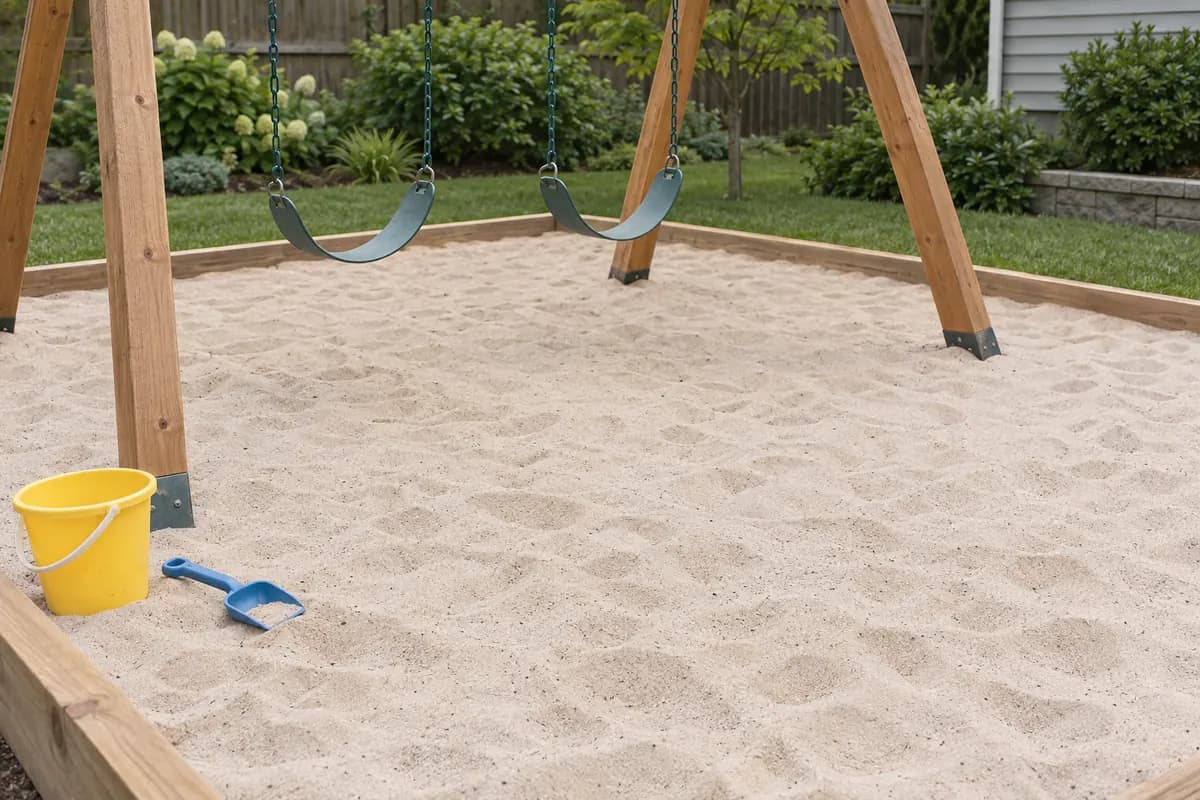
Sand · Light tan
Playground Sand Delivered by the Ton
Playground Sand is washed, screened sand with fine, soft grains in a light tan color. It is the sand you want where kids dig, players dive and bare feet walk. Gravel Valet sells it by the ton and delivers it in bulk for sandboxes, play yards, volleyball courts and backyard beaches.
- From
- $415 delivered
- Size
- Fine, washed
- Weight
- 2,700 lb/yd³
- Sold by
- the ton
See local Playground Sand pricing for your ZIP
Checking your saved delivery area.
- US cities served
- 368
- From, 2 tons delivered
- $415
- Weight
- 2,700 lb/yd³
- Size
- Fine, washed

About Playground Sand
Sand for play has a few jobs to do. It should feel soft, brush off skin and clothes without staining, and stay loose so it cushions a fall instead of packing hard. Playground Sand is made for that. The grade is Fine, washed, which means the sand runs through screens that hold back coarse grit and pebbles, then goes through water to rinse out most of the silt and clay. What is left is clean grains that pour like dry salt.[1]
The color is Light tan, close to a beach, and it stays bright when dry. Washed sand is still heavy. Plan on about 2,700 lb for a cubic yard, sold by the ton through Gravel Valet. Because the clay is mostly gone, the sand does not crust over after rain, and it dries out fast once the sun returns.[1]
Playground Sand is Fine, washed, light tan, about 2,700 lb per cubic yard, sold by the ton with a 2 ton minimum.
Specifications
| Material | Playground Sand |
|---|---|
| Category | sand |
| Typical size | Fine, washed |
| Color | Light tan |
| Weight | 2,700 lb/yd³, about 1.35 tons per cubic yard |
| Sold by | the ton |
| Order minimum | 2 tons per delivery |
| Online order steps | half tons, up to 40 per order; more by quote |
Coverage: how much Playground Sand do you need?
Square feet one ton of Playground Sand covers at common spread depths. For exact tonnage, use the calculator.
- 120
- sq ft at 2" deep
- Top dressing, beds
- 80
- sq ft at 3" deep
- Paths, patios, drainage
- 60
- sq ft at 4" deep
- Driveways, base layers
Best uses for Playground Sand
Home sandboxes come first. Kids can dig, build and pour all day, and the sand shakes out of shoes and hair at the end of it. Larger play yards at homes, daycares and churches use it under swings and climbing sets as a soft surface. A sand play table on a deck takes a few shovels from the same pile.[1]
Backyard volleyball courts need deep, loose sand that cushions a dive and does not cake. Washed fine sand fits that need, and its Light tan color makes a court look like a beach. Horseshoe pits, a sand area beside a fire pit, a small backyard beach next to a pond, and a putting-green bunker are other good spots. The same washed grade works for top dressing a lawn and for filling paver joints when you want the sand to match a light patio.[1]
Skip it as a base or a fill. Clean, fine sand rolls under weight and does not lock. Under a slab, a pool or a shed, use a compacted base stone or Fill Sand, and save the washed sand for the top where people touch it.[1]
Some families build a sand area into a larger backyard plan, with a border of timbers, a shade sail above and a bench beside it. Others fill a plastic turtle or a boat-shaped box on a patio. Each of those setups works with the same Fine, washed sand, only in different amounts.[1]
How to install Playground Sand
Pick a level spot with some sun, so the sand dries after rain, and mark the outline. Dig down a few inches, set a timber, plastic or stone border, and lay a permeable landscape fabric across the floor. The fabric keeps soil from mixing in and slows weeds. Holes drilled in any box bottom let water out.[1]
For a small box or a sand table, a 3 inch layer is enough, about 1.25 tons per 100 square feet. Deeper digging needs more. A 4 inch fill takes about 1.67 tons per 100 square feet, and 6 inches takes about 2.50 tons per 100 square feet. Pour the sand in, rake it level and leave it loose. Do not tamp it, since play sand works best soft.[1]
Volleyball courts and play yards under equipment need much deeper sand than a sandbox, a foot or more, laid over a drainage stone layer so the court does not hold water. Build those in stages and rake each stage level. For a thin top-up on an existing area, 2 inches of new sand takes about 0.83 tons per 100 square feet.[1]
Once a season, rake the whole area to turn the sand and loosen spots that have packed down. Scoop out debris and any clumps. If the level has dropped, top it up with fresh sand so the cushioning layer stays even. A cover that fits the box keeps out rain, leaves and animals between play days.[1]
Comparable materials
Mason Sand is the closest substitute. It is also fine and washed, and many families use it in sandboxes. Its main job is mortar, and its grain can run a touch finer. Playground Sand is screened with play in mind and is the usual pick for courts and play yards where the area is large and the sand stays loose.[1]
Concrete Sand is coarser and sharper, which makes it rough on knees and hands, though it drains faster and works well as a paver bed. Fill Sand is unwashed and holds silt and pebbles, so it stains and packs, which is fine for filling a hole and wrong for a sandbox. Pea Gravel is another play-area surface, with round stones that drain fast, but kids cannot build with it the way they can with sand.[1]



Where we source Playground Sand
Playground Sand starts as natural sand from pits that dig old river, lake or glacial deposits. A wash plant tumbles it in water to float off clay and silt, and a set of screens pulls out stones and coarse grit. Some yards wash it a second time for a cleaner product. It then drains on a stockpile until it is dry enough to load.[1]
Gravel Valet buys from pits and yards near each delivery address. Each region's sand has its own mineral mix, so the Light tan can lean a little toward cream or toward gold from one area to another. The Fine, washed grade stays the same.[1]
Why bulk delivery saves money
Play sand in bags is small, heavy and quick to run out. A family sandbox can swallow a stack of bags, and a volleyball court can take a truckload or more. Ordering by the ton turns all those bags into a single delivery and one pile in the driveway, without bags to cut and throw out.[1]
Sand runs about 2,700 lb per cubic yard, which makes it one of the heavier things to move in a car. A dump truck handles the weight safely in one visit. Getting the whole amount at once also means the box or court is filled with sand from one stockpile, with one color and one feel throughout.[1]
Ordering Playground Sand from Gravel Valet
Measure the inside of the box, court or play area in feet, multiply length by width, and choose a depth. The calculator gives the tons. For a deep court or a play yard, add a margin, since loose sand settles as people walk on it. Enter your ZIP to see the delivered total, then order by the ton.[1]
Ask the driver to drop the load on a tarp or a hard surface, close to the play area but where the truck can reach on firm ground. Clean sand on a lawn picks up grass and dirt. Cover the pile until you spread it so cats and leaves stay out, and keep the finished box covered too, so the Light tan sand stays clean.[1]
FAQ: Playground Sand
Is Playground Sand safe for kids
Playground Sand is washed to remove most silt and clay, so it is cleaner and less dusty than unwashed sand. Keep it covered when not in use so animals and debris stay out, and rake it now and then to turn it over. Wet the sand lightly before heavy play on dry, windy days to keep fine dust down.
How much sand do I need for a sandbox
Multiply the inside length by the width in feet and choose a depth. A 3 inch layer needs about 1.25 tons per 100 square feet, and a 4 inch layer about 1.67 tons. A small home box can need well under a ton, so a single bulk order can fill it and leave some for later.
Can I use Playground Sand for a volleyball court
Yes. Washed, fine sand stays soft and loose for diving, and it drains well when laid over a stone layer. A court needs a deep layer, much deeper than a sandbox, so plan the tonnage with the calculator and expect to top it up as the sand settles and spreads.
What is the difference between Playground Sand and Mason Sand
The two sands are fine and washed, and they look alike. Mason Sand is graded for mortar and masonry. Playground Sand is screened and washed for play surfaces and courts. Either works in a home sandbox. For a large court or play yard, Playground Sand is the usual pick.
How do I keep a sandbox clean
Lay a fabric floor under the sand, cover the box when it is not in use, and rake out leaves and sticks. Drain holes or a gravel layer below keep water from pooling. Replace or top up the sand when it gets dirty or thin, about once a season.
Does Playground Sand get hard after rain
Washed sand holds little clay, so it does not crust the way unwashed sand does. It may feel firm while wet and loosens again as it dries. A quick rake after a storm fluffs it back up.
Order Playground Sand today
Enter your ZIP for the delivered price, or send the job and we quote it by hand.
By state
Playground Sand by state
- Playground Sand in Alaska
- Playground Sand in Alabama
- Playground Sand in Arkansas
- Playground Sand in Arizona
- Playground Sand in California
- Playground Sand in Colorado
- Playground Sand in Connecticut
- Playground Sand in District of Columbia
- Playground Sand in Florida
- Playground Sand in Georgia
- Playground Sand in Hawaii
- Playground Sand in Iowa
- Playground Sand in Idaho
- Playground Sand in Illinois
- Playground Sand in Indiana
- Playground Sand in Kansas
- Playground Sand in Kentucky
- Playground Sand in Louisiana
- Playground Sand in Massachusetts
- Playground Sand in Maryland
- Playground Sand in Michigan
- Playground Sand in Minnesota
- Playground Sand in Missouri
- Playground Sand in Mississippi
- Playground Sand in Montana
- Playground Sand in North Carolina
- Playground Sand in North Dakota
- Playground Sand in Nebraska
- Playground Sand in New Hampshire
- Playground Sand in New Jersey
- Playground Sand in New Mexico
- Playground Sand in Nevada
- Playground Sand in New York
- Playground Sand in Ohio
- Playground Sand in Oklahoma
- Playground Sand in Oregon
- Playground Sand in Pennsylvania
- Playground Sand in Rhode Island
- Playground Sand in South Carolina
- Playground Sand in South Dakota
- Playground Sand in Tennessee
- Playground Sand in Texas
- Playground Sand in Utah
- Playground Sand in Virginia
- Playground Sand in Washington
- Playground Sand in Wisconsin