
Gravel and Crushed Stone · Gray
#4 Crushed Stone for Heavy Base and Construction Entrances
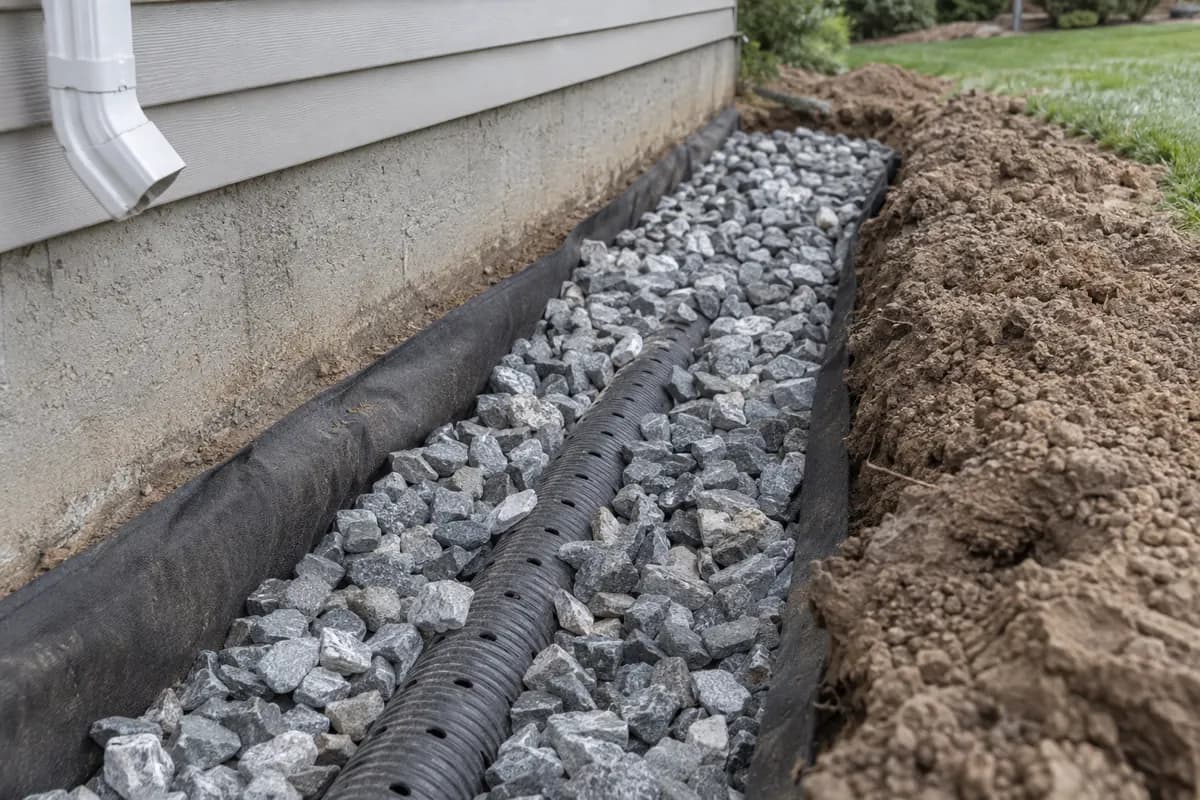
#4 Crushed Stone is big, gray, angular rock sized from 1-1/2 to 2-1/2 inches. It goes where loads are heavy and ground is soft: the bottom layer of a long lane, the pad at a building site entrance, the bed around a culvert. Gravel Valet delivers it by the ton so the foundation of your project starts strong.
- From
- $445 delivered
- Size
- 1-1/2 to 2-1/2 inches
- Weight
- 2,700 lb/yd³
- Sold by
- the ton
See local #4 Crushed Stone pricing for your ZIP
Checking your saved delivery area.
- US cities served
- 368
- From, 2 tons delivered
- $445
- Weight
- 2,700 lb/yd³
- Size
- 1-1/2 to 2-1/2 inches

About #4 Crushed Stone
Hold a piece of #4 Crushed Stone and it fills most of your palm. The grade runs from 1-1/2 to 2-1/2 inches, which puts it near the top of the size range most yards keep in stock. Each stone is broken rock with rough faces and blunt corners, and a load looks like a heap of fist-sized gray chunks. The shade of gray follows the bedrock the quarry mines.[1]
A cubic yard weighs about 2,700 lb, and Gravel Valet sells it by the ton. With pieces this large, the gaps between stones are wide. That makes the layer a fast path for water and a strong skeleton that spreads the weight of a truck over a broad patch of soil. Those gaps leave a rough top, so this rock is rarely the last layer anyone sees.[1]
#4 Crushed Stone is 1-1/2 to 2-1/2 inches, gray, about 2,700 lb per cubic yard, sold by the ton with a 2 ton minimum.
Specifications
| Material | #4 Crushed Stone |
|---|---|
| Category | crushed stone |
| Typical size | 1-1/2 to 2-1/2 inches |
| Color | Gray |
| Weight | 2,700 lb/yd³, about 1.35 tons per cubic yard |
| Sold by | the ton |
| Order minimum | 2 tons per delivery |
| Online order steps | half tons, up to 40 per order; more by quote |
Coverage: how much #4 Crushed Stone do you need?
Square feet one ton of #4 Crushed Stone covers at common spread depths. For exact tonnage, use the calculator.
- 120
- sq ft at 2" deep
- Top dressing, beds
- 80
- sq ft at 3" deep
- Paths, patios, drainage
- 60
- sq ft at 4" deep
- Driveways, base layers
Best uses for #4 Crushed Stone
Construction entrances are its signature job. Builders lay a thick pad of this rock where trucks leave a muddy site, and the big stones shake mud loose from the tires before they reach the street. The same pad keeps heavy equipment from sinking into wet ground on the way in.[1]
On farm roads, long rural drives and equipment yards, #4 Crushed Stone forms the lower layer that carries the weight. A smaller crushed grade then goes on top to give tires a smoother surface. Without that heavy bottom layer, soft soil tends to swallow finer stone within a season or two.[1]
Culvert crossings, ditch linings and the outlet of a drain pipe also suit it. Running water moves small stone easily, but rock this heavy stays put and slows the flow so the soil behind it does not wash out. Some owners use it to fill a soggy low spot before building on top, and others line the base of a retaining wall with it for drainage.[1]
Builders also set it behind riprap and along the toe of a slope, where it acts as a filter layer between soil and bigger boulders. On a homestead, a strip of #4 Crushed Stone at a field gate or in front of a barn door keeps the ground from turning into a mud hole where animals and machines cross every day.[1]
How to install #4 Crushed Stone
Clear vegetation and soft topsoil, then look at the subgrade. If a boot sinks in, lay a heavy woven geotextile first. The fabric keeps the big stones from punching down into the mud and keeps mud from rising into the gaps. Overlap the fabric seams generously.[1]
Big stone needs a thick layer to lock together, so thin coats are rare. Where it is used to stabilize a path or a small pad, a 3 inch layer takes about 1.25 tons per 100 square feet. Even a 2 inch skim, about 0.83 tons per 100 square feet, is mostly useful only to fill ruts in an existing base.[1]
For a driveway base or a construction entrance, plan on 4 inches at about 1.67 tons per 100 square feet, or 6 inches at about 2.50 tons per 100 square feet. Many site pads go thicker still. Spread the rock with a skid steer or tractor bucket, then run heavy equipment or a large roller over it until the stones stop shifting.[1]
Finish a drive with a top layer of a smaller grade worked into the surface. The small stone fills the upper gaps in the #4 Crushed Stone and gives a surface that a car, a bike or a stroller can cross without bouncing.[1]
Comparable materials
#57 Crushed Stone is the usual partner. It goes on top of this rock in a two-layer drive, or replaces it entirely on firm ground where a heavy base is not needed. #67 Stone fills the same top role with a slightly tighter finish. Neither one has the bulk to stand up to mud and heavy trucks on its own the way this grade can.[1]
3/4" Crushed Stone and 3/8" Crushed Stone are surface and drainage grades, far too small for a stabilization pad. #89 Crushed Stone belongs in pipe trenches and paver work. Pick #4 Crushed Stone for the hidden layer that carries weight, and a smaller grade for whatever people will drive or walk on.[1]
 From$4242 ton delivered
#57 Crushed Stone
Gravel and Crushed Stone- Size
- 3/4 to 1 inch
- Weight
- 2,700 lb/yd³
- Color
- Gray
 From$4372 ton delivered
#67 Stone
Gravel and Crushed Stone- Size
- 3/4 inch and under
- Weight
- 2,700 lb/yd³
- Color
- Gray
 From$4252 ton delivered
#89 Crushed Stone
Gravel and Crushed Stone- Size
- 3/8 inch
- Weight
- 2,700 lb/yd³
- Color
- Gray
 From$4272 ton delivered
3/4" Crushed Stone
Gravel and Crushed Stone- Size
- 3/4 inch
- Weight
- 2,700 lb/yd³
- Color
- Gray
 From$4272 ton delivered
3/8" Crushed Stone
Gravel and Crushed Stone- Size
- 3/8 inch
- Weight
- 2,700 lb/yd³
- Color
- Gray
 From$4242 ton delivered
1-1/2" Crushed Gravel
Gravel and Crushed Stone- Size
- 1-1/2 inch
- Weight
- 2,700 lb/yd³
- Color
- Gray to tan
Where we source #4 Crushed Stone
Quarries pull this grade from early in the crushing process. After blasting, a primary crusher breaks the rock into large pieces, and the first screens separate out the 1-1/2 to 2-1/2 inch range before the rest heads to smaller crushers. Less crushing means less dust, so most loads come out fairly clean even without washing.[1]
Gravel Valet sources it from quarries and yards in your region. Large rock is heavy to haul, so a nearby source is the sensible choice. The color is gray in most places, with tints of blue, brown or white depending on what the local ledge rock is.[1]
Why bulk delivery saves money
Big base rock does not come in small bags. A pad or a drive base can swallow many tons, and the only practical way to move that much is a dump truck. Ordering by the ton in bulk gets the full amount on the ground in one trip, ready for the loader.[1]
At about 2,700 lb per cubic yard, every partial load means paying for a truck that is not full. A single complete order makes the most of each trip. One complete delivery lets the crew spread and compact the whole base in one session, so the layer locks together evenly.[1]
Big base rock also saves money later. A drive with a thick, coarse base holds its shape for years, so you spend less on loads of top stone poured into the same ruts each spring. The bulk order at the start is what makes that long life possible.[1]
Ordering #4 Crushed Stone from Gravel Valet
Measure the footprint of the pad or base, choose a depth and let the calculator convert it to tons. Enter your ZIP in the order box to check that the address is in our area. Add the tons to the cart, pick a date and describe the drop spot.[1]
Big rock is hard to move by hand, so ask for the load to be dumped as close to the work as the truck can safely reach. If you have a tractor or skid steer, a spot at one end of the base works well. For a 6 inch entrance pad at about 2.50 tons per 100 square feet, the numbers climb fast, so double-check the measurements before you order.[1]
FAQ: #4 Crushed Stone
What is #4 Crushed Stone used for?
It is a heavy base rock. Builders use it for construction entrances, the bottom layer of driveways and farm roads, culvert crossings, ditch linings and wet spots that need to be firmed up. It carries weight and moves water well, but it is too coarse for a smooth top surface, so a smaller grade usually goes over it.
Can I drive directly on #4 Crushed Stone?
Trucks and tractors can, and on a work site that is the point. A family car will find it rough and loud, and loose large stones can kick up. For a home drive, cover it with a layer of #57 Crushed Stone or a similar smaller grade worked into the gaps.
How deep should a #4 Crushed Stone base be?
Deep enough for the stones to lock together and bridge soft soil. For most drive bases that means at least 4 inches, about 1.67 tons per 100 square feet, and 6 inches, about 2.50 tons per 100 square feet, on soft ground or under heavy trucks. Construction entrances are built thicker still.
Do I need fabric under #4 Crushed Stone?
On soft or wet soil, yes. Large stones push down into mud under heavy loads, and a woven geotextile stops that sinking. The fabric keeps clay from rising into the gaps, so the base keeps draining. On rocky, firm ground you can sometimes skip the fabric.
Is #4 Crushed Stone good for drainage?
Yes. The wide gaps between the large stones let water pass quickly, which is why it lines ditches, fills culvert beds and sits at drain outlets. Heavy pieces like these resist being carried off by moving water. For a pipe trench, a smaller, washed grade is easier to work around the pipe.
Order #4 Crushed Stone today
Enter your ZIP for the delivered price, or send the job and we quote it by hand.
By state
#4 Crushed Stone by state
- #4 Crushed Stone in Alaska
- #4 Crushed Stone in Alabama
- #4 Crushed Stone in Arkansas
- #4 Crushed Stone in Arizona
- #4 Crushed Stone in California
- #4 Crushed Stone in Colorado
- #4 Crushed Stone in Connecticut
- #4 Crushed Stone in District of Columbia
- #4 Crushed Stone in Florida
- #4 Crushed Stone in Georgia
- #4 Crushed Stone in Hawaii
- #4 Crushed Stone in Iowa
- #4 Crushed Stone in Idaho
- #4 Crushed Stone in Illinois
- #4 Crushed Stone in Indiana
- #4 Crushed Stone in Kansas
- #4 Crushed Stone in Kentucky
- #4 Crushed Stone in Louisiana
- #4 Crushed Stone in Massachusetts
- #4 Crushed Stone in Maryland
- #4 Crushed Stone in Michigan
- #4 Crushed Stone in Minnesota
- #4 Crushed Stone in Missouri
- #4 Crushed Stone in Mississippi
- #4 Crushed Stone in Montana
- #4 Crushed Stone in North Carolina
- #4 Crushed Stone in North Dakota
- #4 Crushed Stone in Nebraska
- #4 Crushed Stone in New Hampshire
- #4 Crushed Stone in New Jersey
- #4 Crushed Stone in New Mexico
- #4 Crushed Stone in Nevada
- #4 Crushed Stone in New York
- #4 Crushed Stone in Ohio
- #4 Crushed Stone in Oklahoma
- #4 Crushed Stone in Oregon
- #4 Crushed Stone in Pennsylvania
- #4 Crushed Stone in Rhode Island
- #4 Crushed Stone in South Carolina
- #4 Crushed Stone in South Dakota
- #4 Crushed Stone in Tennessee
- #4 Crushed Stone in Texas
- #4 Crushed Stone in Utah
- #4 Crushed Stone in Virginia
- #4 Crushed Stone in Washington
- #4 Crushed Stone in Wisconsin