
Driveway and Landscaping · Mixed tan and brown
Pea Gravel in Bulk for Patios, Paths and Play Areas
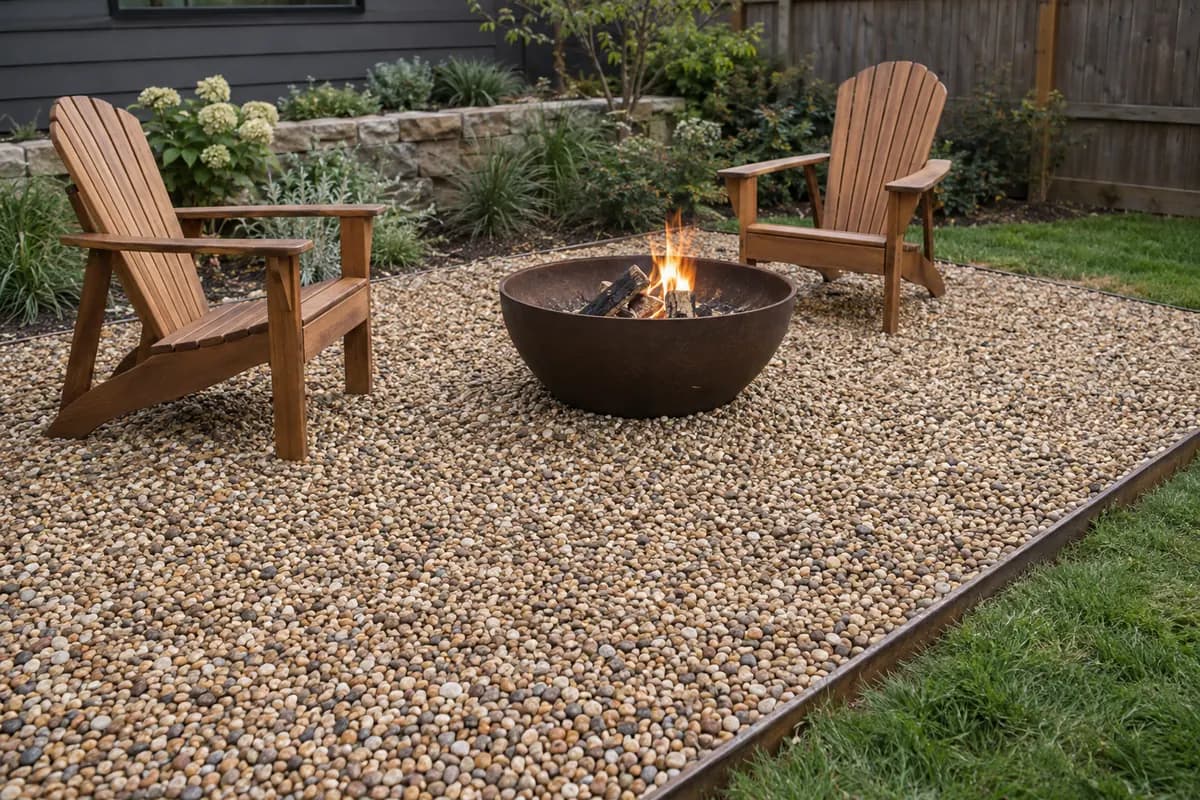
Pea Gravel is small, rounded stone about 3/8 inch across, in a warm mix of tan and brown. Water smoothed every pebble long ago, so it feels soft underfoot and pleasant to look at. Gravel Valet sells it by the ton and delivers it in bulk for patios, garden paths, play areas, dog runs and planting beds.
- From
- $416 delivered
- Size
- 3/8 inch
- Weight
- 2,600 lb/yd³
- Sold by
- the ton
See local Pea Gravel pricing for your ZIP
Checking your saved delivery area.
- US cities served
- 368
- From, 2 tons delivered
- $416
- Weight
- 2,600 lb/yd³
- Size
- 3/8 inch

About Pea Gravel
The name fits: each stone is close to the size of a garden pea, about 3/8 inch, and nearly round. Rivers and glacial meltwater tumbled these pebbles until the corners wore off, leaving a smooth, polished surface. A pile shows a mixed tan and brown palette, with the odd cream, rust or gray pebble scattered through it, so a bed has a natural, warm look.[1]
Gravel Valet sells Pea Gravel by the ton. One cubic yard weighs about 2,600 lb, a touch lighter than crushed rock of the same volume, because round pebbles leave more air between them. Those gaps let water drain away quickly. The round shape also means the pebbles shift and roll, which gives a soft, springy feel and is the main thing to plan for.[1]
Pea Gravel feels different from most stone products. Walking on it makes a soft crunch, and bare feet find it comfortable on a warm day. Raking it is easy, and a quick pass with a rake erases footprints and restores the surface after a party or a busy weekend.[1]
Pea Gravel is 3/8 inch, mixed tan and brown, about 2,600 lb per cubic yard, sold by the ton with a 2 ton minimum.
Specifications
| Material | Pea Gravel |
|---|---|
| Category | decorative |
| Typical size | 3/8 inch |
| Color | Mixed tan and brown |
| Weight | 2,600 lb/yd³, about 1.30 tons per cubic yard |
| Sold by | the ton |
| Order minimum | 2 tons per delivery |
| Online order steps | half tons, up to 40 per order; more by quote |
Coverage: how much Pea Gravel do you need?
Square feet one ton of Pea Gravel covers at common spread depths. For exact tonnage, use the calculator.
- 125
- sq ft at 2" deep
- Top dressing, beds
- 83
- sq ft at 3" deep
- Paths, patios, drainage
- 62
- sq ft at 4" deep
- Driveways, base layers
Best uses for Pea Gravel
Casual patios and seating areas are a classic use. A courtyard of tan pebbles with a couple of chairs and a fire bowl feels relaxed and drains fast after rain. Garden paths that wind between beds suit it as well, as long as they see foot traffic and not bikes or carts.[1]
Play areas under swings and climbing sets use Pea Gravel because the smooth pebbles have no sharp edges and give a little when a child lands. Dog runs are another fit: the stone drains, can be hosed down and stays cool compared with paving.[1]
In the garden, Pea Gravel makes a neat mulch around shrubs and perennials, a top layer in containers and a filler between stepping stones. Some people use it around downspouts and along a house wall to keep rain from splashing mud onto siding. Because it drains so freely, it can also fill a shallow French drain where a fine look matters.[1]
Pea Gravel also fills the space under a deck, the strip beside an air conditioning unit and the bed around a hot tub, where it drains splashes and keeps weeds down. Its warm colors soften hard edges next to concrete, brick and siding.[1]
- Best Aggregate for a Pool DeckMaterial guide and pricing
- Best Rock for a Fire PitMaterial guide and pricing
- Decorative GravelMaterial guide and pricing
- Patio GravelMaterial guide and pricing
- 3/8 Inch Pea GravelMaterial guide and pricing
- Planting Bed GravelMaterial guide and pricing
- Pool Deck GravelMaterial guide and pricing
- Weed Barrier GravelMaterial guide and pricing
How to install Pea Gravel
Edging comes first with this stone. Round pebbles migrate, so set a firm border of steel, stone, brick or timber that rises a little above the finished surface. Dig out the area, remove weeds and roots, and lay landscape fabric to stop the pebbles from sinking into the soil.[1]
For a decorative bed or a mulch layer around plants, 2 inches is plenty, at about 0.80 tons per 100 square feet. A garden path or a casual patio feels better at 3 inches, about 1.20 tons per 100 square feet, which covers the fabric fully.[1]
Play areas need a cushioning depth. A 4 inch layer takes about 1.60 tons per 100 square feet, and a 6 inch layer takes about 2.41 tons per 100 square feet. Deeper beds also stand up better to dogs digging and children kicking the pebbles around.[1]
For a firmer patio, some builders put a compacted layer of crushed stone underneath and only a thin skin of Pea Gravel on top. The crushed base holds its shape and the pebbles give the surface its look. Stabilizing grids made of plastic honeycomb panels do a similar job on paths.[1]
Once the stone is down, rake it level and walk over it to see where it shifts most. Add a bit more in the low spots. A light tamp helps the pebbles settle, though the surface will always stay a little loose.[1]
Comparable materials
River Rock shares the smooth, rounded shape but comes in larger stones. It suits borders, dry creek beds and spots where moving water would carry small pebbles away. Pea Gravel is the better pick where people walk, sit or play.[1]
Decomposed Granite packs into a firm, flat surface that wheelchairs, strollers and furniture legs handle with ease, which round pebbles never quite do. Walkway Gravel is an angular stone made to lock into a stable path. If a path must stay firm, choose one of those. If comfort and a soft, natural look matter more, Pea Gravel wins.[1]
 From$4582 ton delivered
River Rock
Driveway and Landscaping- Size
- 1 to 3 inches
- Weight
- 2,600 lb/yd³
- Color
- Mixed earth tones
 From$4702 ton delivered
Decomposed Granite
Driveway and Landscaping- Size
- 1/4 inch and fines
- Weight
- 2,500 lb/yd³
- Color
- Gold to tan
 From$4242 ton delivered
Walkway Gravel
Driveway and Landscaping- Size
- 3/8 inch
- Weight
- 2,600 lb/yd³
- Color
- Mixed
Where we source Pea Gravel
Pea Gravel is dug, not blasted. It comes from natural sand and gravel deposits left by old rivers and glaciers. Pits excavate the deposit, wash away clay and sand, then screen the pebbles to the 3/8 inch size. The washing is what makes the colors bright and the pebbles clean to handle.[1]
Gravel Valet sources from pits and landscape yards close to your address. Every deposit holds its own mix of rock, so the tan and brown blend shifts from region to region. Local stone means a shorter haul and a color that looks at home with the soil and stone already around you.[1]
Because the stones are natural pebbles and not crushed rock, each load is a sample of the deposit it came from. You may see quartz, granite, sandstone and other rock types side by side. That variety gives Pea Gravel its mixed tan and brown look, which no crushed product can match.[1]
Why bulk delivery saves money
Bags of Pea Gravel are handy for a planter or two. A patio or a play area takes many times that amount, and buying it in bags means repeated store runs and lots of lifting. One bulk delivery by the ton brings the whole job to your driveway in a single trip.[1]
At about 2,600 lb per cubic yard, Pea Gravel is heavy to carry. A truck moves many tons at once, so the trucking behind each ton is small. Ordering enough the first time keeps your project from stalling while you wait on more stone.[1]
Ordering Pea Gravel from Gravel Valet
Measure the area, pick a depth and use the area calculator to see the tons. Enter your ZIP in the order box to check delivery to your address, then add Pea Gravel to the cart and choose a delivery date.[1]
Think about the dump spot. A pile of rounded pebbles spreads wide when it lands, so a tarp on the driveway makes cleanup easy. For a play area at 6 inches, about 2.41 tons per 100 square feet, keep the pile close to the play set to cut down on wheelbarrow trips across the lawn.[1]
FAQ: Pea Gravel
Is Pea Gravel good for a patio?
For a relaxed, casual patio, yes. The smooth pebbles drain fast and feel soft underfoot. They do shift under chair legs and heels, so set firm edging and lay at least a few inches. For a firmer surface, put a compacted crushed stone base underneath and a thinner layer of Pea Gravel on top.
Is Pea Gravel safe for play areas?
It is a popular choice under swings and climbing sets. The pebbles are round, so there are no sharp edges, and a deep bed gives some cushion. Keep the layer deep, rake it back into place now and then, and watch small children, since pebbles this size can be put in mouths.
Can I drive on Pea Gravel?
It is a poor choice for a driveway. Round pebbles roll under tires, rut easily and spray out to the edges. For a drive, choose an angular crushed stone that locks together. Keep Pea Gravel for patios, paths and garden areas where people walk instead of drive.
How much Pea Gravel do I need?
Figure about 0.80 tons per 100 square feet at 2 inches, 1.20 tons at 3 inches, 1.60 tons at 4 inches and 2.41 tons at 6 inches. Measure length times width in feet, divide by 100 and multiply by the figure for your depth.
Does Pea Gravel keep weeds out?
On its own it slows weeds, but seeds can still sprout in the gaps. Lay landscape fabric before the stone goes down, keep the layer deep enough to cover it, and pull any weeds that root in blown-in debris on top. A leaf blower keeps the surface clean in fall.
Order Pea Gravel today
Enter your ZIP for the delivered price, or send the job and we quote it by hand.
By state
Pea Gravel by state
- Pea Gravel in Alaska
- Pea Gravel in Alabama
- Pea Gravel in Arkansas
- Pea Gravel in Arizona
- Pea Gravel in California
- Pea Gravel in Colorado
- Pea Gravel in Connecticut
- Pea Gravel in District of Columbia
- Pea Gravel in Florida
- Pea Gravel in Georgia
- Pea Gravel in Hawaii
- Pea Gravel in Iowa
- Pea Gravel in Idaho
- Pea Gravel in Illinois
- Pea Gravel in Indiana
- Pea Gravel in Kansas
- Pea Gravel in Kentucky
- Pea Gravel in Louisiana
- Pea Gravel in Massachusetts
- Pea Gravel in Maryland
- Pea Gravel in Michigan
- Pea Gravel in Minnesota
- Pea Gravel in Missouri
- Pea Gravel in Mississippi
- Pea Gravel in Montana
- Pea Gravel in North Carolina
- Pea Gravel in North Dakota
- Pea Gravel in Nebraska
- Pea Gravel in New Hampshire
- Pea Gravel in New Jersey
- Pea Gravel in New Mexico
- Pea Gravel in Nevada
- Pea Gravel in New York
- Pea Gravel in Ohio
- Pea Gravel in Oklahoma
- Pea Gravel in Oregon
- Pea Gravel in Pennsylvania
- Pea Gravel in Rhode Island
- Pea Gravel in South Carolina
- Pea Gravel in South Dakota
- Pea Gravel in Tennessee
- Pea Gravel in Texas
- Pea Gravel in Utah
- Pea Gravel in Virginia
- Pea Gravel in Washington
- Pea Gravel in Wisconsin