
Use case
Pool Deck Gravel: Material Guide
The ground around a pool takes splashes, wet feet, lounge chairs and hot sun all summer. Gravel handles that well when it is the right size and laid on a firm bed. It drains fast, stays cooler than dark paving and needs little care beyond a rake. This guide covers which stone to pick, how to build the area and how many tons to order.
Best materials for a pool deck
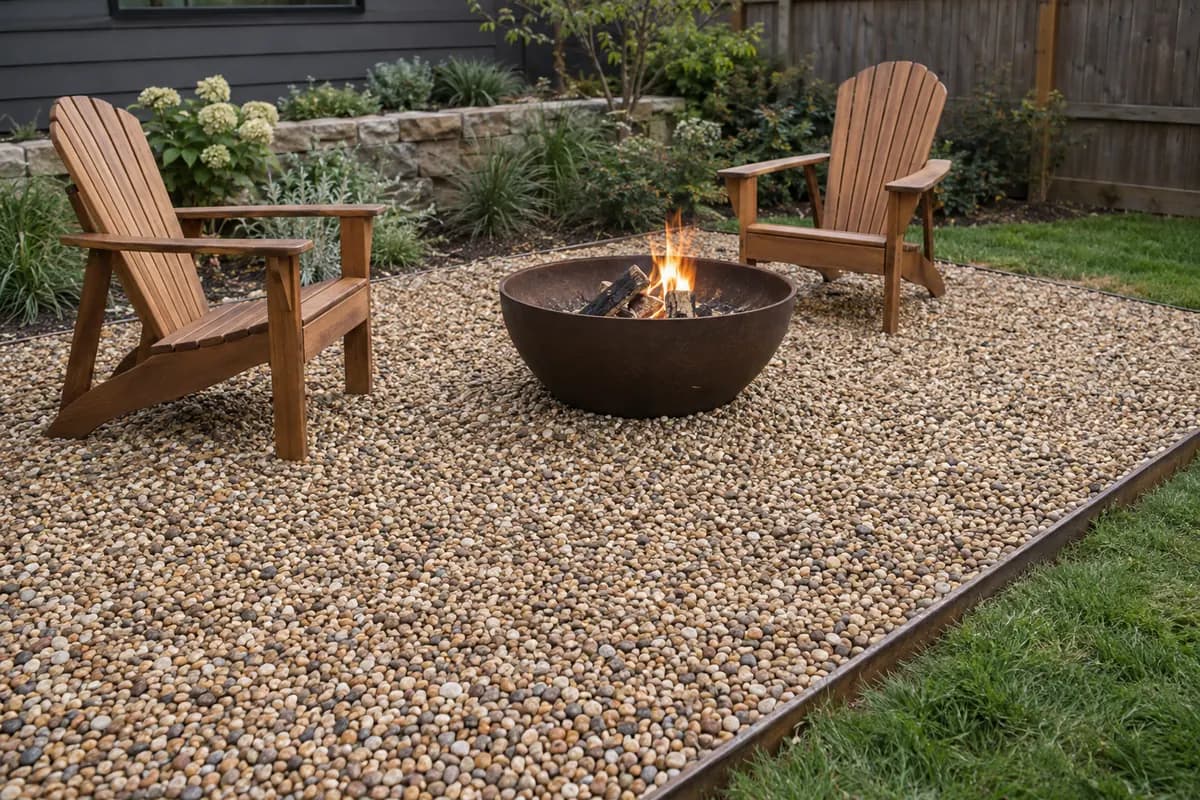
Pea Gravel is the stone we suggest first for the open ground around a pool. The pebbles are about 3/8 inch and rounded, with no sharp edges to catch a bare heel. Its mixed tan and brown color looks warm next to blue water and does not glare the way bright white stone can at midday.[1]
Decomposed Granite suits the paths and lounge pads that lead to the water. Its fine grit packs into a smooth, flat tread when it is wetted and tamped, so chair legs stay level and a wet foot does not sink. Keep it a step or two back from the coping, since loose grit tracked into the pool clouds the water and wears the filter.[1]
Walkway Gravel is a crushed stone of about the same size as pea pebbles. Its broken faces lock together and make a firmer surface for a busy route from the house to the pool gate. Those same sharp faces are less pleasant under bare feet, so many yards use it on the approach and keep pea pebbles near the water.[1]
River Rock belongs in the planting strips and drainage bands around the deck, not under feet. Larger, smooth stones frame the pool, catch splash water and hide the pipes and pump housing. Children love to toss them, so keep them well back from the edge of the water.[1]
 From$4162 ton delivered
Pea Gravel
Driveway and Landscaping- Size
- 3/8 inch
- Weight
- 2,600 lb/yd³
- Color
- Mixed tan and brown
 From$4582 ton delivered
River Rock
Driveway and Landscaping- Size
- 1 to 3 inches
- Weight
- 2,600 lb/yd³
- Color
- Mixed earth tones
 From$4702 ton delivered
Decomposed Granite
Driveway and Landscaping- Size
- 1/4 inch and fines
- Weight
- 2,500 lb/yd³
- Color
- Gold to tan
 From$4242 ton delivered
Walkway Gravel
Driveway and Landscaping- Size
- 3/8 inch
- Weight
- 2,600 lb/yd³
- Color
- Mixed
What a pool deck needs in a material
Comfort under bare feet comes first. A round stone near 3/8 inch spreads weight across many smooth points, so walking on it feels like a coarse beach. Crushed stone of the same size feels sharper, and large rock is no surface for walking at all.[1]
The area has to drain at once. Pool water, rain and runoff from wet bodies all land on the ground around the pool. Clean pebbles with open spaces between them let that water sink straight down, so puddles do not form and algae has no film of water to grow in.[1]
The surface should stay bearable in strong sun. A light, mixed tan and brown stone reflects much of the heat that dark pavers and black rock soak up. Gravel also has air between the stones, so the top warms but does not hold heat the way a solid slab does.[1]
The stone has to stay where it is put. Pea Gravel weighs about 2,600 lb per cubic yard, heavy enough that a splash from a cannonball or a gust of wind does not throw it around. Light materials such as bark and rubber chips float, and every storm washes some of them into the water.[1]
It must be kind to the pool itself. Fine dust and small sand grains can blow or wash into the water and work their way into the filter. A washed 3/8 inch pebble carries little dust, and any piece that falls in sinks to the floor where the vacuum picks it up.[1]
How to install pool deck gravel
Mark the area and dig out sod and topsoil to firm ground. Grade the bottom so it falls away from the pool, never toward it. Water that runs back to the coping can undermine the pool shell and carries dirt into the water.[1]
Set a solid border along every edge. A row of pavers, a concrete curb or a steel edge staked into the ground holds the stone in place. Along the pool side, a hard strip of pavers or concrete between the coping and the gravel is the best defense against stone landing in the water.[1]
Lay landscape fabric over the dug area to keep the soil below from mixing into the stone. On soft or clay ground, put down a thin layer of compacted crushed base under the fabric so chair legs and foot traffic do not push ruts into the surface.[1]
Spread the Pea Gravel with a rake and walk it in. Hose it down well before the first swim to wash away dust, and run the pool filter afterward if any fines drift in. The washing also brings out the full tan and brown color.[1]
How much pool deck gravel do you need
A 2 inch layer of Pea Gravel feels firm underfoot and is enough over a well compacted base. It takes about 0.80 tons for every 100 square feet. Thin layers stay steadier for chairs and tables.[1]
A 3 inch layer gives a softer, beach-like feel and hides fabric better. At that depth, 100 square feet takes about 1.20 tons. Lounge chair legs sink a little more, so a few flat stepping stones under the chairs help.[1]
Thicker layers make walking harder. At 4 inches, 100 square feet takes about 1.60 tons, and feet start to sink with each step. A 6 inch fill, about 2.41 tons per 100 square feet, belongs only in a drainage trench beside the deck, not on the walking surface.[1]
Measure the area around the pool as a large rectangle and subtract the pool itself, along with any paved strips and planting beds. Divide what remains by 100 and multiply by the tons for your depth. Pea Gravel is sold by the ton, so round the result up to keep a small pile on hand for raking into worn spots.[1]
| Project size | 3 inch depth | 4 inch depth |
|---|---|---|
| 100 sq ft | 0.9 cu yd / 1.2 tons | 1.2 cu yd / 1.6 tons |
| 300 sq ft | 2.8 cu yd / 3.6 tons | 3.7 cu yd / 4.8 tons |
| 600 sq ft | 5.6 cu yd / 7.2 tons | 7.4 cu yd / 9.6 tons |
What pool deck gravel costs
Pea Gravel is sold by the ton and comes by dump truck. The delivered total depends on how many tons the area takes, the distance from the yard that supplies it and how close the truck can get to the backyard.[1]
Access matters more for a pool than for most jobs. Fences, gates and the pool itself keep a truck in the driveway, so the stone has to be moved by wheelbarrow. Budget time for that, or plan a drop spot near the side gate.[1]
Base work and depth shape the order. A good compacted base lets a 2 inch layer do the job, while a soft, poorly prepared bed needs deeper stone to feel firm and still moves around.[1]
Gravel asks for little after it goes in. There are no joints to reseal, no cracks to patch and no slab to replace. A rake keeps it level, and a light top up after a few summers covers what is lost to shoes and the pool vacuum.[1]
Type your ZIP into the box on the site to see the delivered figure, then enter the area in the calculator to see the tonnage.[1]
Delivered, 2 tons: from $416 to $1,044 depending on the city (366 cities priced). Enter your ZIP for the exact figure.
Pool deck mistakes to avoid
Running loose stone right up to the coping. Swimmers carry pebbles in on their feet and splashes knock stones over the edge. A strip of pavers or concrete between the water and the gravel stops most of this.[1]
Grading toward the pool. Water that drains to the edge carries dirt and stone into the water and can wash out soil under the deck. The ground should fall away from the pool on every side.[1]
Laying unwashed stone. Dust from crushed or unwashed rock clouds the water and clogs the filter. Rinse the stone well after spreading and before anyone swims.[1]
Choosing sharp stone where people walk barefoot. Angular gravel is fine on a path to the gate but hurts on the walk from the lounger to the ladder. Use round pebbles in the barefoot zone.[1]
Picking a dark stone for a sunny deck. Black and deep gray rock heat up fast and become hard to stand on in midsummer. A lighter, mixed color stays more comfortable.[1]
Coverage
Browse more
FAQ for pool deck gravel
Is pea gravel safe around a pool?
Pea Gravel is a common choice around pools because the 3/8 inch pebbles are smooth and round, so they are comfortable under bare feet and do not cut. The main care point is keeping stones out of the water. A paved strip along the coping and a border that stands above the gravel solve most of that.
Will gravel get into the pool filter?
Whole pebbles sink to the floor of the pool and the vacuum or a net picks them up, so they rarely reach the filter. Dust is the bigger risk. Rinse the stone thoroughly after spreading, keep a paved band beside the coping and run the filter longer for a day after the work is done.
Does gravel around a pool get hot?
A light, mixed tan and brown stone stays cooler than dark pavers or black rock, and the air between the pebbles keeps it from storing heat like a slab. On the hottest afternoons it still warms up, so sandals or a few flat stepping stones near the loungers help.
Can I put lounge chairs on gravel?
Yes. Keep the layer thin, about 2 inches, over a compacted base so chair legs stay level. Wide chair feet, or a large flat paver under each chair, stop the legs from digging in when someone sits down.
How do I keep weeds out of pool deck gravel?
Lay landscape fabric under the stone and keep the border tight so soil from nearby beds stays out. Leaves and grass clippings that break down on the surface give weeds a place to start, so blow or rake them off every week or two in leaf season. Pull any weeds while they are small.