
Category · 4 materials
Mulch and Wood
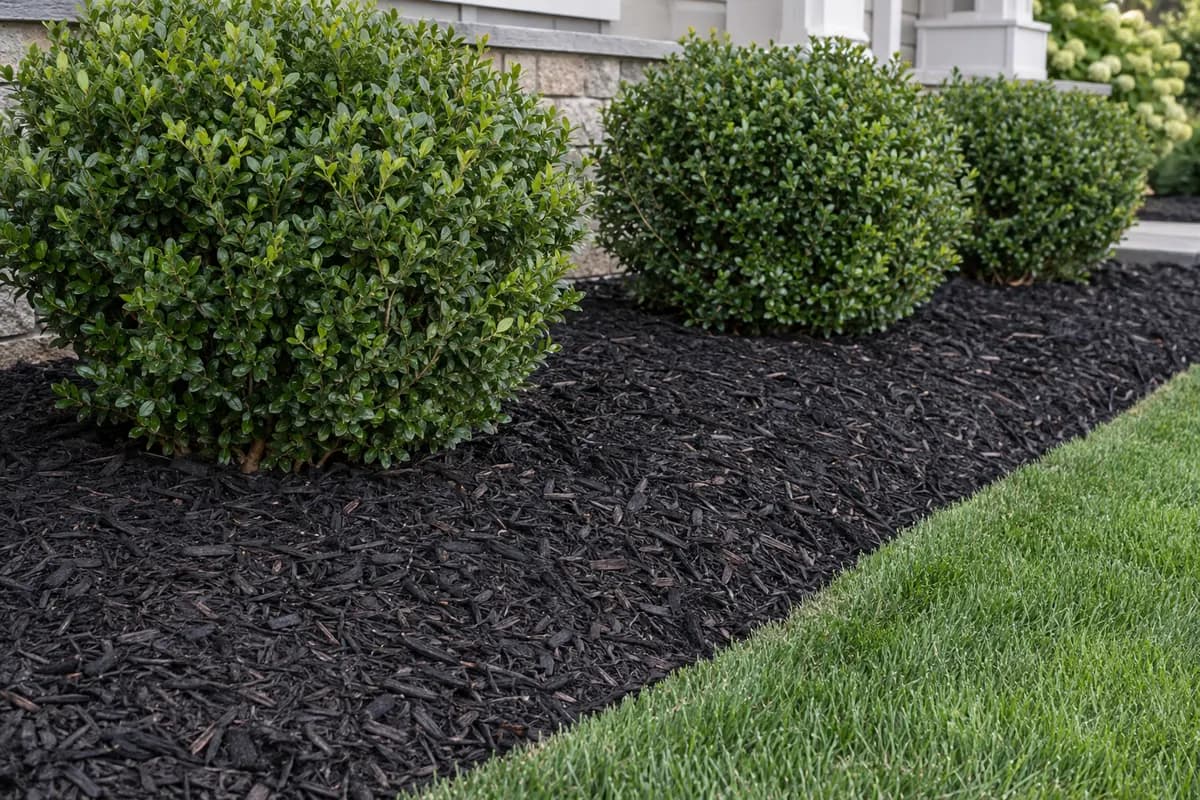
Mulch is the finishing layer of a planting bed. It holds moisture in the soil, keeps weeds down and gives a yard a clean, cared-for edge. This group holds three double shredded mulches in black, brown and red, plus natural Wood Chips for paths and wild corners. Gravel Valet sells each one by the cubic yard in bulk loads.
 From$4672 yd delivered
Black Shredded Mulch
Mulch and Wood- Size
- Double shredded
- Weight
- 800 lb/yd³
- Color
- Black
 From$4642 yd delivered
Brown Shredded Mulch
Mulch and Wood- Size
- Double shredded
- Weight
- 800 lb/yd³
- Color
- Brown
 From$4702 yd delivered
Red Mulch
Mulch and Wood- Size
- Double shredded
- Weight
- 800 lb/yd³
- Color
- Red
 From$5722 yd delivered
Wood Chips
Mulch and Wood- Size
- 1 to 3 inches
- Weight
- 700 lb/yd³
- Color
- Natural
What this category covers
Three of the four materials share one make. Black Shredded Mulch, Brown Shredded Mulch and Red Mulch are double shredded, which means the wood runs through the grinder twice. The second pass leaves fine, stringy pieces that knit into a mat once they settle. That mat holds on a gentle slope, stays put in wind and covers soil evenly. The three differ only in color: black, brown and red, so the choice among them comes down to the look of the house and the plants around it.[1]
Wood Chips are the coarse member of the group. The pieces run 1 to 3 inches, in a natural wood color, and they stay loose instead of matting. A cubic yard of Wood Chips weighs 700 lb, a little less than the 800 lb of the shredded mulches, since the larger pieces leave more air between them. That open texture lets water and air through fast and makes the chips slow to break down.[1]
The jobs here are surface jobs on soil: covering flower and shrub beds, ringing trees, lining a path through a garden, filling the floor of a natural play space, keeping weeds off a fence line. Mulch is not soil, so do not use it to fill a bed or raise grade. It is not a stone either, and it will not carry a car or hold a slope against running water.[1]
When to use which mulch material
For flower beds at the front of a house, the color of the shredded mulch is the main call. Black Shredded Mulch gives the sharpest contrast with green leaves and bright flowers, and it suits modern homes and dark trim. Brown Shredded Mulch looks the most like bare forest floor, so it blends into any style and shows wear the least as it ages. Red Mulch makes a bold border and pairs well with brick, though some buyers find it loud next to red or orange blooms.[1]
For slopes and windy spots, pick any of the double shredded mulches over Wood Chips. The fine, stringy texture of Black Shredded Mulch, Brown Shredded Mulch and Red Mulch locks into a mat that resists sliding and blowing, while loose chips can drift downhill after a hard rain.[1]
For paths, play spaces and wide natural areas, Wood Chips win. The 1 to 3 inch pieces make a springy, well drained tread that does not pack into mud, and their natural color looks at home under trees and along a woodland edge. Chips also break down more slowly than shredded mulch, so a thick path layer lasts longer between top-ups. They look rougher than a dyed mulch, which makes them less suited to a formal bed by the front door.[1]
For tree rings, any of the four works. A shredded mulch gives a neat, finished circle on a lawn, and Wood Chips suit a large ring under a mature tree where a natural look fits better. Pick the one that matches the beds nearby, so the yard reads as one design.[1]
Mulch math for beds and tree rings
Mulch is ordered by the cubic yard, and each of the four materials in this group shares one set of coverage figures. For 100 square feet, you need 0.62 cubic yards at 2 inches deep, 0.93 cubic yards at 3 inches, 1.23 cubic yards at 4 inches and 1.85 cubic yards at 6 inches. For each further hundred square feet, add the same amount again.[1]
Beds take 2 to 3 inches. A fresh bed of Brown Shredded Mulch at 3 inches needs 0.93 cubic yards for 100 square feet. A bed that already has an old layer needs only a top-up, so the 2 inch row, 0.62 cubic yards, is the usual refresh. Measure each bed on its own, length times width, and add the totals up before you order.[1]
Paths and play spaces of Wood Chips run deeper, since feet push the chips aside. At 4 inches, 100 square feet takes 1.23 cubic yards, and at 6 inches it takes 1.85 cubic yards. A deep layer stays springy and keeps weeds from finding light.[1]
A tree ring is a circle, so the easy way to measure it is as a square as wide as the ring. That square is a little larger than the circle, and the extra makes up for mulch lost to settling and spillover. Measure across the ring in feet, multiply that width by itself and read the row for your depth. A ring of Red Mulch at 3 inches takes 0.93 cubic yards for each 100 square feet of that square.[1]
Pricing and tonnage
Each material in this group is sold by the yard, meaning the cubic yard, not by the ton. Mulch is light and springy, and its weight shifts with every rain, so volume is the fair and steady measure. The coverage figures above come in cubic yards for the same reason, so the number you work out is the number you order.[1]
Weight still plays a part in delivery. A cubic yard of shredded mulch weighs 800 lb and a cubic yard of Wood Chips weighs 700 lb, far less than stone or soil. A truck fills its bed with mulch long before it gets near a weight limit, so the size of the truck bed decides how many cubic yards ride in one trip. Wet mulch is heavier than dry mulch of the same volume, though the volume you receive stays the same.[1]
Three things move the delivered price. Distance comes first, since each load is a round trip from the yard to your site. Load size comes next, because a full truck spreads that trip across more cubic yards. The material is the third. Black Shredded Mulch, Brown Shredded Mulch and Red Mulch go through a second shred and a color treatment, while Wood Chips are a natural product with less handling. The table below this section shows what each one runs in your area.[1]
| Material | Sold by | Delivered from (2 units) | Cities priced |
|---|---|---|---|
| Black Shredded Mulch | the yard | $467 to $1,360 | 366 |
| Brown Shredded Mulch | the yard | $464 to $1,363 | 366 |
| Red Mulch | the yard | $470 to $1,691 | 366 |
| Wood Chips | the yard | $572 to $1,376 | 366 |
Installation patterns that fail
Piling mulch against a tree trunk is the most common mistake. A cone of mulch packed against the bark holds moisture there, invites rot and pests, and can girdle the tree over a few seasons. Spread the ring wide and flat, and pull the mulch back a hand's width from the trunk so the root flare shows.[1]
Too deep and too thin both cause trouble. A layer much deeper than the 3 inch row starves roots of air and keeps the soil soggy, and too thin a layer lets light through to weed seeds. Keep beds at 2 to 3 inches and rake out old layers before they build up year after year. Paths of Wood Chips can go deeper, since nothing grows under them.[1]
Skipping the prep wastes the mulch. Pull the weeds and edge the bed before you spread, or the weeds push straight through and the mulch spills onto the lawn. A cut edge, a few inches deep, holds the layer in place. Keep mulch a short gap away from wood siding and door frames, so the house wall stays dry.[1]
Mixing fresh mulch into the soil is the last trap. Wood Chips and shredded mulch belong on top of the soil. Turned into a bed, raw wood pulls nitrogen from the soil as it breaks down, and plants turn pale. Leave the layer on the surface and let it feed the soil slowly from above.[1]
Frequently Asked Questions
How much mulch do I need?
Measure each bed in square feet and pick a depth. For each 100 square feet, the mulches in this group take 0.62 cubic yards at 2 inches, 0.93 cubic yards at 3 inches and 1.23 cubic yards at 4 inches. A bigger bed repeats that amount for every added hundred square feet. Most beds look full at 2 to 3 inches.
Which mulch color should I choose?
Choose by the house and the plants. Black Shredded Mulch gives strong contrast with green leaves and bright flowers. Brown Shredded Mulch looks the most natural and suits any style. Red Mulch makes a bold border and pairs well with brick. Each is double shredded, so they spread, settle and hold in the same way.
Are Wood Chips good for a garden path?
Yes. Wood Chips are 1 to 3 inches across, so they make a loose, springy tread that drains fast and does not pack into mud. Lay them deeper than a bed layer, since feet push them aside. At 4 inches, 100 square feet takes 1.23 cubic yards. Edge the path so the chips stay in place.
How deep should mulch be around a tree?
Keep it at 2 to 3 inches, spread wide and flat. Pull the mulch back from the trunk so the root flare shows, because mulch piled against the bark holds moisture and can harm the tree. A wide, thin ring helps the roots more than a tall mound. At 3 inches, 100 square feet takes 0.93 cubic yards.
Does colored mulch fade?
Black Shredded Mulch, Brown Shredded Mulch and Red Mulch keep their color for a good while, though sun and rain soften it over time. A thin top-up of the same color brings the bed back. Rake the old layer before you add new mulch, so the bed does not grow too deep year after year.
Where we deliver
Mulch and Wood delivery coverage across the US
ARArkansas2 cities
AZArizona15 cities
CACalifornia70 cities
- American Canyon
- Anaheim
- Antioch
- Bakersfield
- Berkeley
- Burbank
- Carlsbad
- Chico
- Chula Vista
- Clovis
- Concord
- Corona
- Costa Mesa
- Daly City
- Downey
- El Cajon
- El Monte
- Elk Grove
- Fairfield
- Fremont
- Fresno
- Fullerton
- Garden Grove
- Glendale
- Hayward
- Hollister
- Huntington Beach
- Imperial Beach
- Inglewood
- Irvine
- Lancaster
- Lemoore
- Long Beach
- Los Angeles
- Modesto
- Oakland
- Oceanside
- Ontario
- Orange
- Oxnard
- Palm Desert
- Palmdale
- Pasadena
- Pomona
- Richmond
- Riverside
- Roseville
- Sacramento
- Salinas
- San Diego
- San Francisco
- San Jose
- San Mateo
- Santa Ana
- Santa Clara
- Santa Maria
- Santa Rosa
- Simi Valley
- Stockton
- Sunnyvale
- Temecula
- Thousand Oaks
- Torrance
- Tracy
- Turlock
- Vacaville
- Vallejo
- Ventura
- Visalia
- West Covina
COColorado12 cities
DCDistrict of Columbia1 city
FLFlorida32 cities
- Boca Raton
- Brandon
- Cape Coral
- Clearwater
- Coral Springs
- Davie
- Deltona
- Fort Lauderdale
- Gainesville
- Hialeah
- Hollywood
- Jacksonville
- Kissimmee
- Lakeland
- Lehigh Acres
- Miami
- Miami Gardens
- Miramar
- Orlando
- Palm Bay
- Palm Coast
- Pembroke Pines
- Pompano Beach
- Port Saint Lucie
- Saint Petersburg
- Sanford
- Sarasota
- Spring Hill
- Sunrise
- Tallahassee
- Tampa
- West Palm Beach
GAGeorgia14 cities
IAIowa3 cities
ILIllinois4 cities
MNMinnesota2 cities
MSMississippi3 cities
NCNorth Carolina19 cities
NDNorth Dakota1 city
NHNew Hampshire1 city
RIRhode Island1 city
SCSouth Carolina8 cities
SDSouth Dakota1 city
TXTexas42 cities
- Abilene
- Allen
- Amarillo
- Anna
- Arlington
- Austin
- Beaumont
- Brownsville
- Carrollton
- College Station
- Corpus Christi
- Dallas
- Del Rio
- Denton
- Edinburg
- El Paso
- Fort Worth
- Frisco
- Garland
- Georgetown
- Grand Prairie
- Houston
- Irving
- Killeen
- Laredo
- Lewisville
- Lubbock
- McAllen
- McKinney
- Mesquite
- Midland
- Odessa
- Pasadena
- Pearland
- Plano
- Richardson
- Round Rock
- San Angelo
- San Antonio
- Tyler
- Waco
- Wichita Falls