
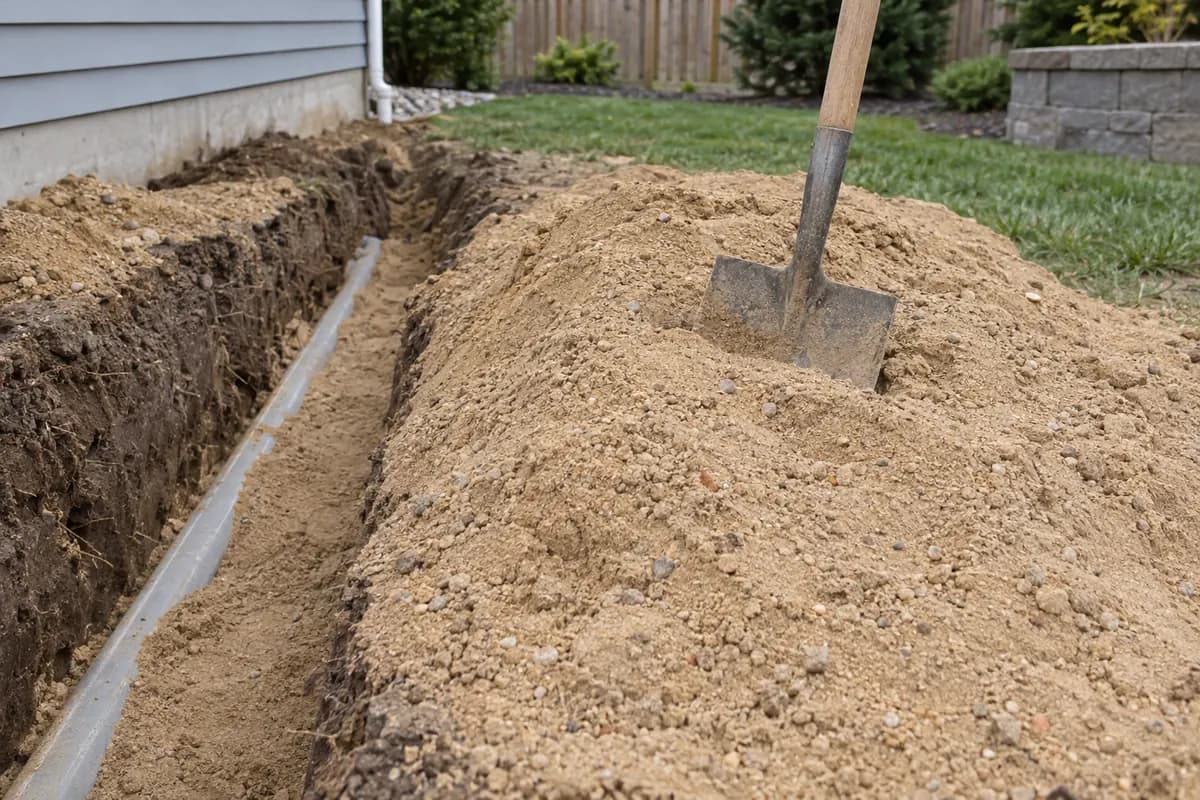
Sand · Tan
Fill Sand Delivered by the Ton
Fill Sand is plain, unscreened sand sold to take up space. It fills holes, raises low ground, backfills trenches and levels a site before a slab or a shed goes in. It packs down well with water and a compactor. Gravel Valet brings it by the ton in bulk loads.
- From
- $416 delivered
- Size
- Unscreened
- Weight
- 2,700 lb/yd³
- Sold by
- the ton
See local Fill Sand pricing for your ZIP
Checking your saved delivery area.
- US cities served
- 368
- From, 2 tons delivered
- $416
- Weight
- 2,700 lb/yd³
- Size
- Unscreened

About Fill Sand
Fill Sand is sand as it comes out of the ground, with little processing in between. The product is Unscreened, so a load holds a mix of grain sizes, some silt and clay, and now and then a small pebble or root. It is not washed. That rough makeup is fine for a material that will be buried, and it is the reason fill sand compacts so well: the fine bits slip into the gaps between the bigger grains.[1]
Most loads look Tan, though the shade can lean toward brown or reddish where the pit has more iron or clay. A cubic yard of it weighs about 2,700 lb. It is sold by the ton. Damp fill sand holds a shape when squeezed, while dry fill sand pours and spreads easily with a rake or a skid steer.[1]
Fill Sand is Unscreened, tan, about 2,700 lb per cubic yard, sold by the ton with a 2 ton minimum.
Specifications
| Material | Fill Sand |
|---|---|
| Category | sand |
| Typical size | Unscreened |
| Color | Tan |
| Weight | 2,700 lb/yd³, about 1.35 tons per cubic yard |
| Sold by | the ton |
| Order minimum | 2 tons per delivery |
| Online order steps | half tons, up to 40 per order; more by quote |
Coverage: how much Fill Sand do you need?
Square feet one ton of Fill Sand covers at common spread depths. For exact tonnage, use the calculator.
- 120
- sq ft at 2" deep
- Top dressing, beds
- 80
- sq ft at 3" deep
- Paths, patios, drainage
- 60
- sq ft at 4" deep
- Driveways, base layers
Best uses for Fill Sand
Filling and grading are the main jobs. Old pool holes, removed tree stumps, sunken spots in a yard and the low corner of a lot all take fill sand well. Builders use it to bring a site up to grade before pouring a slab or setting a shed, and to create a level pad where the ground slopes.[1]
Backfill is the other big use. Sand flows around pipes, conduit and tanks better than dug clay, so it leaves fewer voids that could settle later. Crews put it around foundations, behind low walls, in utility trenches and along the sides of septic and drain lines. Because sand drains better than most native clay, it also helps keep water from sitting against a buried pipe.[1]
Some jobs call for a cleaner product. For mortar, concrete, paver beds or a sandbox, the silt and stray debris in Unscreened sand cause trouble, so pick a washed grade. Fill sand also does not hold nutrients, so finish any area that will grow grass with a layer of Topsoil on top.[1]
Low areas that collect water after storms are another common target. Raising a soggy patch with sand, then topping it with soil, lifts the surface above the wet zone and lets rain soak down instead of standing. On a slope, sand can wash in heavy rain until grass or a cover holds it, so plan for that before the next storm.[1]
How to install Fill Sand
Clear out roots, trash and soft muck from the hole or the area to be raised. Water and organic matter left at the bottom can rot or squish later and cause the surface to sink. If the hole is deep, plan to fill it in stages instead of dumping it all at once.[1]
Spread the sand in thin lifts, soak each lift with a hose until it is damp through, and run a plate compactor or a hand tamper over it before the next goes on. Sand settles hard when wet and tamped. A 2 inch lift takes about 0.83 tons per 100 square feet, and a 3 inch lift about 1.25 tons per 100 square feet, which keeps each pass thin enough to pack well.[1]
For a level pad under a slab or a shed, build the sand up to the full height, then compact and check it with a string line or a laser level. A 4 inch pad needs about 1.67 tons per 100 square feet, and a 6 inch pad needs about 2.50 tons per 100 square feet. For a lawn on top, leave room for a few inches of Topsoil so the grass has something to root in.[1]
Comparable materials
Fill Dirt is the main alternative. It is native soil with more clay and less sand, so it holds its shape on slopes and berms but drains slowly and can shrink and swell. Fill Sand drains faster and packs more evenly, which suits backfill around pipes and pads under slabs. On a big low area where drainage does not matter, Fill Dirt does the job.[1]
Concrete Sand and Mason Sand are washed and screened, so they take more work at the yard and suit finer jobs: concrete, mortar and paver bedding. Playground Sand is cleaner still. Keep those for jobs where the grain shows or touches skin, and use Fill Sand anywhere the sand will be buried and only needs to fill and compact.[1]
Crushed stone is the step up when a fill must carry real weight, such as under a driveway. Road Base or Crushed Concrete compacts into a much stiffer layer than any sand. Many builders use Fill Sand for the bulk of a deep hole and a crushed stone base for the top layer that takes the load.[1]
 From$4182 ton delivered
Mason Sand
Sand- Size
- Fine
- Weight
- 2,700 lb/yd³
- Color
- Tan
 From$4152 ton delivered
Concrete Sand
Sand- Size
- Coarse
- Weight
- 2,700 lb/yd³
- Color
- Tan to gray
 From$4152 ton delivered
Playground Sand
Sand- Size
- Fine, washed
- Weight
- 2,700 lb/yd³
- Color
- Light tan
Where we source Fill Sand
Fill sand comes from sand pits, gravel pits and sometimes from construction sites that dig into sandy ground. At a pit it is the raw sand that has not gone through the wash plant. Some yards also sell the leftover sand from washing other products as fill. Either way, it gets loaded straight from the stockpile.[1]
Gravel Valet buys it from pits and yards near each delivery address. Since it is not processed, its look follows the local ground. One area's Tan fill sand may be pale and clean, while another holds more clay and runs darker. If a project needs a cleaner grade, say so when you order.[1]
Why bulk delivery saves money
Filling a hole or raising a yard takes tons, not bags. Fill sand is rarely sold in small amounts at all, and hauling a few yards in a pickup means many trips, a sore back and wear on the truck. A dump truck drops the full order at once, right next to the hole.[1]
Because it skips washing and screening, fill sand is one of the plainest materials a pit sells. Ordering the whole job in one load also avoids paying for a second trip when the first pile runs out. At about 2,700 lb per cubic yard, letting a truck move it is far easier than moving it yourself.[1]
Ordering Fill Sand from Gravel Valet
Measure the area and the average depth you need to fill. For a hole, estimate its width, length and depth. The calculator turns that into tons. Because wet, compacted sand settles, order a little more than the raw number. Enter your ZIP to see the delivered total and place your order by the ton.[1]
Choose a drop spot as close to the fill area as a truck can safely reach, on firm ground and clear of septic tanks, buried lines and overhead wires. For a big hole, the truck may be able to dump right at its edge, which saves hours of wheelbarrow work. Add notes about gates and soft ground when you order, and have a hose ready to wet each Unscreened lift as it goes in.[1]
FAQ: Fill Sand
What is Fill Sand used for
Fill Sand fills holes, raises low ground, levels a pad under a slab or shed, and backfills trenches and foundations. It is unscreened and unwashed, so it is meant to be buried. For mortar, concrete, paver beds or a sandbox, use a washed sand such as Mason Sand, Concrete Sand or Playground Sand.
Is Fill Sand better than Fill Dirt
It depends on the job. Fill Sand drains faster and compacts more evenly, so it suits backfill around pipes and pads under concrete. Fill Dirt holds its shape better on slopes and berms and is fine for a large low area. Neither grows grass well on its own, so top either with Topsoil.
How do I compact Fill Sand
Spread it in thin lifts, soak each lift with water until it is damp through, and run a plate compactor or a hand tamper over it. Wet sand packs much tighter than dry sand. Repeat until the area reaches the height you need, then check it with a level or a string line.
Can grass grow on Fill Sand
Not well. Sand holds little water or food for roots. After filling and compacting, spread a few inches of Topsoil on top, then seed or lay sod. The sand below helps drainage, and the topsoil gives the grass what it needs.
How much Fill Sand do I need
Multiply the area in square feet by the depth, then use the calculator to convert to tons. As a guide, 2 inches deep takes about 0.83 tons per 100 square feet, 3 inches about 1.25 tons, 4 inches about 1.67 tons and 6 inches about 2.50 tons. Add a margin for settling.
Will Fill Sand have rocks or debris in it
It can. Unscreened sand may hold small pebbles, bits of root or clay lumps. That is normal for fill and does no harm once buried. If a job needs a cleaner material, ask about a washed sand grade when ordering.
Order Fill Sand today
Enter your ZIP for the delivered price, or send the job and we quote it by hand.
By state
Fill Sand by state
- Fill Sand in Alaska
- Fill Sand in Alabama
- Fill Sand in Arkansas
- Fill Sand in Arizona
- Fill Sand in California
- Fill Sand in Colorado
- Fill Sand in Connecticut
- Fill Sand in District of Columbia
- Fill Sand in Florida
- Fill Sand in Georgia
- Fill Sand in Hawaii
- Fill Sand in Iowa
- Fill Sand in Idaho
- Fill Sand in Illinois
- Fill Sand in Indiana
- Fill Sand in Kansas
- Fill Sand in Kentucky
- Fill Sand in Louisiana
- Fill Sand in Massachusetts
- Fill Sand in Maryland
- Fill Sand in Michigan
- Fill Sand in Minnesota
- Fill Sand in Missouri
- Fill Sand in Mississippi
- Fill Sand in Montana
- Fill Sand in North Carolina
- Fill Sand in North Dakota
- Fill Sand in Nebraska
- Fill Sand in New Hampshire
- Fill Sand in New Jersey
- Fill Sand in New Mexico
- Fill Sand in Nevada
- Fill Sand in New York
- Fill Sand in Ohio
- Fill Sand in Oklahoma
- Fill Sand in Oregon
- Fill Sand in Pennsylvania
- Fill Sand in Rhode Island
- Fill Sand in South Carolina
- Fill Sand in South Dakota
- Fill Sand in Tennessee
- Fill Sand in Texas
- Fill Sand in Utah
- Fill Sand in Virginia
- Fill Sand in Washington
- Fill Sand in Wisconsin