
Soil and Fill · Dark brown
Screened Topsoil Delivered by the Ton
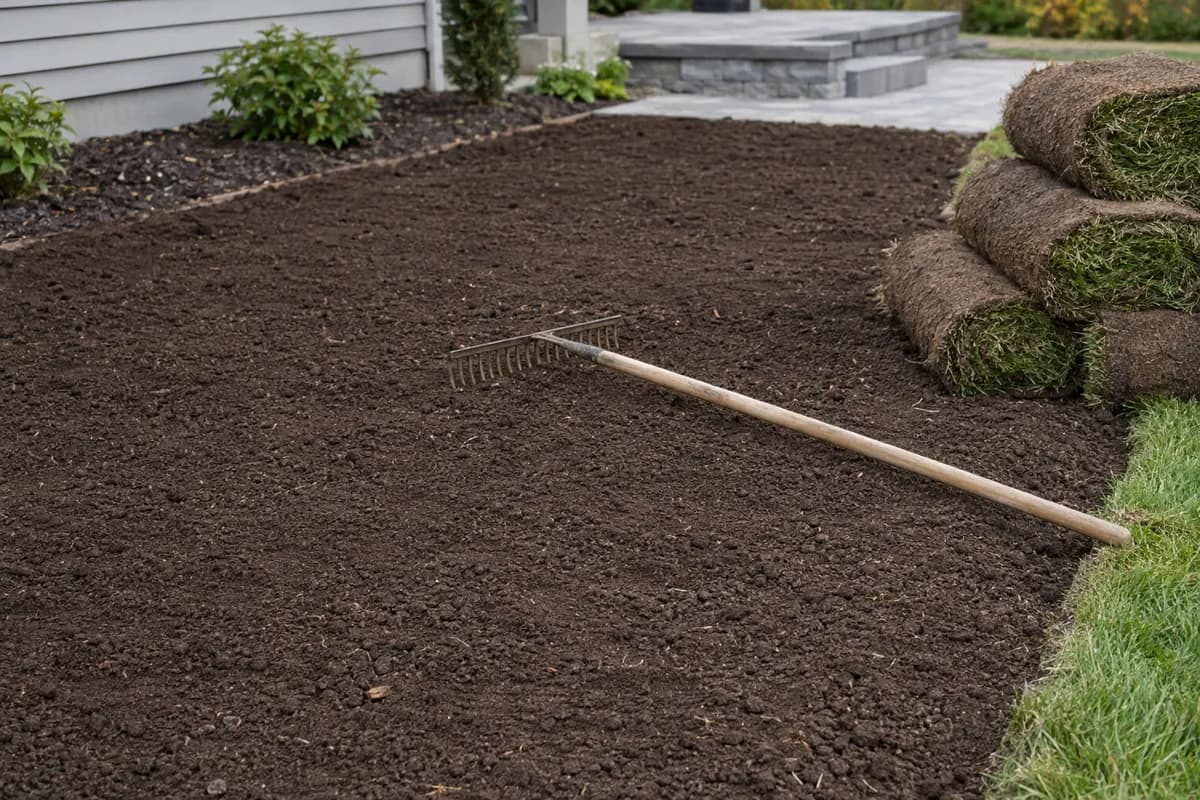
Topsoil is the dark upper layer of the ground, where roots live and grass takes hold. Screened to remove rocks, roots and clods, it spreads smoothly for new lawns, regrading around a house and filling raised beds. Gravel Valet sells it by the ton and delivers it in bulk.
- From
- $428 delivered
- Size
- Screened
- Weight
- 2,200 lb/yd³
- Sold by
- the ton
See local Topsoil pricing for your ZIP
Checking your saved delivery area.
- US cities served
- 368
- From, 2 tons delivered
- $428
- Weight
- 2,200 lb/yd³
- Size
- Screened

About Topsoil
In a natural field, the top few inches of ground are richer and darker than the subsoil below. That layer holds most of the organic matter, the soil life and the fine pores that store water for plants. Yards collect it from sites being cleared for building and from farm ground, then run it through a shaker screen. The product is Screened, so stones, sticks and lumps come out and what remains is crumbly and even.[1]
Good topsoil looks Dark brown and smells earthy, like a forest floor after rain. A cubic yard weighs about 2,200 lb, lighter than sand or stone because of the organic matter and air spaces in it. Gravel Valet sells it by the ton. Moisture changes the weight a lot, so soil delivered after a wet week will feel heavier than the same soil in a dry spell.[1]
Texture is the next thing to look at. A handful of moist topsoil should crumble when you squeeze and open your fist, rather than smearing like clay or falling apart like beach sand. That middle texture holds water for roots and still lets extra water drain. Soil that sticks in a hard ball has too much clay, and soil that will not hold together has too much sand.[1]
Topsoil is Screened, dark brown, about 2,200 lb per cubic yard, sold by the ton with a 2 ton minimum.
Specifications
| Material | Topsoil |
|---|---|
| Category | soil |
| Typical size | Screened |
| Color | Dark brown |
| Weight | 2,200 lb/yd³, about 1.10 tons per cubic yard |
| Sold by | the ton |
| Order minimum | 2 tons per delivery |
| Online order steps | half tons, up to 40 per order; more by quote |
Coverage: how much Topsoil do you need?
Square feet one ton of Topsoil covers at common spread depths. For exact tonnage, use the calculator.
- 147
- sq ft at 2" deep
- Top dressing, beds
- 98
- sq ft at 3" deep
- Paths, patios, drainage
- 74
- sq ft at 4" deep
- Driveways, base layers
Best uses for Topsoil
New lawns need a good root zone, and new construction can leave behind compacted subsoil with little life in it. Spreading topsoil before seeding or laying sod gives the grass something to grow into. Spread a layer over a tired lawn with thin, patchy turf and reseed it to bring it back. The same soil fills ruts and low spots that hold puddles after rain.[1]
Grading is the other big job. Adding soil along a foundation so the ground slopes away from the house helps move roof water off. Topsoil works for leveling a yard, building up a berm, finishing the top layer over a filled hole, and covering an area where an old patio or pool came out.[1]
Raised beds and planting areas can use it too, mixed with Compost. For a vegetable bed or flower border where you want the richest mix, Garden Soil is already blended for that. Use Fill Dirt or Fill Sand for deep fills below the root zone, and save topsoil for the top layer where plants grow.[1]
How to install Topsoil
Clear weeds, old turf and debris from the area. Loosen the existing ground with a tiller or a garden fork so the new soil blends in instead of sitting on a hard layer. A sharp line between two soils can block roots and water. Rough grade the base first so the finished surface will slope away from buildings.[1]
Spread the soil with a rake or a small loader, then roll it lightly or water it to settle it. To top dress a thin lawn, 2 inches is enough, about 0.68 tons per 100 square feet. A new lawn over bare subsoil does better with 3 inches, about 1.02 tons per 100 square feet, or with 4 inches, about 1.36 tons per 100 square feet.[1]
Deep planting areas and raised beds take more. A 6 inch layer uses about 2.04 tons per 100 square feet. Spread it, rake out any clods, and water it well. Seed or sod soon after, before rain can wash the loose surface. Topsoil settles over the first few weeks, so leave the finished grade a touch high.[1]
Timing helps a new lawn take hold. Spread and seed in mild weather when rain is regular and the ground is not frozen or baking. Keep the seeded surface damp, with light watering every day or two, until the grass is up and growing. Stay off the new soil until the turf has rooted, so footprints do not leave low spots.[1]
Comparable materials
Garden Soil is topsoil blended with compost and other organic matter for planting beds. It is richer and lighter, and it suits vegetables and flowers. Topsoil is the plainer, all-purpose choice for lawns and grading, where you need volume and a stable surface more than extra nutrients.[1]
Fill Dirt is subsoil with more clay and little organic matter. It is meant for filling and building up ground, not for growing things. Compost is pure organic matter, used to enrich soil rather than to replace it. A common plan uses all three: Fill Dirt to raise the grade, Topsoil for the top layer, and a dose of Compost worked in where plants go.[1]
 From$4172 ton delivered
Garden Soil
Soil and Fill- Size
- Blended
- Weight
- 2,000 lb/yd³
- Color
- Dark brown
 From$4162 ton delivered
Fill Dirt
Soil and Fill- Size
- Unscreened
- Weight
- 2,400 lb/yd³
- Color
- Brown
 From$4152 yd delivered
Compost
Soil and Fill- Size
- Screened
- Weight
- 1,200 lb/yd³
- Color
- Dark brown
Where we source Topsoil
Most topsoil starts on land being cleared for roads, homes or commercial building, where the top layer is stripped and stockpiled before grading. Some comes from farm ground and river bottoms. Soil yards take those stockpiles, let them dry, and run them through screens to remove rocks, roots and clods. Some yards blend in sand or compost to improve texture.[1]
Gravel Valet buys from soil yards near each delivery address. Each region's topsoil reflects its native ground, so one area's may be sandier and another's richer in clay, while all of it is Screened and Dark brown. If you are planting something with special needs, a soil test after delivery will tell you what to add.[1]
Quality varies between sources, which is why the screening step matters so much. A yard that screens well delivers soil you can rake out smooth the same afternoon. Soil that skips the screen can carry rocks, roots and chunks of sod that take hours to pick out by hand.[1]
Why bulk delivery saves money
Bagged topsoil fills a pot or a small bed, but a lawn takes tons. A bulk order delivers it all at once, which beats many trips with a car and dozens of bags. The truck drops it near the area you are working, so the wheelbarrow runs stay short.[1]
At about 2,200 lb per cubic yard, topsoil is lighter than stone but still heavy in quantity. Ordering enough for the whole yard in one delivery means the lawn grows in on one soil, with an even color and texture, instead of a patchwork from different bags.[1]
Ordering Topsoil from Gravel Valet
Measure the area, choose the depth, and let the calculator convert it to tons. Topsoil settles after watering, so add a little extra. Enter your ZIP to see the delivered total, then pick the tonnage. Plan the order for a dry stretch if you can, since dry soil spreads more easily.[1]
Pick a drop spot close to the work on firm ground, away from septic fields and buried lines, with clear space above for the truck bed to lift. A tarp under the pile keeps the soil off the lawn and makes cleanup easier. Spread the Screened soil within a few days so the pile does not sprout weeds or pack down in rain.[1]
FAQ: Topsoil
How much Topsoil do I need for a new lawn
For a new lawn over bare ground, 3 to 4 inches gives grass a good root zone. That takes about 1.02 tons per 100 square feet at 3 inches and about 1.36 tons at 4 inches. Measure the area in square feet and use the calculator to get the total tons.
What is the difference between Topsoil and Garden Soil
Topsoil is screened native soil used for lawns, grading and general fill near the surface. Garden Soil is topsoil blended with compost and other organic matter, made for vegetable beds and flower gardens. Use Topsoil for volume and Garden Soil where you want the richest mix for plants.
Can I put Topsoil over existing grass
A thin layer, up to about 2 inches, can top dress a lawn and the grass will grow through it. A deeper layer smothers grass, so remove or kill the old turf first, loosen the ground, then spread the new soil and seed or sod.
Is screened Topsoil free of weeds
Screening removes rocks, roots and clods, but it does not kill weed seeds. A few weeds may sprout in fresh soil. Seed or sod quickly so the grass fills in first, and pull or spot-treat weeds while they are small.
How do I spread Topsoil
Clear the area, loosen the existing ground, and dump the soil in small piles. Rake it level, roll it lightly or water it to settle, and check the slope away from buildings. Seed or lay sod soon after so rain does not wash the loose surface.
Should I mix Compost into Topsoil
For planting beds and garden areas, mixing in some Compost adds organic matter and helps the soil hold moisture. For a lawn, plain topsoil works well on its own. If you want a ready-made rich blend for beds, Garden Soil already has it mixed in.
Order Topsoil today
Enter your ZIP for the delivered price, or send the job and we quote it by hand.
By state
Topsoil by state
- Topsoil in Alaska
- Topsoil in Alabama
- Topsoil in Arkansas
- Topsoil in Arizona
- Topsoil in California
- Topsoil in Colorado
- Topsoil in Connecticut
- Topsoil in District of Columbia
- Topsoil in Florida
- Topsoil in Georgia
- Topsoil in Hawaii
- Topsoil in Iowa
- Topsoil in Idaho
- Topsoil in Illinois
- Topsoil in Indiana
- Topsoil in Kansas
- Topsoil in Kentucky
- Topsoil in Louisiana
- Topsoil in Massachusetts
- Topsoil in Maryland
- Topsoil in Michigan
- Topsoil in Minnesota
- Topsoil in Missouri
- Topsoil in Mississippi
- Topsoil in Montana
- Topsoil in North Carolina
- Topsoil in North Dakota
- Topsoil in Nebraska
- Topsoil in New Hampshire
- Topsoil in New Jersey
- Topsoil in New Mexico
- Topsoil in Nevada
- Topsoil in New York
- Topsoil in Ohio
- Topsoil in Oklahoma
- Topsoil in Oregon
- Topsoil in Pennsylvania
- Topsoil in Rhode Island
- Topsoil in South Carolina
- Topsoil in South Dakota
- Topsoil in Tennessee
- Topsoil in Texas
- Topsoil in Utah
- Topsoil in Virginia
- Topsoil in Washington
- Topsoil in Wisconsin