
Best picks
Best Soil for a New Lawn: 2026 Picks
A new lawn is only as good as the few inches of soil under it. Seed scattered on hard subsoil comes up thin, and sod laid on clay stays shallow. Our pick for the job is screened Topsoil, a loose, dark brown soil with the rocks and roots taken out. Here is why it wins, where the other soils fit, and how much to order.
Topsoil
soil · size Screened · 2,200 lb/yd³ · sold by the ton

Bottom line: Topsoil for soil for a new lawn
Our top pick: Topsoil
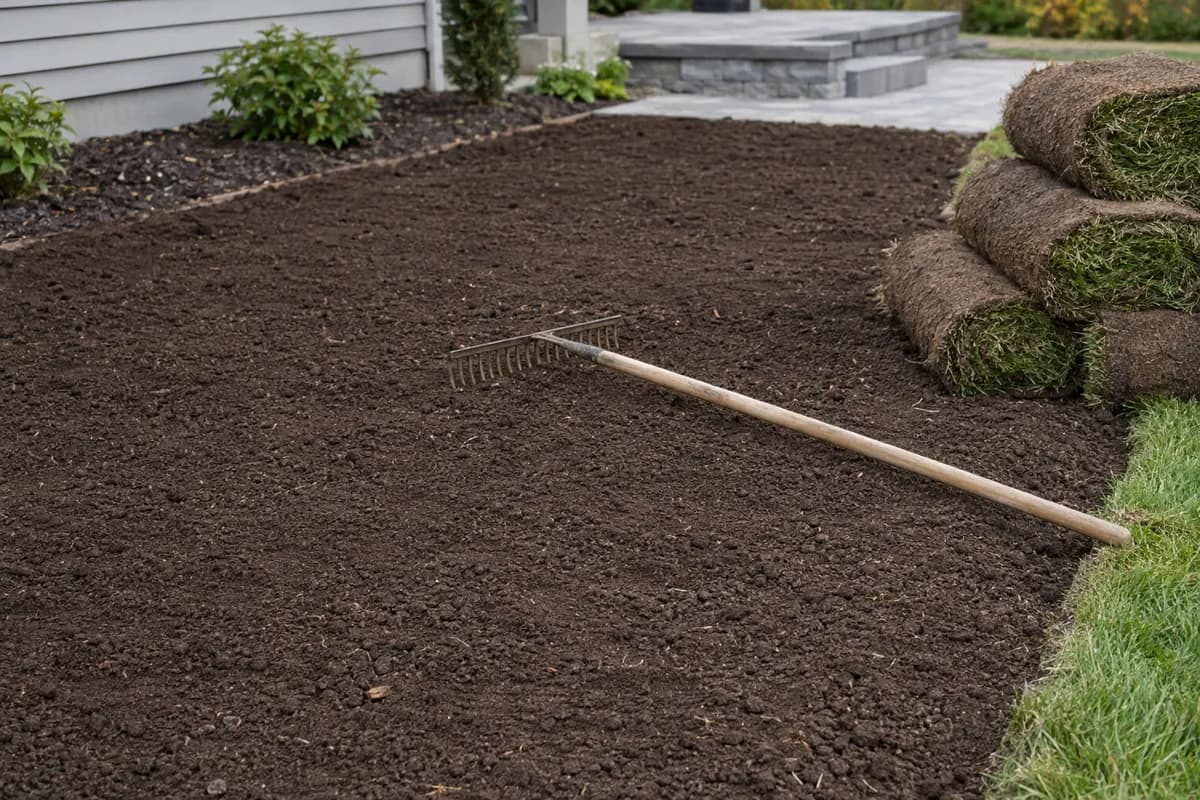
Screened Topsoil is the upper layer of natural ground, run through a screen to pull out rocks, roots and clods. What arrives is a loose, dark brown soil that spreads easily with a rake and gives grass roots an even layer to grow into. Seed and sod both take best on soil like this, free of stones that make low spots or dry patches.[1]
New construction can leave a yard of packed subsoil, with the good soil stripped away or buried under fill. Grass seeded straight onto that ground struggles. Roots cannot push down, rain runs off instead of soaking in, and the lawn thins out in the first dry spell. A fresh layer of Topsoil gives the new lawn a working root zone from day one.[1]
Topsoil is sold by the ton. A cubic yard weighs about 2,200 lb, less than stone or sand, because soil holds air and organic matter between its particles. That lighter weight makes it easy to move by wheelbarrow, but a full truckload still covers a lot of ground and needs a clear, flat spot near the lawn for the dump.[1]
Why Topsoil fits a new lawn
Turf grass roots are shallow next to the roots of shrubs or trees, but they still need several inches of loose soil to stay green through summer. Topsoil supplies that depth with a mix of sand, silt, clay and organic matter. It holds water long enough for roots to drink, then lets the extra drain away, so the young lawn neither drowns nor dries out fast.[1]
Screening matters for a smooth finish. A lawn is the one landscape surface that shows every bump, because a mower rides over it each week. Screened soil rakes out level and settles evenly. Unscreened soil full of stones and clods leaves high spots that get scalped and low spots that hold puddles.[1]
Fresh soil also has to join the ground below it. Rototill the first few inches of the existing yard before you spread the new layer, so the two mix at the boundary. That blended zone lets water and roots move down instead of stopping at a hard line where loose dark brown soil sits on old clay.[1]
Lawns grown from sod need Topsoil as much as seeded ones. Sod arrives with a thin layer of soil around its roots, and those roots must reach into the ground below within a few weeks. A loose bed lets them knit in quickly. Sod laid on bare, hard subsoil tends to stay shallow and brown at the seams in the first hot spell.[1]
Dark soil also warms faster in spring sun, which helps seed sprout early in the season. A dark brown seedbed holds that warmth near the surface, where grass seed sits after a light raking. Keep the top of the bed moist but not soaked until the new blades are up, then water less often and more deeply so roots chase the moisture down.[1]
Worth considering
Garden Soil is Topsoil blended with compost or other organic matter for planting beds. It wins in vegetable gardens, flower beds and around new shrubs, where plants feed heavily. Across a whole lawn it gives grass more than it needs, and a rich, fluffy soil can sink as the organic matter breaks down, leaving dips you mow over for years.[1]
Compost is decomposed plant material, dark and crumbly. It wins as an amendment: rake a thin layer into Topsoil before seeding, or spread it over an existing lawn as a top dressing in spring or fall. On its own it is too light and settles too much to be the main soil under a lawn.[1]
Fill Dirt is subsoil with little organic matter and some clay and stones mixed in. It wins when the yard needs raising, such as filling a low corner, building up a slope away from the house or bringing a new lot up to grade. Spread and compact Fill Dirt first, then cover it with Topsoil, because grass will not thrive in fill alone.[1]
 From$4172 ton delivered
Garden Soil
Soil and Fill- Size
- Blended
- Weight
- 2,000 lb/yd³
- Color
- Dark brown
 From$4162 ton delivered
Fill Dirt
Soil and Fill- Size
- Unscreened
- Weight
- 2,400 lb/yd³
- Color
- Brown
 From$4152 yd delivered
Compost
Soil and Fill- Size
- Screened
- Weight
- 1,200 lb/yd³
- Color
- Dark brown
How much to order
For a brand new lawn on bare subsoil, a layer of 4 to 6 inches of Topsoil gives grass a solid root zone. At 4 inches deep, 100 square feet takes about 1.36 tons. At 6 inches deep, the same area takes about 2.04 tons. Thinner layers can work for a yard that already has some decent soil under the weeds.[1]
Patching, leveling and top dressing use far less. At 2 inches, 100 square feet takes about 0.68 tons, and at 3 inches about 1.02 tons. A shallow layer worked into tilled ground is a good fix for a thin, patchy lawn that only needs a better surface.[1]
Measure the lawn in rectangles, multiply length by width for each one, and add the results. Divide the total square feet by 100, then multiply by the tonnage for your chosen depth. Soil settles after the first few waterings, so order a little more than the math shows, especially for a deep layer.[1]
Spread the soil soon after it arrives if rain is coming. A big pile can sit under a tarp for a while, but soil that soaks overnight turns heavy and sticky to rake. Dry or slightly damp soil spreads and levels best.[1]
Firm the new layer before seeding. Run a half-full lawn roller over it, or walk it in overlapping passes, then rake out the footprints. Soft spots that sink under the roller need a little more soil now, because they will turn into puddles and scalped patches later. At 3 inches deep, the roughly 1.02 tons per 100 square feet you spread should feel firm underfoot before any seed goes down.[1]
| Project size | 3 inch depth | 4 inch depth |
|---|---|---|
| 100 sq ft | 0.9 cu yd / 1.0 tons | 1.2 cu yd / 1.4 tons |
| 300 sq ft | 2.8 cu yd / 3.1 tons | 3.7 cu yd / 4.1 tons |
| 600 sq ft | 5.6 cu yd / 6.1 tons | 7.4 cu yd / 8.1 tons |
Top picks side by side
| Material | Spec | Fit and price |
|---|---|---|
| TopsoilTop pick | Screened, dark brown, 2,200 lb/yd³, by the ton | from $428 delivered, 2 tons |
| Garden Soil | Blended, dark brown, 2,000 lb/yd³, by the ton | from $417 delivered, 2 tons |
| Fill Dirt | Unscreened, brown, 2,400 lb/yd³, by the ton | from $416 delivered, 2 tons |
| Compost | Screened, dark brown, 1,200 lb/yd³, by the yard | from $415 delivered, 2 yd |
Verdict
Screened Topsoil is the best soil for starting a new lawn from seed or sod. It is loose, dark brown and free of rocks, so it rakes smooth, takes water well and gives roots room to grow. Spread it over tilled subsoil, firm it with a lawn roller, and seed or lay sod on top.[1]
Mix in some Compost if the existing ground is poor. Use Fill Dirt for raising grade underneath, never as the final layer. Save Garden Soil for beds. For most yards, a solid layer of Topsoil is all the new grass needs to get going.[1]
Give the new lawn a gentle first season. Mow only once the blades stand well above the mower height, keep heavy traffic off the soft ground, and feed lightly in the first fall. Screened soil that was spread, rolled and seeded with care rewards that patience with a dense, even stand of grass.[1]
Get a delivered quote for Topsoil
Tell us your project and we price Topsoil delivered to your ZIP, no obligation.
Frequently Asked Questions
How deep should topsoil be for a new lawn?
Aim for 4 to 6 inches of Topsoil over tilled ground. That depth gives grass roots room to spread and to hold moisture through dry weeks. A thinner layer can work over existing soil that is already loose, but on hard, compacted ground left by new construction the deeper layer makes a far better lawn.
Should I mix topsoil with the existing soil?
Yes, at the boundary. Till or loosen the top few inches of the existing ground before spreading, then rake part of the new Topsoil into it. This blends the layers so roots and water pass through. A sharp line between loose soil above and hard soil below can stop roots and trap water.
Is screened topsoil worth it for a lawn?
For a lawn, yes. Screening removes rocks, roots and clods that would leave bumps and bare spots. A mower shows every uneven patch, so a smooth bed makes the lawn easier to keep. Screened soil spreads faster with a rake as well, which saves real time on a large yard.
When should I spread topsoil and seed?
Cool-season grasses do best when seeded in early fall or spring, and warm-season grasses when seeded in late spring. Spread the Topsoil a few days before seeding, water it to settle the surface, and rake out any dips. Avoid working soil that is frozen or waterlogged, since it compacts and clumps.
Can I lay sod directly on topsoil?
Yes, that is the right way to do it. Spread and level the Topsoil, roll it lightly so it is firm but not hard, and water it the day before. Lay the sod in a staggered pattern with tight seams, then water deeply. The roots grow down into the loose soil within a few weeks.