
Driveway and Landscaping · Mixed
Walkway Gravel Delivered in Bulk
Walkway Gravel is small 3/8 inch stone in mixed colors, sized for comfort underfoot. It crunches softly, drains at once and fills curves that pavers cannot follow. Gravel Valet delivers it loose, by the ton, for garden paths, side yards and the walks between beds.
- From
- $424 delivered
- Size
- 3/8 inch
- Weight
- 2,600 lb/yd³
- Sold by
- the ton
See local Walkway Gravel pricing for your ZIP
Checking your saved delivery area.
- US cities served
- 368
- From, 2 tons delivered
- $424
- Weight
- 2,600 lb/yd³
- Size
- 3/8 inch

About Walkway Gravel
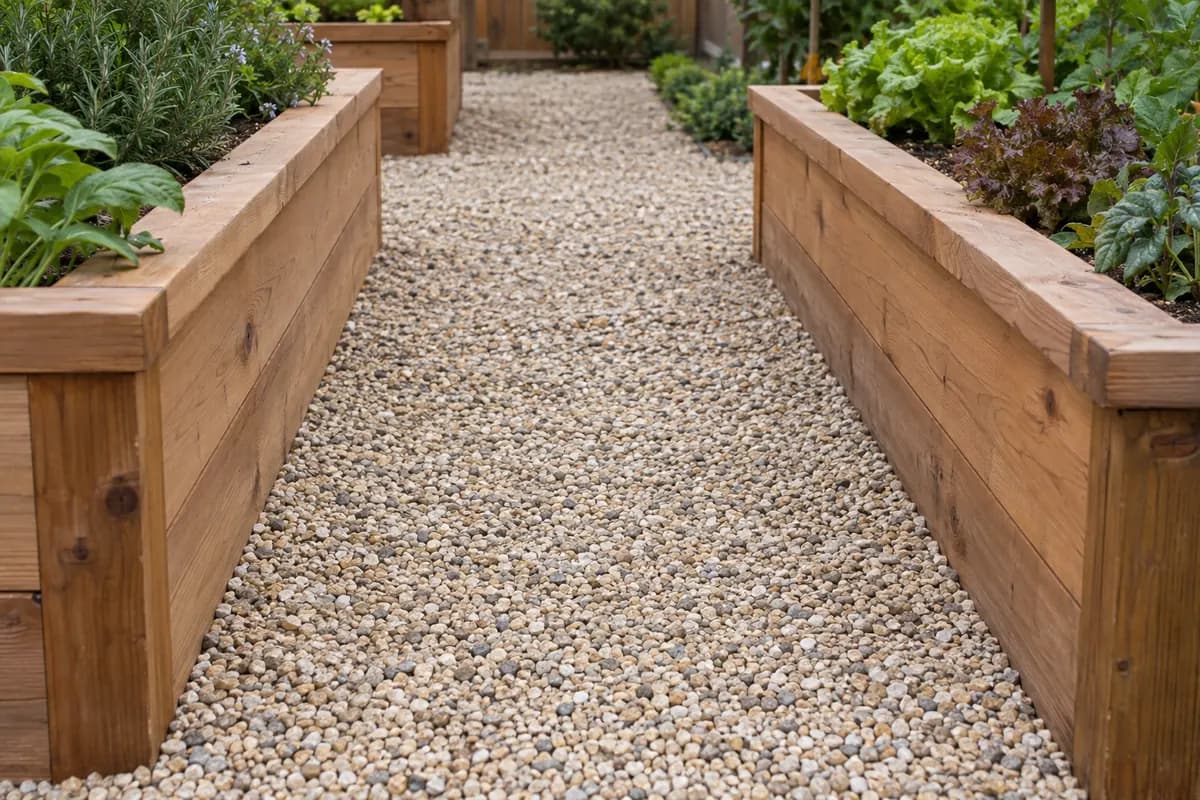
Walkway Gravel is chosen for one thing above all: how it feels when you step on it. At 3/8 inch, each piece is about the size of a pencil eraser, small enough that a shoe presses it flat and big enough that it does not cling to soles like sand. The stones settle into a loose, springy carpet that gives slightly with each step.[1]
The color is mixed, a blend of light and darker stones that hides leaf litter, dust and footprints far better than a single bright shade. A cubic yard comes in at roughly 2,600 lb, and loads go out by the ton. The pieces are small and evenly sized, so the layer stays open and rain soaks through it within moments.[1]
Because it stays loose, a Walkway Gravel path is easy to change. You can widen it, move a bend or add a branch to a new bed with a rake, a spade and a bit more stone. Nothing has to be cut, broken out or reset, which makes it a forgiving surface for a garden that is still taking shape.[1]
Walkway Gravel is 3/8 inch, mixed, about 2,600 lb per cubic yard, sold by the ton with a 2 ton minimum.
Specifications
| Material | Walkway Gravel |
|---|---|
| Category | decorative |
| Typical size | 3/8 inch |
| Color | Mixed |
| Weight | 2,600 lb/yd³, about 1.30 tons per cubic yard |
| Sold by | the ton |
| Order minimum | 2 tons per delivery |
| Online order steps | half tons, up to 40 per order; more by quote |
Coverage: how much Walkway Gravel do you need?
Square feet one ton of Walkway Gravel covers at common spread depths. For exact tonnage, use the calculator.
- 125
- sq ft at 2" deep
- Top dressing, beds
- 83
- sq ft at 3" deep
- Paths, patios, drainage
- 62
- sq ft at 4" deep
- Driveways, base layers
Best uses for Walkway Gravel
Garden paths are the obvious fit, from a straight walk to the vegetable beds to a winding route through a shade garden. The mixed color looks at home among plants, and the small size lets the path hug the curves of a border. Side yards, the narrow strip beside a garage and the route from a back door to a compost bin all suit it.[1]
Walkway Gravel works well in the spaces around stepping stones and as the floor of a small sitting area with a bench, the ground under a clothesline and the walk around raised beds. Routes where you push a wheelbarrow need a firmer base underneath, but the surface itself still works. For a play area, Pea Gravel feels a touch smoother on bare skin. For a dining patio where chair legs need a hard floor, Decomposed Granite packs firmer.[1]
How to install Walkway Gravel
Lay out the path with stakes and string or a garden hose and walk it a few times before digging, since a path that follows the way people walk gets used. Dig out sod and soft soil so the finished gravel sits just below the lawn edge. Tamp the floor of the trench firm.[1]
Install edging before anything else goes in. Small stones travel, and a steel, aluminum, brick or timber edge is what keeps Walkway Gravel on the path and out of the grass. Then roll out landscape fabric across the trench, tucking it under the edging. On soft or clay ground, a few inches of packed crushed base under the fabric keeps the path from turning spongy.[1]
Spread the stone and rake it level. A 2 inch surface layer is the common choice for a path over a base, about 0.80 tons per 100 square feet, and it keeps footing firm because the stones have less depth to shift in. A 3 inch layer, about 1.20 tons per 100 square feet, hides the fabric better on a path with no base. Go deeper only to fill a dip: 4 inches takes about 1.60 tons and 6 inches about 2.41 tons per 100 square feet, and a deep loose layer feels like walking on a beach.[1]
Comparable materials
Pea Gravel shares the 3/8 inch size but its stones are rounded by water. That makes it slightly softer to kneel or sit on, and slightly more mobile underfoot. Walkway Gravel tends to hold a path shape a little better. Many gardeners pick by look: Pea Gravel for a smooth pebble finish, Walkway Gravel for its mixed color.[1]
Decomposed Granite packs into a firm crust because of its fines, so it suits patios and accessible paths where wheels and chair legs need a hard surface. River Rock is much larger, from 1 to 3 inches, and belongs in borders, drainage swales and dry creek beds rather than under feet. A path of Walkway Gravel with a River Rock border along a wet edge pairs the two well.[1]
Mixing two of these in one design is common. A main path of Walkway Gravel can branch into a Decomposed Granite seating area, with River Rock filling a low spot where water crosses. Each surface then does the job it handles best, and the changes in texture help mark where the path ends and the beds begin.[1]
 From$4162 ton delivered
Pea Gravel
Driveway and Landscaping- Size
- 3/8 inch
- Weight
- 2,600 lb/yd³
- Color
- Mixed tan and brown
 From$4582 ton delivered
River Rock
Driveway and Landscaping- Size
- 1 to 3 inches
- Weight
- 2,600 lb/yd³
- Color
- Mixed earth tones
 From$4702 ton delivered
Decomposed Granite
Driveway and Landscaping- Size
- 1/4 inch and fines
- Weight
- 2,500 lb/yd³
- Color
- Gold to tan
Where we source Walkway Gravel
Walkway Gravel comes from local sand and gravel pits and stone yards. Natural gravel is dug, washed to remove clay and dirt, and screened down to the 3/8 inch range, and some yards add crushed stone of the same size to the blend. The mixed color reflects the many rock types in a gravel deposit.[1]
Gravel Valet fills orders from yards close to your address. A short trip keeps truck time low and gets the stone to you straight from the pile. Because local deposits differ, the blend of colors can look warmer in one region and grayer in another. If you need to match a path laid years ago, send us a note or a photo before ordering and we will check what nearby yards stock.[1]
Why bulk delivery saves money
A garden path can easily need a ton or more of stone, which would mean dozens of small bags from a store. Each one has to be hauled to the car, unloaded, carried to the path and slit open, and the empty plastic piles up. A bulk load ends up in a single pile in one drop.[1]
Without bags, there is no packaging or shelf handling built into what you buy. You order the tons the path needs and spread from a pile near the work with a wheelbarrow and a rake. For anything longer than a few steps, bulk Walkway Gravel takes less time, less lifting and less money than buying sack by sack.[1]
Ordering Walkway Gravel from Gravel Valet
Measure the length of the path and its width, and add any side branches and sitting areas. Choose the depth, then let the calculator convert square feet into tons using a weight of about 2,600 lb per cubic yard. Round up slightly so you have a little left for topping up thin spots later.[1]
Enter your ZIP to see what delivery to your address comes to, choose the tons and check out. Pick a drop spot on a driveway or firm ground near the path, and lay a tarp first if you want an easy cleanup. Our team gets in touch to confirm the delivery day.[1]
FAQ: Walkway Gravel
How deep should Walkway Gravel be on a path?
Over a packed base, 2 inches of Walkway Gravel gives the firmest footing and uses about 0.80 tons per 100 square feet. On a path without a base, 3 inches hides the fabric better and takes about 1.20 tons. Deeper loose stone feels soft and shifty, so put extra depth into the base instead.
Is Walkway Gravel comfortable to walk on barefoot?
The 3/8 inch stones are small, and most people find them comfortable in shoes and fine for short barefoot walks. Pea Gravel is a little smoother because its stones are rounded. For long barefoot use, such as around a pool, keep the layer thin and well raked so no larger pieces sit on top.
How do I stop Walkway Gravel from spreading into the lawn?
Use a firm edge that stands slightly above the gravel surface, such as steel, brick or timber. Keep the stone a little below the top of the edge, and rake stray pieces back in after mowing. A thinner layer also travels less, because there is less loose stone to kick around.
Can I use Walkway Gravel on a slope?
A gentle slope works well. On steeper grades loose stone drifts downhill, so add timber or stone steps at intervals, and use a packed base underneath. For a path that carries runoff, place a strip of larger stone along the low side so water has its own route and leaves the path in place.
What color is Walkway Gravel?
Gravel Valet's Walkway Gravel comes in mixed colors, a blend of lighter and darker stones from the local gravel deposit. The shade can lean warm or cool by region. The mix hides dirt, leaves and footprints well, which keeps a path looking tidy between rakings.
Do weeds grow in a Walkway Gravel path?
Fabric under the stone stops most weeds from below. Seeds that blow in can still sprout in dust that collects over time. Rake or blow leaves off before they rot, pull seedlings early, and refresh the top with new stone every few years to keep the path clean.
Order Walkway Gravel today
Enter your ZIP for the delivered price, or send the job and we quote it by hand.
By state
Walkway Gravel by state
- Walkway Gravel in Alaska
- Walkway Gravel in Alabama
- Walkway Gravel in Arkansas
- Walkway Gravel in Arizona
- Walkway Gravel in California
- Walkway Gravel in Colorado
- Walkway Gravel in Connecticut
- Walkway Gravel in District of Columbia
- Walkway Gravel in Florida
- Walkway Gravel in Georgia
- Walkway Gravel in Hawaii
- Walkway Gravel in Iowa
- Walkway Gravel in Idaho
- Walkway Gravel in Illinois
- Walkway Gravel in Indiana
- Walkway Gravel in Kansas
- Walkway Gravel in Kentucky
- Walkway Gravel in Louisiana
- Walkway Gravel in Massachusetts
- Walkway Gravel in Maryland
- Walkway Gravel in Michigan
- Walkway Gravel in Minnesota
- Walkway Gravel in Missouri
- Walkway Gravel in Mississippi
- Walkway Gravel in Montana
- Walkway Gravel in North Carolina
- Walkway Gravel in North Dakota
- Walkway Gravel in Nebraska
- Walkway Gravel in New Hampshire
- Walkway Gravel in New Jersey
- Walkway Gravel in New Mexico
- Walkway Gravel in Nevada
- Walkway Gravel in New York
- Walkway Gravel in Ohio
- Walkway Gravel in Oklahoma
- Walkway Gravel in Oregon
- Walkway Gravel in Pennsylvania
- Walkway Gravel in Rhode Island
- Walkway Gravel in South Carolina
- Walkway Gravel in South Dakota
- Walkway Gravel in Tennessee
- Walkway Gravel in Texas
- Walkway Gravel in Utah
- Walkway Gravel in Virginia
- Walkway Gravel in Washington
- Walkway Gravel in Wisconsin