
Best picks
Best Stone for a Walkway: 2026 Picks
A gravel path should feel firm, shed rain and stay inside its edges. Our pick for that job is Walkway Gravel, a small 3/8 inch crushed stone made for foot traffic. Here is why it beats the other common path stones in most yards, when one of those others is the better call, and how much stone a path takes.
Walkway Gravel
decorative · size 3/8 inch · 2,600 lb/yd³ · sold by the ton

Bottom line: Walkway Gravel for stone for a walkway
Our top pick: Walkway Gravel
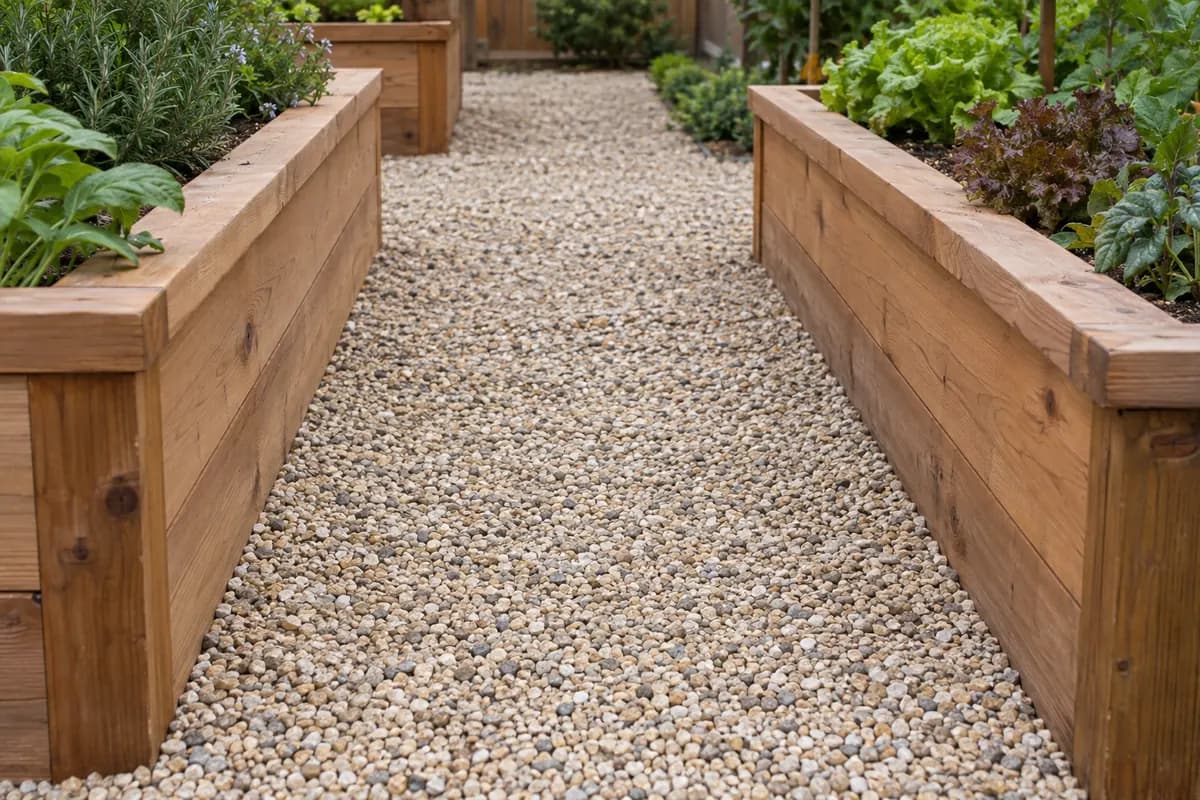
Walkway Gravel is a small crushed stone screened to about 3/8 inch and made for foot paths. The pieces are angular, so they bite into one another when stepped on and form a surface that stays put. Shoes sink only a little, and the path feels steady from the first week.[1]
Its color is a mix of natural stone shades rather than one flat tone. A mixed surface hides dirt, footprints and fallen leaves better than a single pale color, and it sits comfortably beside brick, wood, lawn and planting beds.[1]
Small size is what makes it pleasant to use every day. At 3/8 inch, the stones are big enough to drain and small enough that a stroller, a wheelbarrow or a garden cart rolls across without bogging down. Larger stone of the same shape feels rough under thin soles and fights every wheel.[1]
Crushed stone in this size also gives a quiet surface. Large loose gravel crunches and rolls loudly under each step, while small locked pieces make a softer sound. For a path that passes bedroom windows or leads to a back gate used late at night, that difference is easy to notice.[1]
It is sold by the ton, and a cubic yard weighs about 2,600 lb. A path is narrow, so even a long garden walk takes a modest amount of stone, and a single load can cover the whole job with a little left for touch ups.[1]
Why Walkway Gravel fits a walkway
A good path needs a firm feel underfoot, quick drainage after rain and edges that hold. Angular stone locks together when compacted, so it feels solid rather than loose. Rounded stone of the same size rolls and slides, which is fine in a patio corner but tiring on a long walk to the shed.[1]
Water passes down through the gaps between the pieces, so the path dries soon after a storm. That keeps mud off shoes and stops puddles that could freeze into slick patches. Build the path with a slight crown or tilt so surface water runs off to the sides.[1]
The build is simple. Dig out the path a few inches deep, compact the soil, lay landscape fabric, and add a thin layer of compacted base where the ground is soft. Spread the Walkway Gravel on top, rake it level and run a plate compactor or a hand tamper over it. Steel, aluminum or brick edging keeps the stone from drifting into the lawn.[1]
Upkeep is light. Rake the surface now and then to fill scuffed spots, and add a thin top dressing every few years. Blow leaves off in fall before they rot into the stone. Weeds that land as seeds pull out easily from loose gravel over fabric, and the mixed color keeps the path looking clean between passes.[1]
Curves and steps work well with this stone. Small pieces follow a curved edge without leaving gaps, and on a gentle slope they hold well once compacted. On steeper ground, timber or stone risers break the path into short level runs, and the gravel fills each tread.[1]
Stepping stones pair well with this gravel. Set flagstones or concrete pavers into the compacted surface at a comfortable stride, and fill the gaps with Walkway Gravel. The stones give a hard landing for each foot, and the gravel between them drains and fills the space. Set each stepping stone on a thin bed of sand or fines so it does not rock.[1]
Worth considering
Pea Gravel is the same small size but rounded. It wins where softness matters most, such as a path to a hammock, a children's play corner or a garden walk used barefoot. Its round pebbles shift more, so it needs firm edging and a compacted base to keep the surface from feeling loose.[1]
Decomposed Granite wins when the path must be smooth and firm, close to a paved surface. Packed granite fines suit wheelchairs, walkers and bikes. It needs a good slope to shed water, and its fine particles can stick to shoes after a rain.[1]
River Rock is too large and lumpy to walk on, but it wins as a border. A strip of bigger rounded stones along each edge of a Walkway Gravel path frames it and helps hold the small pieces in place.[1]
Walkway Gravel still beats these three for an everyday path. It packs firmer than Pea Gravel, drains better than Decomposed Granite, and it is comfortable to walk on, unlike River Rock. For a path that sees daily foot traffic, garden carts and the odd bicycle, that balance is hard to match.[1]
 From$4162 ton delivered
Pea Gravel
Driveway and Landscaping- Size
- 3/8 inch
- Weight
- 2,600 lb/yd³
- Color
- Mixed tan and brown
 From$4582 ton delivered
River Rock
Driveway and Landscaping- Size
- 1 to 3 inches
- Weight
- 2,600 lb/yd³
- Color
- Mixed earth tones
 From$4702 ton delivered
Decomposed Granite
Driveway and Landscaping- Size
- 1/4 inch and fines
- Weight
- 2,500 lb/yd³
- Color
- Gold to tan
How much to order
Most foot paths use a surface layer of 2 to 3 inches of Walkway Gravel over a compacted base. At 2 inches, 100 square feet takes about 0.80 tons. At 3 inches, the same path area takes about 1.20 tons. A thin layer compacts firmer and walks better than a deep one.[1]
To find the area, multiply the path length by its width. A winding path can be split into straight stretches and added up. Divide by 100, then multiply by the tonnage for your chosen depth.[1]
A path that doubles as a cart route or a side yard access lane can take more. At 4 inches, 100 square feet takes about 1.60 tons, and at 6 inches about 2.41 tons. Past a few inches, loose stone feels soft underfoot, so put any extra depth into compacted base and keep the walking layer shallow.[1]
Order a little more than the math says. Stone settles as you compact it, path edges are never quite straight, and a spare pile makes yearly touch ups easy.[1]
Base and surface are two separate figures. The compacted base below the walking layer is a crushed stone with fines, ordered on its own. Only the top layer is Walkway Gravel, so a path built at 3 inches deep needs about 1.20 tons of the surface stone per 100 square feet, plus the base stone for the layer underneath.[1]
| Project size | 3 inch depth | 4 inch depth |
|---|---|---|
| 100 sq ft | 0.9 cu yd / 1.2 tons | 1.2 cu yd / 1.6 tons |
| 300 sq ft | 2.8 cu yd / 3.6 tons | 3.7 cu yd / 4.8 tons |
| 600 sq ft | 5.6 cu yd / 7.2 tons | 7.4 cu yd / 9.6 tons |
Top picks side by side
| Material | Spec | Fit and price |
|---|---|---|
| Walkway GravelTop pick | 3/8 inch, mixed, 2,600 lb/yd³, by the ton | from $424 delivered, 2 tons |
| Pea Gravel | 3/8 inch, mixed tan and brown, 2,600 lb/yd³, by the ton | from $416 delivered, 2 tons |
| River Rock | 1 to 3 inches, mixed earth tones, 2,600 lb/yd³, by the ton | from $458 delivered, 2 tons |
| Decomposed Granite | 1/4 inch and fines, gold to tan, 2,500 lb/yd³, by the ton | from $470 delivered, 2 tons |
Verdict
Walkway Gravel is our pick for a garden or yard path. Its small, angular 3/8 inch pieces lock into a firm surface that drains well, and its mixed color looks natural in most settings.[1]
Choose Pea Gravel for a softer, barefoot path, Decomposed Granite for a smooth, firm surface that suits wheels, and River Rock for borders. For any of them, start with a dug-out bed, fabric, compacted base and a solid edge.[1]
Get a delivered quote for Walkway Gravel
Tell us your project and we price Walkway Gravel delivered to your ZIP, no obligation.
Frequently Asked Questions
How deep should gravel be on a walkway?
A surface layer of 2 to 3 inches over a compacted base works for most foot paths. Deeper loose stone feels soft and shifts under each step. If the soil is soft or wet, add depth to the compacted base below the path and keep the top layer thin.
Do I need edging for a gravel path?
Yes. Without edging, stones drift into the lawn or beds and the path slowly widens and thins. Steel, aluminum, brick or stone edging holds the gravel in place. Set the edging so its top sits just above the gravel, which also makes mowing along the path easier.
Is Walkway Gravel comfortable to walk on?
It is firm and stable once compacted. The small 3/8 inch pieces feel fine under shoes and let strollers and carts roll easily. For bare feet, rounded Pea Gravel is softer, but it moves more. Many people pick the crushed stone for daily paths and the rounded stone for play areas.
Can I put gravel straight over grass?
Remove the grass and roots first. Turf left under a path rots and settles, which makes low spots, and grass pushes up through the stone. Cut the sod out, compact the soil, lay landscape fabric and then add base and gravel. That extra work at the start saves years of weeding.
Will the gravel wash away on a sloped path?
On a gentle slope, compacted angular stone holds well. On steeper grades, add steps made of timbers or stone to break the run into short level sections. Each step keeps the gravel from creeping downhill and gives rainwater a place to slow down.