
Best picks
Best Base for a Patio: 2026 Picks
Pavers and flagstone only stay flat when the layer under them stays put. A soft or thin base shows up a year later as rocking stones, sunken corners and weeds in the joints. Our pick for that hidden layer is Road Base, a 3/4 inch minus gray stone that compacts into a solid slab. Here is why, when two other materials join it, and how much to order.
Road Base
base · size 3/4 inch minus · 2,800 lb/yd³ · sold by the ton

Bottom line: Road Base for base for a patio
Our top pick: Road Base
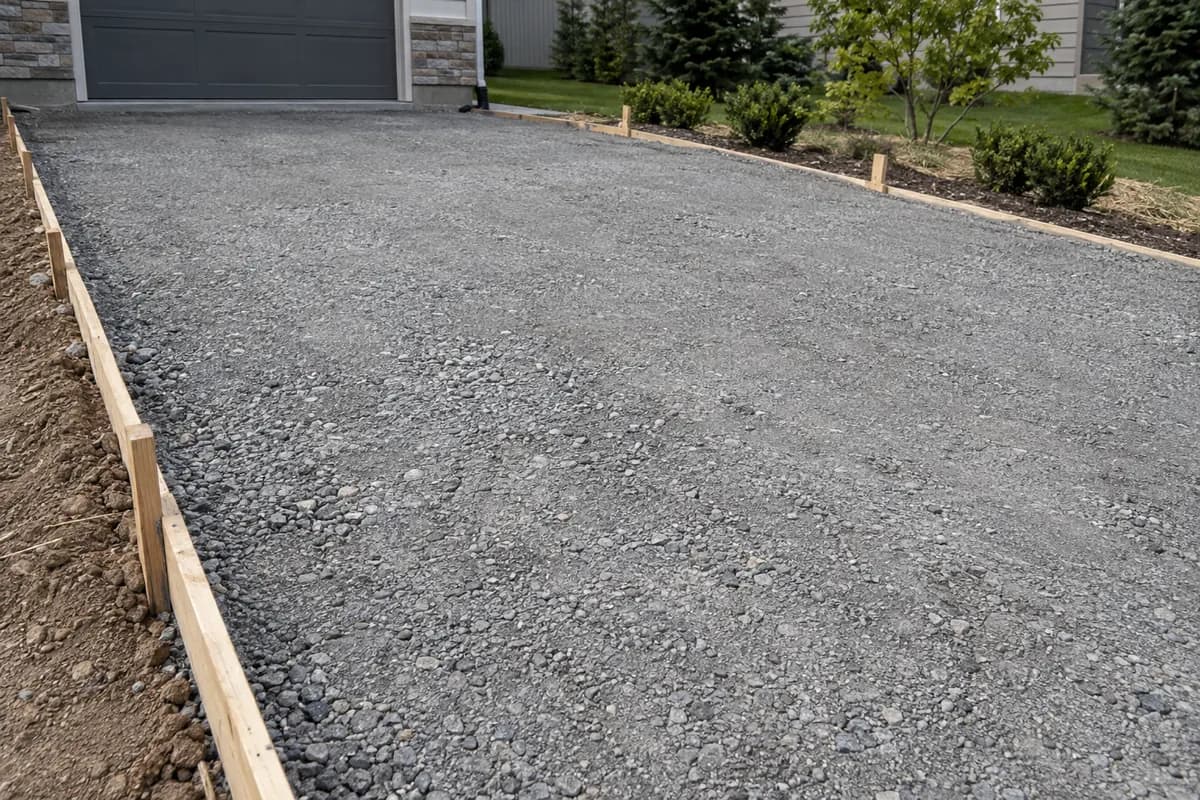
Road Base is crushed stone sized 3/4 inch minus. That label means the largest pieces are about 3/4 inch, and everything smaller is left in, down to sand-sized grit and stone powder. The mix of sizes is what makes it a base. Small particles fill the spaces between the larger ones, and when the layer is wetted and compacted, it locks into a dense mat that barely moves.[1]
A cubic yard of Road Base weighs about 2,800 lb, heavier than clean stone of a similar size because the fines fill its gaps. It is sold by the ton and arrives as a gray pile that looks dusty and ordinary. Once spread and packed, that ordinary pile becomes the hard floor every patio stone sits on.[1]
The base also spreads load. A heavy planter, a grill or a table full of guests presses on a few pavers at a time. A well packed layer of Road Base passes that weight across a wide patch of soil underneath, so no single spot sinks. A patio built this way stays level for many seasons.[1]
First-time builders often get the water content wrong. Dry Road Base resists packing, and soaked Road Base turns to mush under the compactor. The right moisture leaves the stone damp enough to hold together when squeezed in a fist, without water running out. Spray each lift lightly, wait a minute for it to soak in and then compact.[1]
Why Road Base fits a patio
A patio needs three layers to last: firm native soil, a thick compacted base and a thin smooth bed for setting stone. Road Base belongs in the middle. The soil below it may be clay that swells, sand that shifts or loam that softens when wet, and the base bridges all of that with a stiff, even platform.[1]
Compaction is where 3/4 inch minus stone pulls ahead of clean gravel. Run a plate compactor over a damp layer and the fines slide into the voids between angular pieces until the whole layer feels like rock. Clean stone with no fines never reaches that density. It stays slightly loose, and pavers set on it can creep and settle over time.[1]
The trick is to build the base in lifts. Spread Road Base a few inches at a time, mist it with a hose until it darkens, then pass the compactor over it several times. Repeat until you reach full depth. Thin lifts compact all the way through. One thick dump packs only at the top and leaves a soft layer hidden underneath.[1]
Slope matters too. Shape the base so the finished patio falls gently away from the house, so rain runs off the surface and away from the foundation. It is far easier to set that slope in the gray base than to fix it later in the pavers. A string line and a level held across the packed layer show where to add or scrape stone.[1]
Edge restraint finishes the job. Once the pavers are set, a plastic or metal edge staked along the outer border, or a poured concrete haunch, stops the outer rows from drifting. That restraint sits on the packed Road Base, so the base needs to extend past the pavers for it to have something firm to grip.[1]
Worth considering
Stone Dust Screenings work alongside Road Base. They are the fine material left after crushing, and they make a smooth, workable bed for setting pavers or flagstone. Spread a thin layer over the packed base, screed it flat with a straight board and set stones into it. Screenings also fill joints between flagstones and lock them in. Used as the full base, they are too fine to stay firm in wet ground, so keep them as the top bed only.[1]
Driveway Gravel, clean 3/4 inch crushed stone, earns a place where drainage matters more than raw density. On a permeable paver patio, the system relies on open stone under the pavers so rain soaks straight down instead of running off. Clean stone lets that happen where Road Base would hold the water. Driveway Gravel also suits a loose gravel patio with no pavers, where the stone itself is the finished surface.[1]
For a standard paver or flagstone patio on most soils, the dense base still wins. Choose Driveway Gravel only when you are building a permeable system on purpose or finishing a simple gravel sitting area.[1]


How much to order
Dig out before you order. The excavation needs room for the full base, the thin bed of screenings and the thickness of the pavers, so the finished surface lines up with the lawn or the house step. Remove all sod and loose topsoil, because organic soil keeps settling under a base for years.[1]
Measure the patio and add a little extra on every side. The base should run a few inches past the edge of the pavers so the border stones have firm support under their outer edge. Multiply the length by the width of that larger footprint to get square feet.[1]
A walking patio on firm, well drained soil can do with a thinner base. At 4 inches, Road Base takes about 1.73 tons per 100 square feet after compaction. That depth suits a small sitting area that sees only foot traffic and light furniture.[1]
On clay, in wet spots or under a patio that will hold a hot tub, a fire pit or heavy planters, go deeper. A 6 inch base takes about 2.59 tons per 100 square feet. For a thinner repair layer or a leveling course over an old base, 2 inches needs about 0.86 tons and 3 inches about 1.30 tons per 100 square feet.[1]
Loose stone packs down as you compact it, so order a bit more than the bare math suggests. The bed of Stone Dust Screenings is a separate, much smaller order on top. Keep both piles on a tarp near the work area, because the fines in Road Base wash away in rain if the pile sits uncovered.[1]
| Project size | 3 inch depth | 4 inch depth |
|---|---|---|
| 100 sq ft | 0.9 cu yd / 1.3 tons | 1.2 cu yd / 1.7 tons |
| 300 sq ft | 2.8 cu yd / 3.9 tons | 3.7 cu yd / 5.2 tons |
| 600 sq ft | 5.6 cu yd / 7.8 tons | 7.4 cu yd / 10.4 tons |
Top picks side by side
| Material | Spec | Fit and price |
|---|---|---|
| Road BaseTop pick | 3/4 inch minus, gray, 2,800 lb/yd³, by the ton | from $415 delivered, 2 tons |
| Driveway Gravel | 3/4 inch clean crushed, gray, 2,700 lb/yd³, by the ton | from $426 delivered, 2 tons |
| Stone Dust Screenings | 1/4 inch and fines, gray, 2,800 lb/yd³, by the ton | from $446 delivered, 2 tons |
Verdict
Road Base is the best base for a patio. Its 3/4 inch minus blend packs into a dense gray platform that spreads weight, holds a slope and keeps pavers from rocking. Build it in damp, thin lifts, run the compactor over each one and finish with a smooth bed of Stone Dust Screenings.[1]
Pick Driveway Gravel only for a permeable paver build or a simple loose stone patio. For a standard patio that should stay flat and tight for many years, a thick, well packed layer of Road Base under a thin screenings bed is the setup we recommend.[1]
Get a delivered quote for Road Base
Tell us your project and we price Road Base delivered to your ZIP, no obligation.
Frequently Asked Questions
What is the best base material for a paver patio?
Compactable crushed stone with fines, such as Road Base. Its 3/4 inch minus blend locks into a dense layer when you wet it and run a plate compactor over it. A thin bed of Stone Dust Screenings goes on top for setting the pavers.
How thick should a patio base be?
For a walking patio on firm soil, about 4 inches of packed Road Base is common, which takes about 1.73 tons per 100 square feet. On clay or under heavy loads, go to 6 inches, about 2.59 tons per 100 square feet.
Can I use stone dust as the only patio base?
It is a poor choice for the full depth. Stone dust is fine grit, so it can soften and shift when it stays wet. Use Road Base for the main layer and keep Stone Dust Screenings as a thin bed for setting stones.
Do I need to compact a patio base?
Yes. Compaction is what turns loose stone into a solid platform. Spread the base in thin lifts, dampen each one and pass a plate compactor over it several times. Skipping this step is the most common reason pavers sink.
Is gravel or road base better under pavers?
Road Base, for most patios. Clean gravel drains but never packs as tight, so pavers can creep. The exception is a permeable paver system, which is designed to use open stone such as Driveway Gravel so rain soaks through.
Should I put fabric under a patio base?
On soft clay or wet soil, a layer of geotextile under the base helps. It keeps the soil from pushing up into the stone, so the base keeps its thickness. On firm, sandy ground many installers skip it.