
Soil and Fill · Brown
Fill Dirt Delivered in Bulk
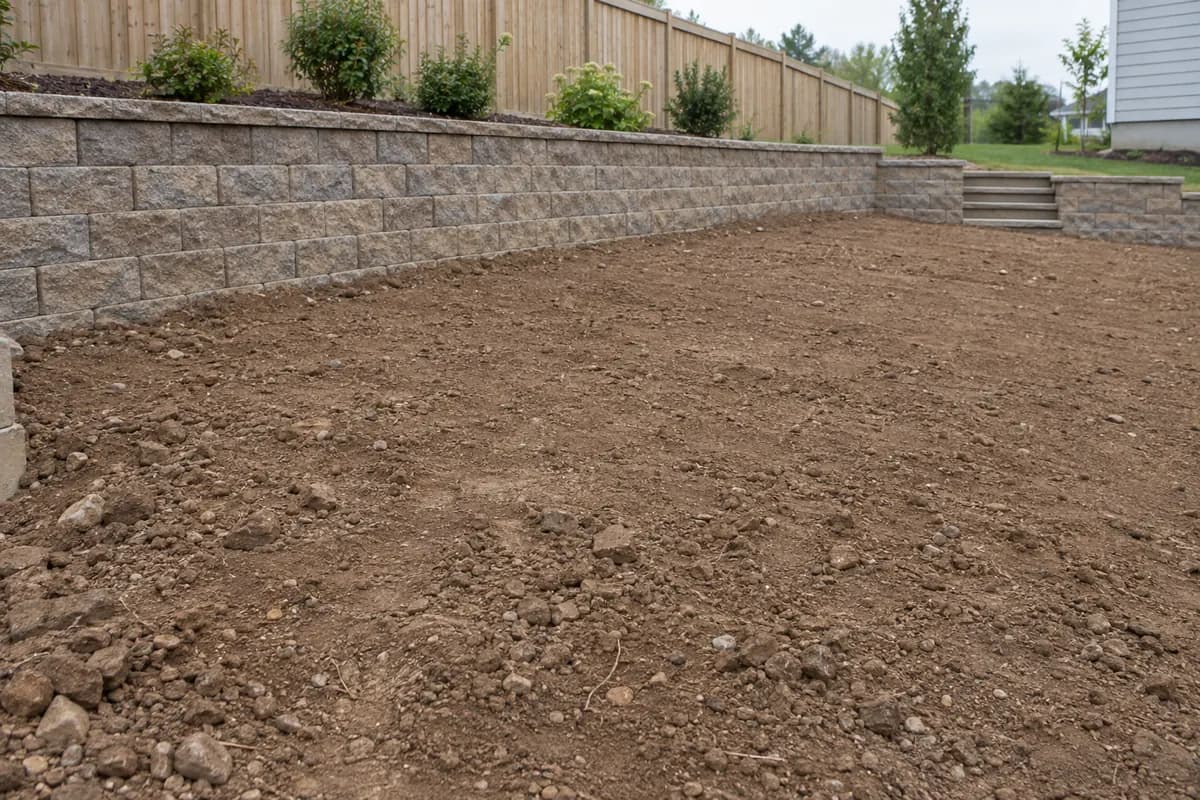
Fill Dirt is unscreened brown earth dug from below the topsoil layer. It packs firm, holds a shape and gives you volume where a yard is too low. Gravel Valet delivers it by the ton for filled holes, raised grades, backfilled walls and level pads for sheds, patios and play sets.
- From
- $416 delivered
- Size
- Unscreened
- Weight
- 2,400 lb/yd³
- Sold by
- the ton
See local Fill Dirt pricing for your ZIP
Checking your saved delivery area.
- US cities served
- 368
- From, 2 tons delivered
- $416
- Weight
- 2,400 lb/yd³
- Size
- Unscreened

About Fill Dirt
Fill Dirt is the subsoil that excavators remove when they dig a basement, a pond or a road cut. It comes from under the dark topsoil, so it holds little organic matter. That is the point. Leaves, roots and compost rot over time and leave voids behind, while mineral earth stays put once it is packed. A grade built from Fill Dirt keeps its height for years.[1]
The load is unscreened, which means it goes from the dig site to the truck without passing over a sorting screen. Expect a mix of clay, silt and sand with the odd stone or clod. The color is brown, a shade lighter than garden earth because of the low organic content. A cubic yard weighs about 2,400 lb, heavier than most planting soils, and it is sold by the ton.[1]
Fill Dirt is Unscreened, brown, about 2,400 lb per cubic yard, sold by the ton with a 2 ton minimum.
Specifications
| Material | Fill Dirt |
|---|---|
| Category | soil |
| Typical size | Unscreened |
| Color | Brown |
| Weight | 2,400 lb/yd³, about 1.20 tons per cubic yard |
| Sold by | the ton |
| Order minimum | 2 tons per delivery |
| Online order steps | half tons, up to 40 per order; more by quote |
Coverage: how much Fill Dirt do you need?
Square feet one ton of Fill Dirt covers at common spread depths. For exact tonnage, use the calculator.
- 135
- sq ft at 2" deep
- Top dressing, beds
- 90
- sq ft at 3" deep
- Paths, patios, drainage
- 68
- sq ft at 4" deep
- Driveways, base layers
Best uses for Fill Dirt
The classic job is a hole that needs to go away. Old pool sites, removed tree stumps, trenches from utility work and sunken spots where a buried tank once sat all take Fill Dirt well. Because it compacts, the patch can carry a lawn mower or foot traffic once it has been packed in layers and topped with a growing soil.[1]
Raising and reshaping ground is the second big use. A low back yard that collects runoff can be built up so water flows away. Soil against a house foundation should slope down and away from the wall, and Fill Dirt is the usual material for that slope. Builders also use it to level a pad for a shed, a patio base or a play set where the yard falls off to one side.[1]
Behind a retaining wall, packed earth fills the space between the wall and the hillside after the drainage stone is in place. Landscapers shape berms and mounds with it before capping them with planting soil. On farms and rural lots it repairs washed out lanes, fills ruts and builds up the approach to a culvert.[1]
How to install Fill Dirt
Strip the area of grass, roots and any soft, dark soil first. Organic material left under fill rots and lets the surface sink. If the hole is wet, give it time to drain or pump it out before you start, since dirt dumped into standing water turns to mud and will not pack.[1]
Place Fill Dirt in thin lifts, not one deep dump. Spread a layer of about 4 inches, which uses roughly 1.48 tons per 100 square feet, then pack it with a plate compactor, a hand tamper or the tracks of a small machine. Lightly moisten dry dirt before packing, because damp earth binds better than dusty earth. Repeat the spread and pack cycle until you reach the height you want.[1]
For a gentle grade change, thinner passes make sense. A 2 inch lift takes about 0.74 tons per 100 square feet and a 3 inch lift about 1.11 tons. Where a low corner needs a big build, plan on 6 inch lifts at about 2.22 tons per 100 square feet each, packed well between passes. Deep fills settle a little over the first season, so leave the surface slightly high.[1]
Finish with a growing layer if grass or plants will go on top. Fill Dirt is too lean for roots on its own. Spread Topsoil over the packed fill, rake it smooth and seed or sod it. Check the slope with a level and a long board so runoff heads away from buildings.[1]
Comparable materials
Topsoil is screened and holds the organic matter that Fill Dirt lacks. It is the right layer for the top few inches where grass and plants root. Using it for deep fill is a waste, since its organic part breaks down and the area sinks. The usual plan is fill below, Topsoil above.[1]
Garden Soil goes one step further, with compost blended into the topsoil. It belongs in vegetable beds, raised boxes and flower borders. Over a packed fill, a layer of Garden Soil turns a former hole into a planting bed. Below the root zone it adds nothing that Fill Dirt does not do better.[1]
Compost is the lightest of the group and is pure organic matter. It improves soil you already have and feeds a lawn as a thin top dressing. It has no place in a fill job, because it shrinks as it decays. Many projects use all three: Fill Dirt for volume, Topsoil for the surface and Compost worked in where plants need extra help.[1]
 From$4282 ton delivered
Topsoil
Soil and Fill- Size
- Screened
- Weight
- 2,200 lb/yd³
- Color
- Dark brown
 From$4172 ton delivered
Garden Soil
Soil and Fill- Size
- Blended
- Weight
- 2,000 lb/yd³
- Color
- Dark brown
 From$4152 yd delivered
Compost
Soil and Fill- Size
- Screened
- Weight
- 1,200 lb/yd³
- Color
- Dark brown
Where we source Fill Dirt
Gravel Valet buys Fill Dirt from soil yards, earthmoving contractors and excavation sites near the delivery address. Much of it is surplus from building work, where a basement or a road cut produces more earth than the site can use. Yards stockpile that material and load it out for jobs that need volume.[1]
Because it is unscreened and local, the makeup of a load follows the ground of the region. In one area it may be heavy and clay rich, while in another it is sandy and loose. The brown tone shifts the same way, from reddish brown to tan. A load may hold a few rocks or roots, which can be raked out as you spread.[1]
Why bulk delivery saves money
Fill jobs need volume, and volume is where bagged products fall apart. Filling even a modest hole from small sacks takes a long row of bags and many trips. A dump truck brings the whole amount in one run, straight from the stockpile, with no packaging to buy or throw away.[1]
Bulk buying also matches the material to the job. Fill Dirt is surplus earth, so paying for screened or blended soil to fill a hole spends money on processing that the job does not need. Ordering by the ton lets you buy plain fill for the deep part and a smaller load of Topsoil for the surface.[1]
One delivery also saves rental time. If you hire a compactor or a skid steer for a weekend, having all the dirt on site from the start keeps the machine working instead of waiting for the next load.[1]
Ordering Fill Dirt from Gravel Valet
Work out the volume first. For a flat area, multiply length by width for square feet and use the coverage figures at your chosen depth. For a hole, estimate its average depth and add a margin, since packed fill takes more material than loose dirt suggests. The area calculator turns those measurements into tons.[1]
Choose a drop spot as close to the work as the truck can safely reach. A loaded dump truck is heavy, so keep it off septic fields, soft lawns and thin pavement. If the fill will go behind the house, a pile at the edge of the drive and a wheelbarrow or a small loader is the usual setup.[1]
Enter your ZIP in the order box to see the delivered amount for your area. Gravel Valet confirms the delivery date with you before the load leaves the yard.[1]
FAQ: Fill Dirt
Can I grow grass directly in Fill Dirt?
Grass struggles in it. Fill Dirt comes from below the topsoil and holds little organic matter, so seed sprouts slowly and thin turf follows. Pack the fill first, then cover it with a layer of Topsoil and seed or sod on top of that. The fill gives height and the Topsoil gives roots a place to grow.
How much does Fill Dirt settle?
Loose dirt dumped in a hole can sink noticeably over the first season. Packing it in thin lifts removes most of that. Spread a layer, tamp it firm, wet it lightly if it is dusty and repeat. Leave the finished surface a little high and top it up after the first heavy rains.
Is Fill Dirt good for grading around a house?
Yes. Packed mineral earth is the standard material for sloping ground away from a foundation. It holds its shape and does not rot. Build the slope in thin, packed layers so the ground falls away from the wall, then cap it with Topsoil for grass or a planting bed.
Will there be rocks in my Fill Dirt?
Possibly. Fill Dirt is unscreened, so it comes as dug and may hold some stones, clods or small roots. Those are normal and do no harm deep in a fill. Rake out the larger pieces near the surface before you add Topsoil, so they do not get in the way of a mower or a garden fork.
How heavy is a load of Fill Dirt?
A cubic yard weighs about 2,400 lb, heavier than most planting soils. That weight matters for the drop spot. A loaded truck can rut a soft lawn or crack thin paving, so pick a firm surface for the pile and move the dirt the last stretch by wheelbarrow or loader.
Should I use Fill Dirt behind a retaining wall?
Use it as the backfill farther from the wall, after the drainage layer is in place. Right behind the wall face, a column of clean stone lets water drain down to the base. Packed Fill Dirt then fills the rest of the space up to the slope, with Topsoil on the surface.
Order Fill Dirt today
Enter your ZIP for the delivered price, or send the job and we quote it by hand.
By state
Fill Dirt by state
- Fill Dirt in Alaska
- Fill Dirt in Alabama
- Fill Dirt in Arkansas
- Fill Dirt in Arizona
- Fill Dirt in California
- Fill Dirt in Colorado
- Fill Dirt in Connecticut
- Fill Dirt in District of Columbia
- Fill Dirt in Florida
- Fill Dirt in Georgia
- Fill Dirt in Hawaii
- Fill Dirt in Iowa
- Fill Dirt in Idaho
- Fill Dirt in Illinois
- Fill Dirt in Indiana
- Fill Dirt in Kansas
- Fill Dirt in Kentucky
- Fill Dirt in Louisiana
- Fill Dirt in Massachusetts
- Fill Dirt in Maryland
- Fill Dirt in Michigan
- Fill Dirt in Minnesota
- Fill Dirt in Missouri
- Fill Dirt in Mississippi
- Fill Dirt in Montana
- Fill Dirt in North Carolina
- Fill Dirt in North Dakota
- Fill Dirt in Nebraska
- Fill Dirt in New Hampshire
- Fill Dirt in New Jersey
- Fill Dirt in New Mexico
- Fill Dirt in Nevada
- Fill Dirt in New York
- Fill Dirt in Ohio
- Fill Dirt in Oklahoma
- Fill Dirt in Oregon
- Fill Dirt in Pennsylvania
- Fill Dirt in Rhode Island
- Fill Dirt in South Carolina
- Fill Dirt in South Dakota
- Fill Dirt in Tennessee
- Fill Dirt in Texas
- Fill Dirt in Utah
- Fill Dirt in Virginia
- Fill Dirt in Washington
- Fill Dirt in Wisconsin