
Use case
Planting Bed Gravel: Material Guide
Gravel in a planting bed does the work of mulch, but it never rots, never floats off in a storm and never needs a fresh layer each spring. It keeps soil moist, stops mud from splashing onto leaves and gives the bed a tidy edge. This guide compares the stones that suit beds, shows how to lay them around living plants and works out how many tons a bed will take.
Best materials for planting beds
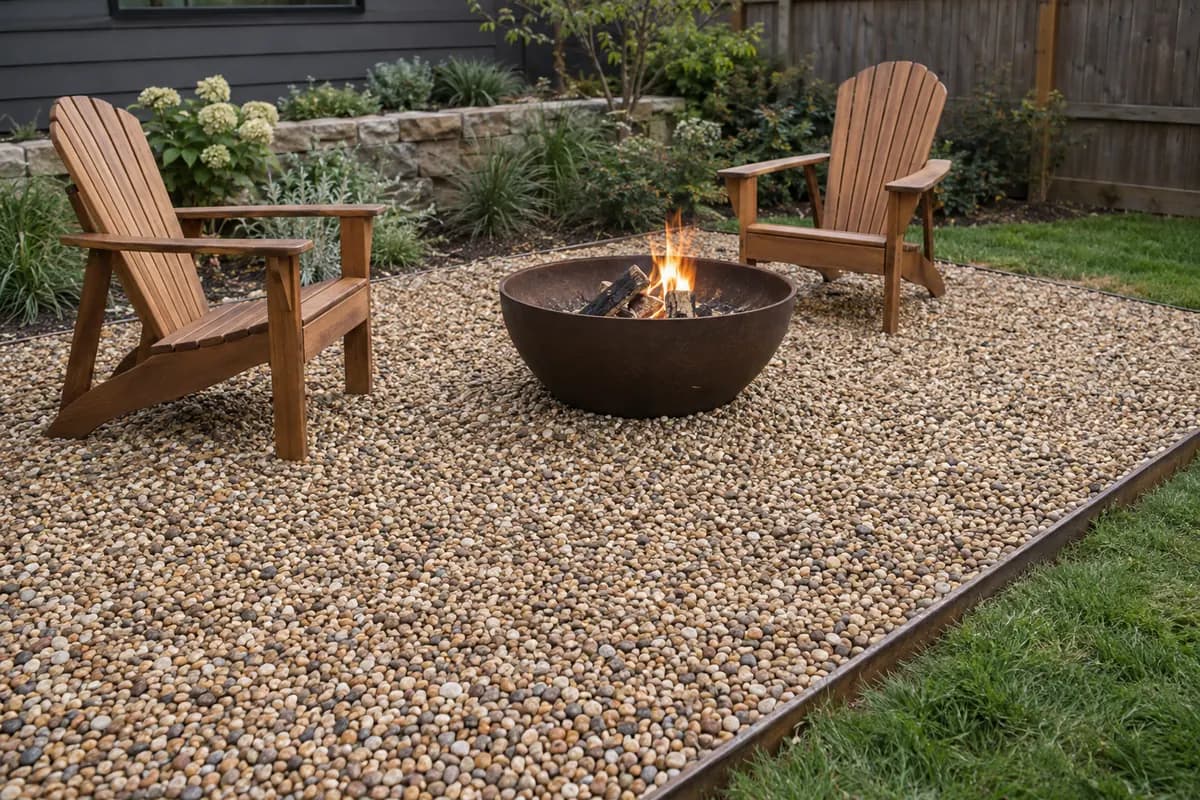
Pea Gravel is our first choice for most beds. The pebbles are about 3/8 inch across and tumbled round, in a mixed tan and brown that sits well beside green leaves and dark soil. Small round stones flow between stems and around the base of a shrub without scraping the bark, and you can push them aside with one hand when a new plant goes in.[1]
River Rock is the bolder option. Its stones are far larger than pea pebbles and smoothed by water, so they read as a feature in their own right. They suit beds of ornamental grasses, succulents and mature shrubs, where the soil is rarely dug. Around annuals they get in the way, because every stone must be lifted by hand to make room for a new planting.[1]
Decomposed Granite fits a dry, sunny bed laid out in a gravel garden style. The fine grit packs into a firm floor between widely spaced plants such as lavender, sage and yucca. It is a poor match for a bed you replant each season, since the packed crust has to be broken up before you can dig.[1]
Walkway Gravel is a small crushed stone close in size to pea pebbles, but with sharp, broken faces. In a bed those faces lock into a firmer layer than round stone does. That helps on a bed that slopes, or on a bed beside a path where feet wander off the edge.[1]
 From$4162 ton delivered
Pea Gravel
Driveway and Landscaping- Size
- 3/8 inch
- Weight
- 2,600 lb/yd³
- Color
- Mixed tan and brown
 From$4582 ton delivered
River Rock
Driveway and Landscaping- Size
- 1 to 3 inches
- Weight
- 2,600 lb/yd³
- Color
- Mixed earth tones
 From$4702 ton delivered
Decomposed Granite
Driveway and Landscaping- Size
- 1/4 inch and fines
- Weight
- 2,500 lb/yd³
- Color
- Gold to tan
 From$4242 ton delivered
Walkway Gravel
Driveway and Landscaping- Size
- 3/8 inch
- Weight
- 2,600 lb/yd³
- Color
- Mixed
What a planting bed needs in a material
Roots need air and water, so the cover on top has to pass both. A layer of 3/8 inch pebbles leaves open gaps between every piece. Rain and sprinkler water fall through to the soil instead of running off the surface, and the soil underneath can breathe.[1]
The color should set off the plants. A mixed tan and brown tone looks like dry earth, so foliage and flowers stand out against it. Pure white stone throws hard light back onto leaves and shows every speck of soil that splashes up. A black stone can soak up heat on a summer afternoon and warm the root zone near the surface.[1]
Weight counts in a bed more than most buyers expect. Pea Gravel weighs about 2,600 lb per cubic yard, so a downpour, a leaf blower or a hose left running leaves it where you raked it. Bark chips and other light covers drift to the low end of a bed and pile against the edging after a storm.[1]
The pieces should be small enough to work in tight spaces. A pebble near 3/8 inch slips between closely spaced perennials and fills the ring around a young tree without leaving bare patches. Large stones leave pockets of open soil between them, and those pockets are where windblown seeds settle and sprout.[1]
The material should be easy to buy in the right amount. Pea Gravel is sold by the ton, so a bed can be measured, converted to tons and ordered in one step, with a little extra kept back for touch ups after the first season.[1]
How to install planting bed gravel
Start with the plants. Set shrubs and perennials in their final spots and water them in before any stone goes down. Digging a planting hole through a finished gravel layer drags pebbles into the soil and leaves a messy patch.[1]
Pull every weed by the root and rake the soil smooth. Give the surface a slight fall away from the house so water drains outward. Cut a crisp edge around the bed with a flat spade, or set a metal, plastic or stone border that stands a little above the finished gravel so pebbles do not spill into the lawn.[1]
Lay woven landscape fabric over the soil in beds of shrubs and perennials that will stay in place. Cut an X at each plant, fold the flaps under, and leave a hand-wide ring of open soil around each stem so the crown is not smothered. In beds you replant every year, leave the fabric out and plan on a little more weeding.[1]
Tip the Pea Gravel from a wheelbarrow onto the fabric in small heaps, then spread it with the back of a rake. Work by hand close to stems so you do not bury low leaves. Hose the finished bed to rinse dust from the stones and bring out the tan and brown color.[1]
How much planting bed gravel do you need
A 2 inch layer is the standard cover for a planting bed. It hides the fabric, shades weed seeds and still lets water pass. For each 100 square feet of bed, that depth takes about 0.80 tons of Pea Gravel.[1]
Beds with no fabric under the stone do better with a 3 inch layer, because the stone has to do the weed blocking on its own. At that depth, 100 square feet takes about 1.20 tons.[1]
Deeper layers suit only special cases. A 4 inch layer, about 1.60 tons per 100 square feet, can work in a gravel garden with sparse, drought tolerant plants. A 6 inch layer needs about 2.41 tons per 100 square feet and is too deep for almost any bed, since it buries the lower stems of most plants.[1]
Measure each bed as a rough rectangle, or split a curved bed into simple shapes and add them up. Divide the total square feet by 100, then multiply by the tons for your chosen depth. Pea Gravel is sold by the ton, so round up. The plants take a little of the space, but the stone settles in the first weeks, so the full measurement is a safe basis for the order.[1]
| Project size | 3 inch depth | 4 inch depth |
|---|---|---|
| 100 sq ft | 0.9 cu yd / 1.2 tons | 1.2 cu yd / 1.6 tons |
| 300 sq ft | 2.8 cu yd / 3.6 tons | 3.7 cu yd / 4.8 tons |
| 600 sq ft | 5.6 cu yd / 7.2 tons | 7.4 cu yd / 9.6 tons |
What planting bed gravel costs
Pea Gravel is sold by the ton and arrives in bulk by dump truck. The delivered total follows the tonnage, the distance from the supplying yard to your address and how easy it is for the truck to reach the spot where it tips.[1]
Depth is the lever you control. Holding a bed to a 2 inch layer keeps the order small, and good fabric under the stone means the layer can stay thin and still block light from weeds.[1]
Planting beds tend to be small, so the trip itself makes up a large share of the bill. Measuring every bed around the house before you order, and adding stone for a path or a downspout splash area to the same load, gets more use out of one truck.[1]
Over the years, stone asks less of your budget than bark does. Bark breaks down and needs a fresh layer every year or two, while Pea Gravel stays in place and wants only a light top up after many seasons.[1]
Enter your ZIP in the box on the site to see the delivered figure for your address, and use the calculator to turn bed sizes into tons.[1]
Delivered, 2 tons: from $416 to $1,044 depending on the city (366 cities priced). Enter your ZIP for the exact figure.
Planting bed mistakes to avoid
Piling stone against stems and trunks is the most common error. Gravel heaped against a shrub holds damp and heat against the bark, and rot or pests can follow. Keep a small open ring of soil at the base of every plant.[1]
Solid plastic film under the stone is the next one. It stops rain from reaching the roots, and the soil underneath turns sour and compacted. Use a woven fabric that lets water through, or no barrier at all.[1]
Planting later without pulling the stone back mixes soil into the gravel. Scoop the pebbles into a bucket, dig and plant, then pour the stone back around the new plant. The bed stays clean and the soil stays free of stone.[1]
Choosing a color from a photo alone can disappoint. Set a handful of the stone against the siding and the plants before you order, and look at it in both sun and shade.[1]
Leaving fallen leaves to rot on the bed undoes the weed control. Leaves break down into soil between the pebbles, and seeds sprout in it on top of the fabric. A leaf blower on a low setting clears the bed in autumn without moving the stone.[1]
Coverage
Browse more
FAQ for planting bed gravel
Is pea gravel or mulch better for a planting bed?
Pea Gravel lasts far longer. It does not rot, fade or blow away, and at about 2,600 lb per cubic yard it stays put in heavy rain. Mulch feeds the soil as it breaks down, so beds of vegetables, annuals and plants that like rich, acid soil do better under bark. For shrubs, grasses and perennials that stay in place for years, stone is the lower effort choice.
Will gravel make my planting beds too hot?
A light, mixed tan and brown stone stays cooler than dark rock. Stone does hold some warmth and gives it back after sunset, which many sun loving plants enjoy. For shade plants and ferns that want cool, damp roots, bark mulch suits them better than any gravel.
Can I add new plants to a bed that already has gravel?
Yes. Rake or scoop the stone away from the spot, cut an X in the fabric if there is one, and dig the hole as usual. After planting, fold the fabric back and return the stone, leaving a small open ring around the stem. Small 3/8 inch pebbles make this quick, since they move with a hand or a trowel.
Do I need landscape fabric under planting bed gravel?
Fabric is worth it under beds of shrubs and perennials, because it keeps stone and soil apart and slows weeds from below. Beds you replant often are easier without it. In that case, lay the stone a little deeper, about 3 inches, so the layer blocks light by itself.
How do I keep a gravel bed free of leaves and debris?
Clear leaves before they break down, since rotted leaves turn into a seed bed between the pebbles. A leaf blower on a low setting or a soft plastic rake lifts leaves off the stone without moving it. Pull any weeds that do appear while they are small, roots and all.
How deep should gravel be in a flower bed?
A layer about 2 inches deep covers fabric and blocks weeds in most flower beds. That takes about 0.80 tons of Pea Gravel for every 100 square feet. Going deeper buries the low leaves of perennials and makes replanting harder.