
Use case
3/8 Inch Pea Gravel: Material Guide
Pea gravel at 3/8 inch is the small, smooth pebble most people picture when they think of loose garden stone. It is soft underfoot, drains freely and fills curved spaces with no cutting. This guide explains where that size works best, what to pair it with, how to lay it and how many tons each depth needs.
Best materials for 3/8 inch pea gravel jobs
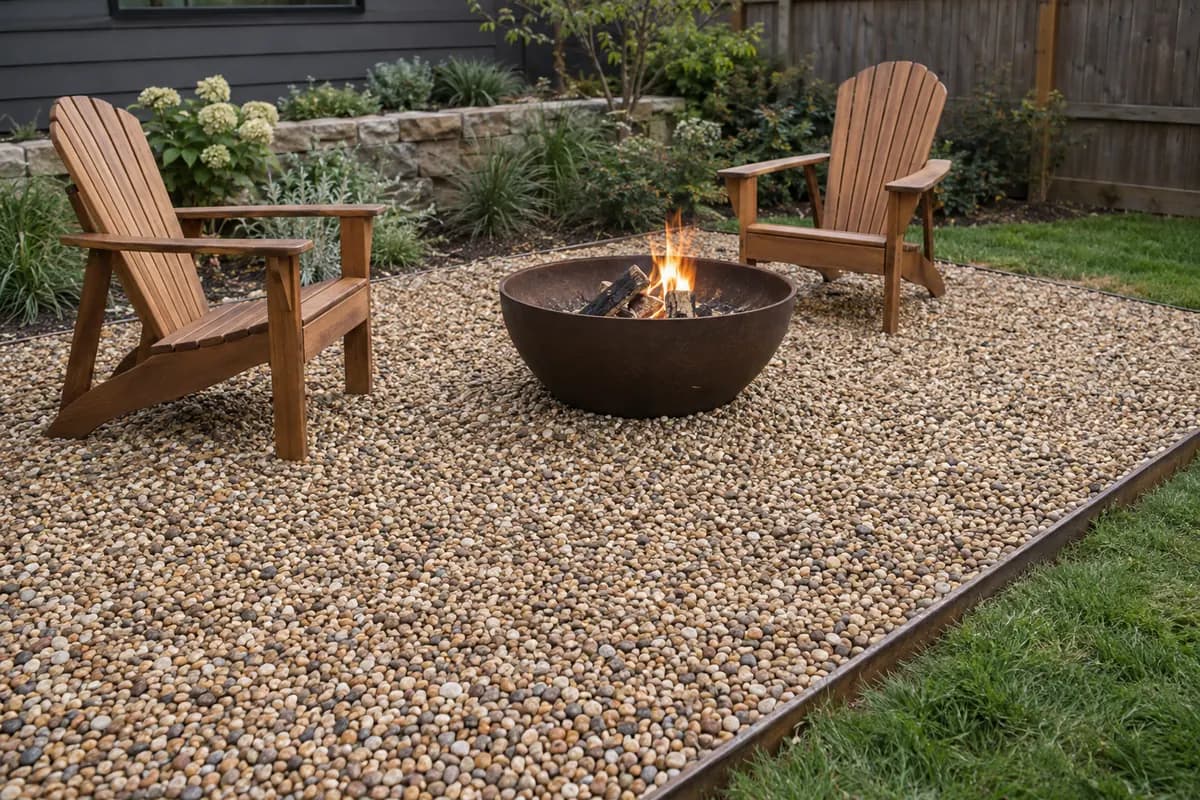
Pea Gravel in the 3/8 inch size is the material for this guide. The pebbles are rounded by water, about the size of a pea, in a mixed tan and brown. The round shape makes the stone pour, spread and level with little effort, and it leaves no sharp edges for hands, paws or bare feet.[1]
Walkway Gravel is the stone to use when the same size has to lock in place. It is crushed rather than rounded, so its flat faces bind together under traffic. Choose it for a busy path or a gentle slope, and keep the rounded pebbles for areas where comfort and a soft look come first.[1]
Decomposed Granite is the swap when a smooth, packed floor is needed. Its fines bind into a firm tread that a stroller or wheelchair can roll across, which loose pebbles do not allow.[1]
River Rock is the larger rounded stone of the family. It shares the smooth, natural look but works at a bigger scale, in dry creek beds, around downspouts and as borders. Many yards use River Rock at the edges and the small pebbles in the open spaces between.[1]
 From$4162 ton delivered
Pea Gravel
Driveway and Landscaping- Size
- 3/8 inch
- Weight
- 2,600 lb/yd³
- Color
- Mixed tan and brown
 From$4582 ton delivered
River Rock
Driveway and Landscaping- Size
- 1 to 3 inches
- Weight
- 2,600 lb/yd³
- Color
- Mixed earth tones
 From$4702 ton delivered
Decomposed Granite
Driveway and Landscaping- Size
- 1/4 inch and fines
- Weight
- 2,500 lb/yd³
- Color
- Gold to tan
 From$4242 ton delivered
Walkway Gravel
Driveway and Landscaping- Size
- 3/8 inch
- Weight
- 2,600 lb/yd³
- Color
- Mixed
What a pea gravel job needs in a material
Comfort is the main reason to pick this size. Small rounded pebbles roll a little under a foot instead of pressing a point into it. That makes them a good fit for dog runs, sitting areas, the space between stepping stones and the ground under a swing.[1]
The small size also makes the stone easy to work around plants and fixtures. Pebbles flow around the base of a bench, a birdbath or a garden light and settle flush against stepping stones without gaps. Larger stone leaves pockets in those spots that collect leaves and soil.[1]
Free drainage matters on most of these jobs. Rounded stones touch at only a few points, which leaves plenty of open space for water. Rain drains straight through, so dog runs rinse clean and the ground under a play set dries after a shower.[1]
The color has to blend in. A mixed tan and brown pebble looks natural beside stepping stones, wooden sleepers and bark mulch. It does not glare in full sun, and dust, soil and dry leaves do not stand out against it.[1]
The material needs to stay where it is spread. A cubic yard of Pea Gravel weighs about 2,600 lb, so rain and wind leave it in place. What moves it is feet and paws, which is why an edge matters more than weight on most jobs.[1]
How to install 3/8 inch pea gravel
Outline the area and remove grass, weeds and roots. For a dog run or a sitting area, dig down far enough that the finished gravel will sit level with the ground around it, which keeps pebbles from spilling over the edge.[1]
Put in a border. Rounded stone moves more than any other gravel, so a firm edge is the most useful step. Steel, staked plastic, timber, brick or a row of flat stones all hold pebbles in. Set the top of the edge a little above the finished layer.[1]
For a walking surface, lay fabric over the soil and add a thin, compacted layer of crushed base before the pebbles. The base gives a firm floor under the loose top, so the surface feels steady. For a play area or a dog run, landscape fabric laid over soil that drains well will do.[1]
Tip the Pea Gravel into the space in wheelbarrow loads and spread it with a rake held flat. The pebbles find their own level fast. Hose them off once laid to wash away dust from the delivery and show the full tan and brown color.[1]
How much 3/8 inch pea gravel do you need
Between stepping stones or over a firm base, 2 inches of pebbles is enough. That takes about 0.80 tons for each 100 square feet.[1]
A dog run or a casual sitting area without a separate base needs a bit more. At 3 inches, 100 square feet takes about 1.20 tons.[1]
A cushioned layer under a swing set or a play area needs to be deep. At 4 inches, 100 square feet takes about 1.60 tons, and at 6 inches it takes about 2.41 tons. Deeper loose pebbles feel softer and catch falls better, so play areas sit at the deep end of the range.[1]
Measure the area, multiply length by width, divide by 100 and multiply by the tons for your depth. Pea Gravel is sold by the ton. The calculator on the site will run the numbers for an odd shape as well as a simple rectangle.[1]
| Project size | 3 inch depth | 4 inch depth |
|---|---|---|
| 100 sq ft | 0.9 cu yd / 1.2 tons | 1.2 cu yd / 1.6 tons |
| 300 sq ft | 2.8 cu yd / 3.6 tons | 3.7 cu yd / 4.8 tons |
| 600 sq ft | 5.6 cu yd / 7.2 tons | 7.4 cu yd / 9.6 tons |
What 3/8 inch pea gravel costs
Pea Gravel is sold by the ton and delivered loose by dump truck. Your delivered total depends on the tons, the trip from the supplier and whether the truck can reach the place where you want the pile.[1]
Where the truck can dump also shapes the job. Pea Gravel flows out of a dump bed in a wide, low pile, so a clear spot on a driveway or a tarp on the lawn near the work area keeps cleanup simple and shortens every wheelbarrow trip.[1]
Small jobs such as the gaps between stepping stones still need a full truck trip. Pairing them with a larger area, such as a play space or a dog run, makes better use of the delivery.[1]
A deep play area uses far more stone than a thin walking layer, so the job type sets the order size more than anything else.[1]
Enter your ZIP in the box on the site to see the delivered figure for your area.[1]
Delivered, 2 tons: from $416 to $1,044 depending on the city (366 cities priced). Enter your ZIP for the exact figure.
Pea gravel mistakes to avoid
Using it on a slope is a common mistake. Rounded pebbles slide downhill under foot traffic and rain, and the top of the slope goes bare. On a slope, use crushed Walkway Gravel or terrace the ground with steps.[1]
Laying it too deep on a walkway makes walking tiring and pushes chair legs into the stone. Keep walking areas shallow over a firm base and save the deep layer for play areas.[1]
Leaving out the edge lets pebbles spread into lawns and beds, where mowers can throw them. Any job with loose rounded stone needs a border.[1]
Letting leaves and soil build up between the pebbles turns the surface into a seed bed. Rake or blow the area clean in autumn, and a gravel area stays loose and free of weeds much longer.[1]
Putting pebbles where snow is plowed or shoveled leads to stone in the lawn every spring. Keep this size off paths that need clearing in winter, or accept a yearly raking.[1]
Coverage
Browse more
FAQ for 3/8 inch pea gravel
What is 3/8 inch pea gravel used for?
The 3/8 inch size suits dog runs, sitting areas, the gaps between stepping stones, play areas and casual garden paths. The small, rounded pebbles are comfortable on feet and paws and drain fast. For a busy path or a slope, crushed Walkway Gravel of a similar size holds better.
Is pea gravel good for dogs?
Many owners like it for dog runs. The rounded 3/8 inch pebbles are kind to paws, and urine and hose water drain straight through, so the run rinses clean. Rake out waste daily, hose the area now and then and top it up when the layer gets thin.
How deep should pea gravel be under a swing set?
Play areas need a deep, loose layer to soften falls, so use the deep end of the range. At 6 inches, 100 square feet takes about 2.41 tons of Pea Gravel. Edge the area so the pebbles stay put, and rake them back under the swings, where feet push them out.
Will pea gravel wash away in heavy rain?
On flat ground, rain rarely moves it. A cubic yard weighs about 2,600 lb, and water drains through the gaps rather than carrying the stone. On a slope or where a downspout empties onto it, fast water can shift pebbles. Send downspouts into a River Rock channel or a buried drain.
Do I need a base under pea gravel?
For a walking surface or a sitting area, a thin compacted crushed stone base under the pebbles makes the surface feel much firmer. For a play area or a dog run, skip the base, since those areas need a loose, soft layer. Fabric over the soil keeps the pebbles clean.