
Project guide
Crushed Concrete Driveway Ideas for a Firm, Recycled Drive
Crushed concrete turns old slabs, curbs and footings into a hard-packing driveway stone. It is light gray, graded 3/4 inch minus, and it locks into a firm surface once it is wetted and rolled. Below you will find how to lay out the drive, how deep to build it, how many tons to order, how to install it and how to keep it in shape.
Why Crushed Concrete works for a driveway
A driveway stone needs angular pieces and enough fines to bind them, and Crushed Concrete has both. Demolished concrete is run through a crusher and screened to 3/4 inch minus, so each load holds chunky pieces near that top size plus the sand and cement dust broken loose in crushing. Those fines fill the voids, and the drive compacts into a dense, even layer.[1]
Old cement paste in the fines can bind again once it is wet and packed. A crushed concrete drive gets firmer through its first season, as traffic and rain press the surface into a crust. That set makes the drive hold a crown well and resist the washboard ripples that loose gravel picks up on a slope.[1]
The material is recycled. Each ton spread on a driveway stays out of the landfill, and the same amount of fresh rock stays in the ground. For buyers who want a gravel drive with a smaller footprint, that matters as much as how it drives.[1]
Asphalt Millings are the other recycled choice for a drive. They are ground-up old pavement, dark in color, and the leftover binder softens in summer heat and knits the pieces together. Millings suit a drive where a black surface looks right. Crushed Concrete suits one where a pale, stone-like finish fits the house and where a light surface that stays cooler in sun is welcome.[1]
Design and sizing choices for a crushed concrete driveway
Start with width. A single-car lane wants room for doors to open and for tires to stay off the soft shoulder, and a two-car pad or a turnaround wants more. Wider is easier on the edges, since cars drift and the outer strip of any gravel drive wears first. Mark the line with stakes and string and drive it once before you dig.[1]
Plan the edges next. Crushed Concrete packs tightly, but its outer few inches still creep into the lawn without a border. Steel edging, timbers, a row of pavers or a poured curb all hold the line. A border also gives the mower a clean pass and keeps the light gray stone from scattering into beds.[1]
Shape the surface for water. A crown down the middle or a steady slope to one side moves rain off the drive before it soaks in. Low spots become puddles and then potholes. Where the drive meets the street, a slight rise keeps the stone from washing out onto the pavement.[1]
Think about the look. The light gray color reads clean beside white or gray siding and next to a concrete walk. Some owners top the drive with a different stone for color. Others leave the Crushed Concrete as the finished surface, which keeps the build simple and the surface firm.[1]
Depth, base and quantity for a crushed concrete driveway
Depth depends on the ground and the vehicles. A light-use parking strip on firm soil can work with a shallow surface layer over a packed base. A daily driveway for cars, a pickup or a delivery van needs a deeper section so the load spreads before it reaches the soil.[1]
Here are the tons for each depth. Crushed Concrete needed for 100 square feet is about 0.80 tons at 2 inches deep, 1.20 tons at 3 inches and 1.60 tons at 4 inches. A full 6 inch section takes about 2.41 tons per 100 square feet.[1]
Many crushed concrete drives use the same stone top to bottom. The 3/4 inch minus grading already holds the fines a base needs, so one material can fill the whole depth. On wet clay, a woven fabric under the first lift keeps the stone from sinking and keeps mud from rising into it.[1]
Weight helps when you size the order. A cubic yard of Crushed Concrete weighs about 2,600 lb, and the stone is sold by the ton. Measure the length and width, work out the square feet, divide by 100 and multiply by the tons for your depth. Add a small margin for compaction and for the edges.[1]
Installation steps
Dig out the drive area. Remove sod, roots and topsoil down to firm mineral soil, and haul the spoil away or use it to build up the shoulders. Shape the bottom of the dig with the same crown or slope the finished surface will have.[1]
Compact the subgrade. Run a plate compactor or a roller over the bare soil until it stops moving under your boots. Soft spots that pump water should be dug out and filled with stone before the main lift goes down.[1]
Lay fabric where the soil is soft. Unroll a woven geotextile across the dig, overlap the seams by a generous margin and pin them. Skip this step on firm, sandy or gravelly ground.[1]
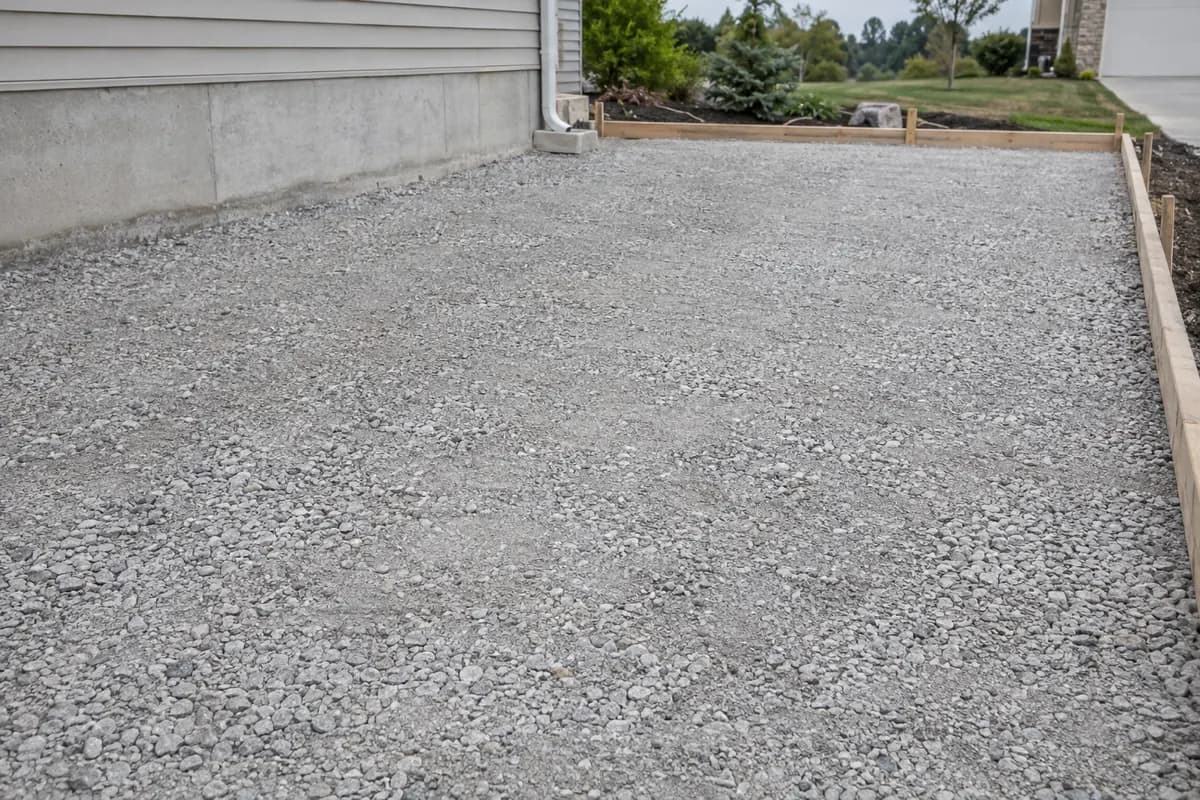
Spread the first lift. Dump the Crushed Concrete in piles along the drive and push it out to an even depth of about 3 inches loose. Water it until it is damp through, then compact it with several overlapping passes. Repeat in lifts until you reach the planned depth.[1]
Finish the surface. Rake out any high spots, check the crown with a long straight board, and give the top lift a final pass with the compactor. Let the drive see a few rains before heavy use, and fill any low spots that show up while it settles.[1]
Maintenance and common mistakes
A crushed concrete drive needs little care once it sets. Rake loose stone back toward the middle a few times a year, fill potholes as soon as they open, and keep the crown in shape. A thin top-up every few years replaces stone carried off by tires and plows.[1]
The most common mistake is laying the stone dry. Dry Crushed Concrete will not lock, and it ruts under the first heavy load. Damp stone packs into a dense layer that the cement fines can bind. Keep a hose on hand during every lift.[1]
Another frequent error is building on topsoil. Organic soil keeps sinking as it breaks down, and the drive follows it. Dig to firm ground first. A third is leaving out the edge. Without a border, the outer strip spreads into the lawn and the drive slowly narrows.[1]
Watch where runoff goes. Fresh concrete fines can raise the pH of water that drains off the drive, so steer runoff away from beds of acid-loving shrubs and toward lawn or a gravel strip. The effect fades as the surface ages.[1]
Ask what is in the load. Recycled stone can hold the odd bit of brick, asphalt or wire from demolition. A screened 3/4 inch minus product keeps that to small amounts, and you can pick out anything sharp that surfaces during the final rake.[1]
Cost and ordering
Crushed Concrete is sold by the ton and arrives in a dump truck. Your delivered total depends on how many tons the drive takes and on the trip to your address. The ZIP box on the site shows current delivered figures, so you can compare depths before you commit.[1]
Depth is the biggest lever on tonnage. Going from 4 inches to 6 inches over the same drive adds about half again to the order. Size the drive once, decide the depth from the soil and the vehicles, and order the whole job in as few loads as the truck allows.[1]
Delivery day goes smoother with a clear plan. Mark where the truck should dump, move cars off the drive, and check for low wires and soft lawn on the truck route. A driver who can tailgate-spread along the drive saves hours of shoveling. Order the full amount at once, since a small second load carries a full trip.[1]
Delivered, 2 tons: from $413 to $746 depending on the city (364 cities priced). Enter your ZIP for the exact figure.
Crushed Concrete for this project

How much crushed concrete do you need?
Measure the area, pick the depth for this project, and the calculator converts it to cubic yards and tons for your delivered price.
Projects
Related project guides
Browse
Browse more
Frequently Asked Questions
Is crushed concrete good for a driveway?
Yes. It is angular, it holds fines from the crushing, and it compacts into a firm surface that can stiffen further as the cement dust binds. Gravel Valet delivers it at 3/4 inch minus in a light gray color. Built on firm soil with a crown, a crushed concrete drive stands up to daily car traffic.
How deep should a crushed concrete driveway be?
For cars and light trucks on firm ground, a compacted section of about 6 inches is a sound target, and that takes about 2.41 tons per 100 square feet. Soft clay or heavy vehicles call for a deeper section with fabric below. A light parking strip needs less depth.
Crushed concrete or asphalt millings for a drive?
Each one is recycled, and each packs hard. Asphalt Millings give a dark surface that knits together in summer heat. Crushed Concrete gives a pale, stone-like surface that stays cooler in sun and suits gray or white houses. Pick the color that fits your house and the ground you are building on.
Does a crushed concrete driveway get dusty?
A new drive can throw some dust in dry weather, since the fines sit on top until rain and traffic press them in. Wetting the surface during the build and rolling it well cuts the dust a lot. After the first season, the surface crust holds most of the fines in place.
Can I put crushed concrete over an old gravel drive?
Yes, in most cases. Grade the old drive, fill potholes, restore the crown and compact it. Then spread the Crushed Concrete in damp lifts and compact each one. A layer of about 2 inches takes about 0.80 tons per 100 square feet. Dig out any section that is soft or full of soil first.