
Project guide
Asphalt Millings Driveway Ideas for a Firm, Dark Drive
An asphalt millings driveway gives a long lane or a parking pad a dark, firm surface that tightens with time. It needs good compaction and a sound base to get there. This guide covers why millings work on a drive, the layout choices to make first, depth and tonnage, the build itself, upkeep, and how ordering works.
Why Asphalt Millings works for a driveway
Asphalt Millings are old pavement ground up when roads are resurfaced. The milling machine chews the asphalt into pieces 1 inch minus, meaning everything passes a 1 inch screen and the finer bits stay mixed in. Each piece still carries a coating of the original binder.[1]
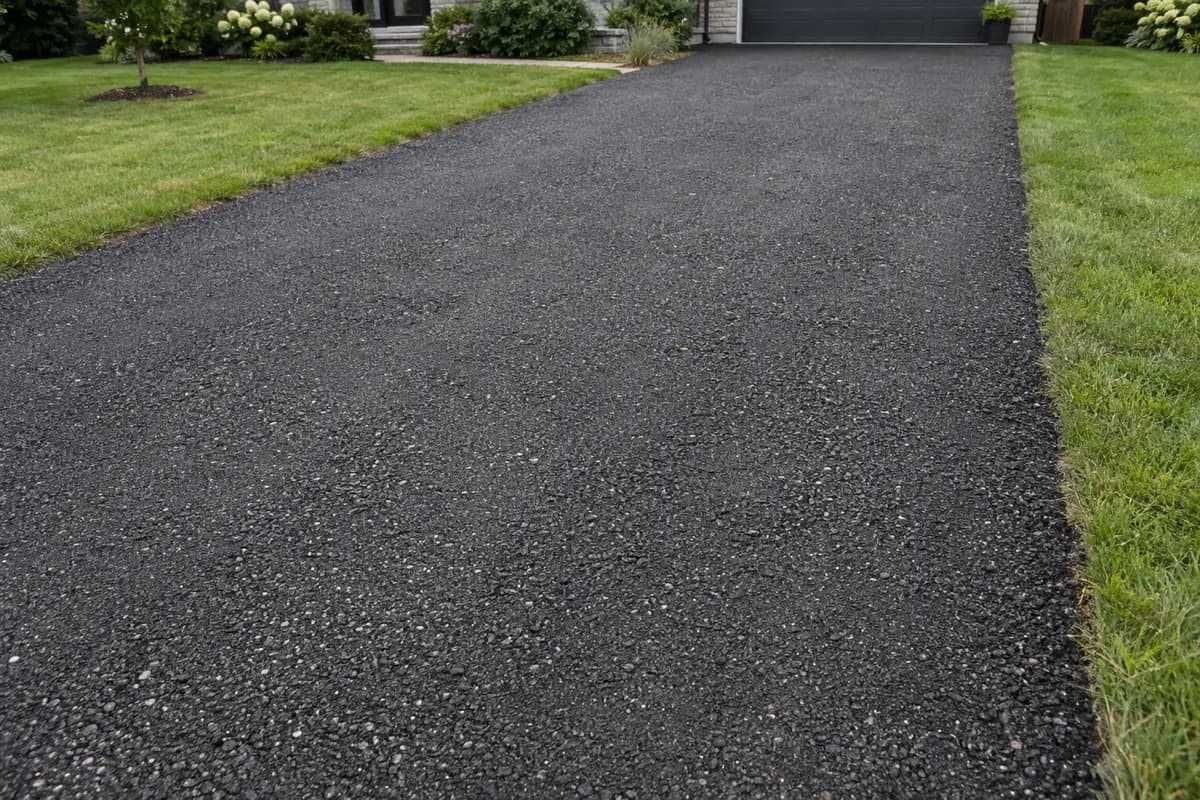
That coating is why the material is black, and it is what sets millings apart from gravel. Once spread and compacted, the coated pieces press together, and on warm days the old binder softens slightly and bonds them. Over a summer or two the drive tightens into a firm, dark surface that looks close to blacktop from the street and kicks up far less dust than loose stone.[1]
The mixed sizes pack densely, and a cubic yard weighs about 2,900 lb, heavier than most loose stone. That density suits driveways that take real abuse: farm lanes, long rural drives and parking pads for trucks and trailers.[1]
Millings are a recycled product, so a millings drive reuses old road surface that would otherwise sit in a stockpile. Crushed Concrete is the other recycled choice, and it can go underneath as the base on soft ground.[1]
Design and sizing choices for a millings driveway
Width comes first. A single car lane needs room for the vehicle plus a margin on each side, so tires do not chew the edges. A two-car drive, a turnaround or a parking pad by the garage adds area fast. Sketch the layout before measuring, and include a wider apron where the drive meets the road.[1]
Plan the crown and the drainage. A millings drive should stand slightly higher in the middle than at the edges, so rain runs off instead of soaking in. Where the drive crosses a low spot, a culvert or a trench of drain stone along the side keeps water from cutting across the surface.[1]
Decide how the edges will look. Millings spread unevenly at the margins unless something holds them. Landscape timbers, a steel edge or a shallow trench with grass grown up to it gives a clean line. On rural lanes, many owners leave the edge soft and grade it back each spring.[1]
Think about color and heat. The black surface reads as a paved drive, which many owners like. The dark surface warms in direct sun, which helps the binder settle during the first summer, but it can feel hot on bare feet and on a dog's paws in midsummer.[1]
Depth, base and quantity for a millings driveway
Most millings driveways use a compacted layer about 3 to 4 inches thick over a firm subgrade or an old gravel drive. At 3 inches, 100 square feet takes about 1.34 tons. At 4 inches, the same area takes about 1.79 tons. A thicker layer handles heavy trucks better and hides bumps in the ground below.[1]
On soft ground or a brand new drive, build a base first. A compacted layer of Crushed Concrete or other crushed stone gives the millings a solid floor. A full 6 inches of millings alone, about 2.69 tons per 100 square feet, can also work on firm soil where the drive carries only cars.[1]
A thin 2 inch layer, about 0.90 tons per 100 square feet, suits only a top dressing over an existing gravel drive that is already firm. It refreshes the surface and adds the dark look without rebuilding anything underneath.[1]
To find tons, multiply the drive length by its width, divide by 100, and multiply by the tonnage for your depth. Millings shrink noticeably when rolled, so the loose layer should start thicker than the finished one, and the order should carry a margin for that loss.[1]
Installation steps
Start by clearing the path. Strip grass, topsoil and roots down to firm subsoil, and dig out any soft or wet pockets. Grade the subgrade with the crown and slope you want in the finished drive, since the millings will follow the shape below them.[1]
Compact the subgrade with a plate compactor or roller. On clay or soft ground, lay a woven geotextile fabric next, then spread and compact a crushed stone base. The fabric keeps the base from sinking into the soil under truck loads.[1]
Spread the Asphalt Millings with a skid steer or a tractor box blade in lifts of a few inches. Dampen each lift lightly and compact it with a heavy roller, working from the edges toward the center. Water helps the fines settle between the larger pieces. On a long drive, a vibratory roller does a better job than a walk-behind plate.[1]
Let the surface cure. Traffic and summer heat finish the job, tightening the black surface over the first season. Some owners spray a light coat of asphalt emulsion on top to speed up the bond, but many drives harden well without it.[1]
Maintenance and common mistakes
Upkeep is simple. Fill ruts and potholes with fresh millings and tamp them in hard. Grade the surface with a box blade in spring if snowplows or heavy tires have pushed material to the sides. Keep water off the drive by clearing ditches and culverts after big storms.[1]
The most common mistake is skipping compaction. Loose millings stay loose, track into the garage and never bond. Roll every lift until the surface feels solid under a boot heel.[1]
Spreading millings thin over soft ground is the next most common error. Without a base, the drive ruts in its first wet season. Ignoring drainage does similar damage: water that sits on the surface softens the subgrade and breaks the drive apart from below.[1]
Avoid sharp turns with the wheels locked on fresh millings during hot afternoons in the first summer, since spinning tires can scuff the soft black surface. Within a season the drive firms up and handles normal turning.[1]
Cost and ordering
Asphalt Millings are sold by the ton and delivered in bulk by dump truck. Your delivered total depends on the tonnage you order, the distance from the supplying yard to your address and the truck size that can reach your site. Larger orders spread the trip over more tons, so the amount per ton tends to drop as the order grows.[1]
Enter your ZIP in the box on the site to see the delivered figure for your area. The area calculator turns the drive length, width and depth into tons, so you can check the order before checkout.[1]
Supply follows road work. Millings come from local resurfacing jobs, so the amount on hand rises and falls with the paving season. Ordering ahead of a big project helps make sure enough is ready when you need it.[1]
Plan the drop spot before the truck arrives. A dump truck needs a firm, level spot with no overhead wires and room to raise its bed. Dropping the load close to where the spreading starts saves a lot of hauling with the tractor.[1]
Delivered, 2 tons: from $416 to $502 depending on the city (366 cities priced). Enter your ZIP for the exact figure.
Asphalt Millings for this project

How much asphalt millings do you need?
Measure the area, pick the depth for this project, and the calculator converts it to cubic yards and tons for your delivered price.
Projects
Related project guides
Browse
Browse more
Frequently Asked Questions
Do asphalt millings get hard?
Yes, with compaction and time. The pieces carry old asphalt binder that softens slightly on warm days and bonds them together. Rolled firmly and driven on through a summer, a millings drive becomes a tight, dark surface. Loose, uncompacted millings stay loose, so the rolling step is what makes the difference.
How thick should a millings driveway be?
A finished layer of 3 to 4 inches over a firm base suits most home driveways. Heavier traffic or softer ground calls for more depth or a crushed stone base below. A thin 2 inch layer works only as a top dressing over an existing, solid gravel drive.
Are asphalt millings better than gravel for a driveway?
They suit different goals. Millings pack tighter, raise less dust and give a dark, paved look. Gravel drains faster and stays loose, which some owners prefer on slopes. For a long drive where a firm, low-dust surface matters, millings are a strong choice. For a decorative drive, clean crushed stone may look better.
Can I put millings over an old gravel driveway?
Yes, if the gravel is firm and well drained. Grade the old surface, fill potholes and compact it. Then spread and roll the millings on top. The old gravel acts as the base, and the millings add a bound top layer. Fix any drainage problems first, since water under the drive will undo the work.
Do millings need sealing?
Sealing is optional. Many millings drives harden well on their own after a season of heat and traffic. A light spray of asphalt emulsion can speed the bond and cut down on loose pieces at the surface. Plan it after the drive has been compacted and has had time to settle.