

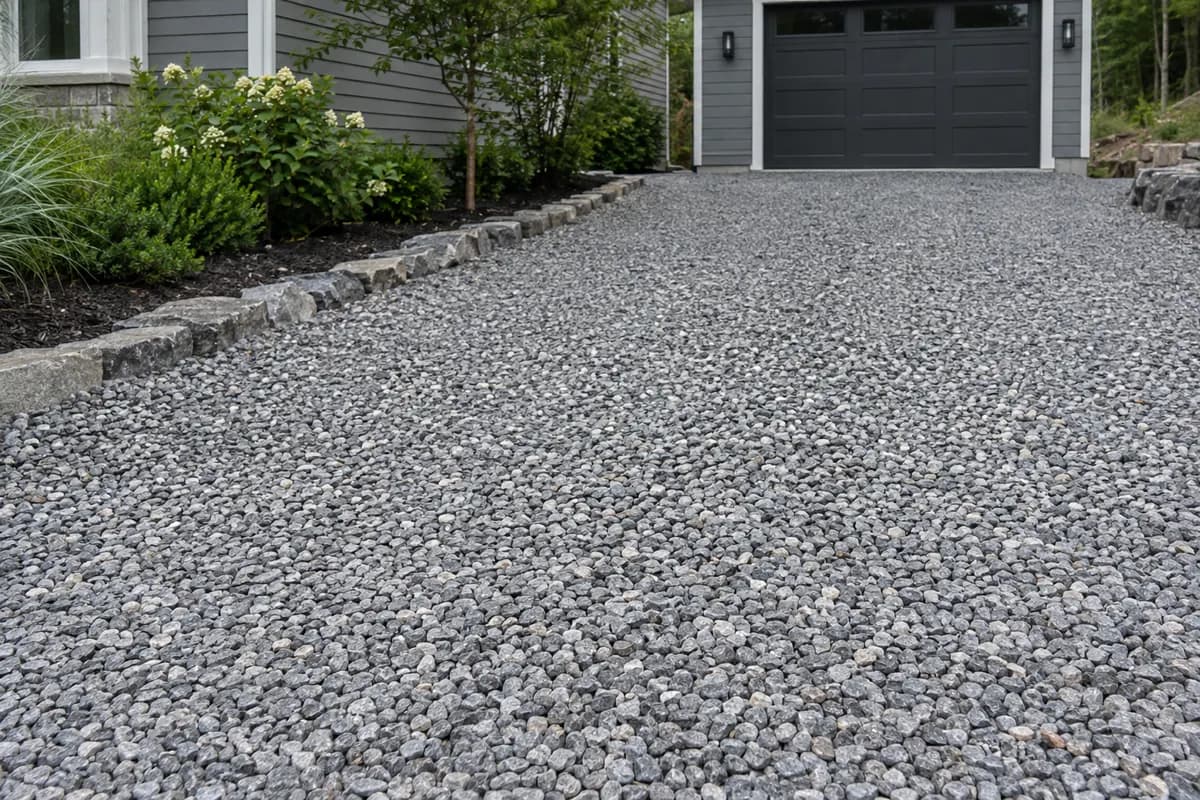
Rough capacity by truck class
Take every figure in this section as a rough range, because ranges vary by truck and by state.
A light dump body on a heavy pickup chassis moves about 1 to 3 tons. Landscapers like them for tight yards, and they are the smallest thing you will hear called a dump truck.
A single axle dump truck has one driven axle at the rear and hauls about 5 to 8 tons. Its box holds around 5 or 6 yards.
The tandem is the truck most people picture. Two rear axles spread the weight, the box holds about 10 to 14 yards, and the payload lands near 10 to 15 tons.
Tri-axle trucks carry a third axle at the back, sometimes one that lifts off the road when empty, and they reach about 15 to 20 tons. Quad-axle trucks go a little past that where a state allows them.
At the top sits a tractor pulling an end dump trailer, at about 20 to 25 tons. It carries the most and needs the most room, so it suits open sites and straight approaches. Backing one down a winding residential drive is a different matter.
Two limits, and the first one reached wins
Every dump truck has a box and a weight rating, and each load stops at whichever limit it hits first. Drivers have their own words for this, and any of them will tell you which limit stopped the load. A load of rock weighs out with space left in the box. A load of mulch cubes out, with the box full and the scale far from its limit.
Road rules sit on top of the truck's own rating. Each state decides how much weight may ride on an axle and on the whole truck, and the empty weight of the truck counts against that number. A heavier truck with a bigger box may legally carry no more than a lighter one. That is why the class ranges overlap, and why two trucks of the same size can leave a yard with different tonnage.
One 12 yard box, eleven different loads
Picture a box that holds 12 cubic yards, and fill it with material from our catalog. To find the weight of a full box, multiply 12 by the weight per yard and divide by 2,000.[1]
Asphalt Millings are the heaviest thing we carry at 2,900 lb a yard, so a full box would come to 17.4 tons. Road Base at 2,800 lb makes 16.8 tons. Anything at 2,700 lb, #57 Crushed Stone or Concrete Sand for instance, makes 16.2 tons.[2]
River Rock, like Pea Gravel, weighs 2,600 lb and comes to 15.6 tons. Decomposed Granite at 2,500 lb makes exactly 15 tons.[2]
Soil drops off from there. Fill Dirt at 2,400 lb reaches 14.4 tons, Topsoil at 2,200 lb reaches 13.2 tons and Garden Soil at 2,000 lb reaches 12 tons.[2]
Then comes the big gap. Compost at 1,200 lb is 7.2 tons. Black Shredded Mulch at 800 lb is only 4.8 tons, and Wood Chips at 700 lb are 4.2 tons.[2]
Now suppose that same truck may carry 15 tons. It weighs out before the box is full on all the rock. For #57 Crushed Stone, 15 tons divided by 1.35 tons a yard is 11.1 yards, so nearly a yard of space stays empty. Road Base stops at 10.7 yards, and Asphalt Millings stop at 10.3 yards, which leaves a clear gap under the top rail.[2]
That gap surprises people. A box that looks short of full may be carrying its whole legal weight.
Run the sum the other way and mulch never gets close to the limit. Fifteen tons of Black Shredded Mulch would fill 37.5 yards, more than three of these boxes, so the box sets the load and the weight rating hardly enters into it.[2]
Water changes the sums too. Wet sand and wet soil weigh more than dry, so a damp load reaches the limit with fewer yards on board.
What 15 tons covers on the ground
Fifteen tons sounds like a lot until you lay it out. Take a yard apron 75 feet by 12 feet, with #57 Crushed Stone going down 4 inches deep. The area is 900 square feet. Four inches is a third of a foot, which makes 300 cubic feet, and 300 over 27 is 11.11 yards. Times 1.35 tons a yard gives exactly 15 tons.[1],[2]
Our coverage figure agrees. One ton of this stone spreads over 60 square feet when laid 4 inches thick, and 15 times 60 is 900.[2]
So the top of the tandem range covers a space a bit bigger than two cars need to park and turn around. A long drive will take several of these, and the calculator turns the tape measure into tons before anyone talks about trucks.
You order tons, and the truck follows
Our orders work in weight or volume. Stone, sand and soil sell by the ton, while mulch and compost sell by the cubic yard. Nobody asks you to pick a tandem or a tri-axle, and you do not need to learn the classes to place an order.[2]
There are good reasons for that. The tonnage, the distance and the route into your property shape what makes sense on the day. A job measured in truck classes also tends to come out wrong, since a buyer who asks for two tandem loads may get 20 tons or 30 tons depending on who hears it.
Give us the number instead. Our online range is 2 tons to 200 tons in half ton steps, with the delivered total shown for the amount you enter. The 200 ton end sits far past every class above, so an order that big takes several trips.[3]
If a tight site worries you, say so in the delivery notes. That is where a narrow entrance belongs.[3]
What a truck needs from your site
Allow a firm path about 12 feet wide for a dump truck, plus room to raise the bed with no branches or wires above it. Stand at the road and walk the path it will take, looking up as well as ahead.[3]
Flag gates, slopes, low wires and soft ground in the delivery notes. A raised box reaches much higher than the cab, so a wire that clears a truck on the way in can still catch the box when it tips.[3]
Weight matters here too. A loaded truck can crack a thin slab, crush a septic lid or sink into a wet lawn, so mark those spots. The driver dumps where you mark if the truck can reach it.[3]
Choose a firm dump spot close to the job. Moving a pile twice is the slowest job in landscaping.
The numbers behind this page
| Fact | Value | Applies to | Source |
|---|---|---|---|
| pounds in one US ton | 2,000 | Material spec | [1] |
| Asphalt Millings weight per cubic yard | 2,900 lb | Material spec | [2] |
| Road Base weight per cubic yard | 2,800 lb | Material spec | [2] |
| #57 Crushed Stone weight per cubic yard | 2,700 lb | Material spec | [2] |
| Concrete Sand weight per cubic yard | 2,700 lb | Material spec | [2] |
| Pea Gravel weight per cubic yard | 2,600 lb | Material spec | [2] |
| River Rock weight per cubic yard | 2,600 lb | Material spec | [2] |
| Decomposed Granite weight per cubic yard | 2,500 lb | Material spec | [2] |
| Fill Dirt weight per cubic yard | 2,400 lb | Material spec | [2] |
| Topsoil weight per cubic yard | 2,200 lb | Material spec | [2] |
| Garden Soil weight per cubic yard | 2,000 lb | Material spec | [2] |
| Compost weight per cubic yard | 1,200 lb | Material spec | [2] |
| Black Shredded Mulch weight per cubic yard | 800 lb | Material spec | [2] |
| Wood Chips weight per cubic yard | 700 lb | Material spec | [2] |
| tons in one cubic yard of #57 Crushed Stone | 1.35 | Material spec | [2] |
| cubic feet in one cubic yard | 27 | Material spec | [1] |
| square feet one ton of #57 Crushed Stone covers at 4 inches deep | 60 | Material spec | [2] |
| #57 Crushed Stone is sold by the | ton | Material spec | [2] |
| Topsoil is sold by the | ton | Material spec | [2] |
| Black Shredded Mulch is sold by the | cubic yard | Material spec | [2] |
| Compost is sold by the | cubic yard | Material spec | [2] |
| Minimum order | 2 tons of stone, gravel, sand or soil, or 2 cubic yards of mulch or compost | Material spec | [3] |
| Quantity steps | half-ton or half-yard steps from the minimum up to 200 online, big jobs of several truckloads go through the same checkout | Material spec | [3] |
| How the delivered price is set | each city has a ladder of delivered totals, delivery included, in whole dollars | Material spec | [3] |
| What to flag in the delivery notes | gates, slopes, low wires and soft ground | Material spec | [3] |
| Truck access | a firm path roughly 12 feet wide, room to raise the bed with no branches or wires above it, and a spot clear of septic tanks and buried lines | Material spec | [3] |
| Where the load lands | in one pile at the spot you mark, as long as a loaded truck can get there safely, the driver does not spread it | Material spec | [3] |
| cubic yards in one ton of #57 Crushed Stone | 0.74 | Material spec | [2] |
| #57 Crushed Stone: median delivered total for 10 tons across priced cities | $810 | Material spec | [4] |
| #57 Crushed Stone: median delivered total for 20 tons across priced cities | $1,612 | Material spec | [4] |
| Delivery day | the site shows a next delivery date two business days ahead, Monday to Friday, and we confirm the day by phone | Material spec | [3] |
Sources
- US customary units of measure, retrieved 2026-11-01
- Gravel Valet material specs, retrieved 2026-11-01
- Gravel Valet ordering and delivery terms, retrieved 2026-11-01
- Gravel Valet delivered price table, national figures across priced cities, retrieved 2026-11-01
Point and station values describe one spot, not every lot in town. Check your own site before you build.
Plan this project with a real person
Tell us the scope and we size the load, quote the delivery and name the material that fits.
Materials and projects mentioned
Use a calculator
Deep reading
More guides like this
Frequently Asked Questions
How many yards of gravel fit on a dump truck?
By weight, fewer than you might expect. A tandem at 10 to 15 tons holds about 7.4 to 11.1 yards of #57 Crushed Stone, since each yard is 1.35 tons. Ranges vary by truck and state, so use them only as a rough guide.
What does a full truck of stone cost?
Price the tons, since truck sizes differ. At the median across our priced cities, a 10 ton load of #57 Crushed Stone is $810 delivered and a 20 ton load is $1,612. Your city has its own ladder, so check the total for your ZIP.
Can I choose which truck comes to my house?
You order the amount, and the truck follows from the order. Tell us about gates, slopes, low wires and soft ground in the delivery notes. We confirm the day by phone, and that call is a good moment to raise any worry about access.