
Use case
Septic Field Gravel: Material Guide
A septic drain field depends on the stone around its pipes. The gravel holds the trench open, spreads the liquid that leaves the tank and lets it soak slowly into the soil below. The wrong stone clogs that path and shortens the life of the whole system. This guide explains what septic field gravel must do, why washed Drain Rock is the usual choice and how to work out the tons for a field.
Best materials for a septic field
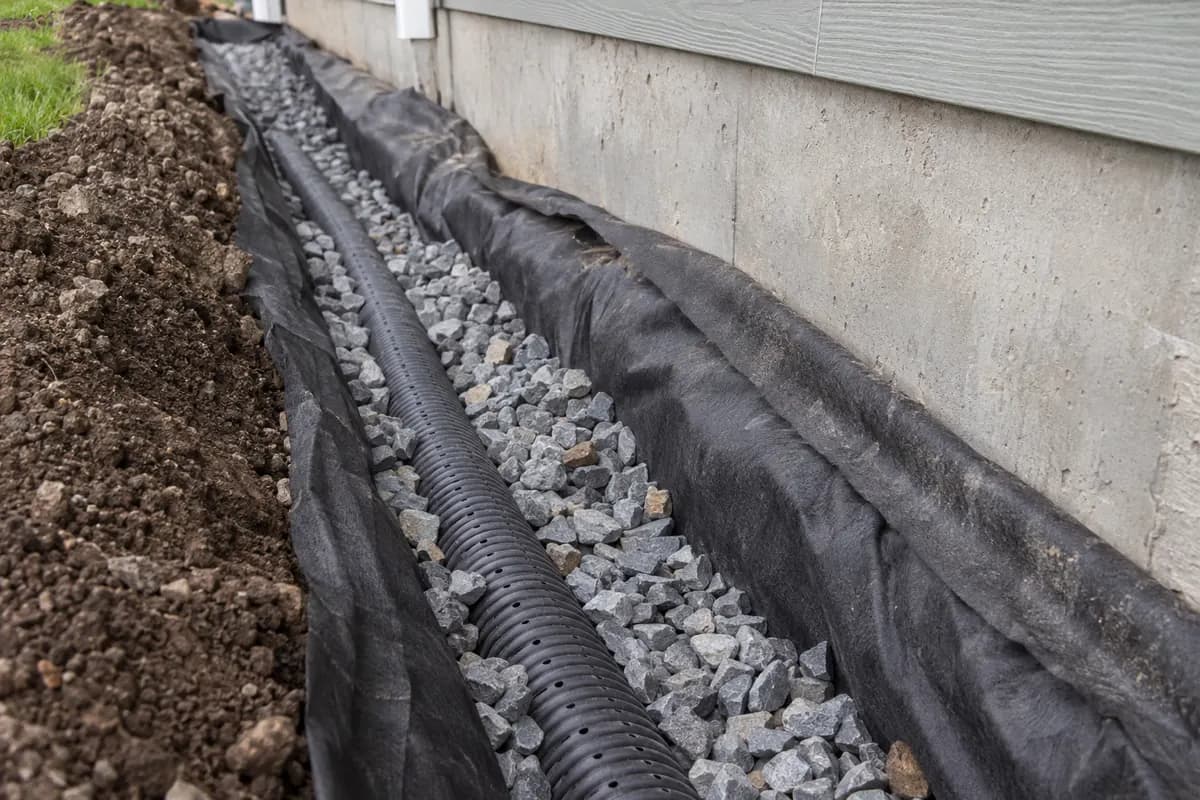
Washed Drain Rock is the standard stone for a septic field. It is clean, hard stone graded from 3/4 to 1-1/2 inches, gray in color, with the dust and fines washed off at the yard. That size range leaves large open spaces between the pieces, which a drain field trench needs to store and spread liquid.[1]
Many system designs call for stone in this range by name or by size, and some describe it as washed crushed stone or washed gravel. Whatever the wording, the features are the same: pieces large enough to leave voids, and no fine material mixed in. If your design names a size, check it against the Drain Rock range before you order.[1]
Some stones do not belong in a septic field. Dirty crushed stone with dust left in, crusher run, stone dust, sand or recycled concrete all pack tight and fill the voids the field depends on. Soft stone that breaks down over the years is also a poor choice, since its crumbs wash into the soil below and seal it.[1]
Color has no effect on how the stone works. Drain Rock tends to come in gray, and the stone is buried under soil once the field is finished, so pick on grading and cleanliness, never on looks.[1]
 From$4252 ton delivered
Drain Rock
Drainage and Base- Size
- 3/4 to 1-1/2 inches
- Weight
- 2,700 lb/yd³
- Color
- Gray
 From$4242 ton delivered
#57 Crushed Stone
Gravel and Crushed Stone- Size
- 3/4 to 1 inch
- Weight
- 2,700 lb/yd³
- Color
- Gray
 From$4372 ton delivered
#67 Stone
Gravel and Crushed Stone- Size
- 3/4 inch and under
- Weight
- 2,700 lb/yd³
- Color
- Gray
 From$4252 ton delivered
#89 Crushed Stone
Gravel and Crushed Stone- Size
- 3/8 inch
- Weight
- 2,700 lb/yd³
- Color
- Gray
What a septic field needs in a material
Open space comes first. Liquid leaves the perforated pipe and has to travel sideways and down through the stone before it reaches the soil. Drain Rock between 3/4 and 1-1/2 inches leaves wide gaps between the pieces, so the trench can hold a surge of water after laundry or a busy morning and release it slowly.[1]
The stone must be clean. Fines on the stone wash down with the first flows and coat the trench bottom with a skin of silt. That skin slows the soak into the ground and is one reason older fields fail early. Washed stone avoids the problem from the start.[1]
It must carry weight without crushing. A cubic yard of Drain Rock weighs about 2,700 lb, and the field above it bears soil, lawn equipment and foot traffic. Hard stone holds its shape under that load, so the trench keeps its voids for decades.[1]
It must support the pipe. A bed of stone under the pipe holds it on a steady line, and stone around and over it shields the perforations from soil. Angular pieces lock together and hold the pipe from shifting, while round pieces of the same size also work when the design allows them.[1]
How to install septic field gravel
Septic work follows a design drawn for the lot, and that plan sets trench width, depth, length and spacing. Build to that plan. The steps below describe how stone goes into a typical trench so you can plan the order and the delivery.[1]
The trenches are dug level along their length, with the bottom raked rough so liquid can enter the soil. Heavy equipment should stay off the trench bottom, since packed soil soaks up water slowly.[1]
A first layer of Drain Rock goes into the bottom of the trench and is spread level. This bed lifts the pipe off the soil and gives liquid a place to collect and spread out before it soaks down.[1]
The perforated pipe is laid on the stone with the holes set as the design shows, and checked for a steady, level line. Joints are fitted to the distribution box at the head of each run.[1]
More Drain Rock goes around and over the pipe to cover it fully. Spread the stone by hand or with a careful bucket so the pipe does not shift or crack.[1]
A layer of filter fabric or untreated building paper, as the design calls for, goes over the stone to keep backfill soil from sifting down into the voids. Soil then fills the trench, mounded slightly so it settles flat, and the area is seeded with grass. Trees and shrubs belong away from the field, since roots seek out the moisture.[1]
How much septic field gravel do you need
Septic trenches are filled with stone much deeper than any garden bed, so tons add up quickly. As a reference, a layer of Drain Rock 2 inches deep over 100 square feet takes about 0.83 tons, and 3 inches takes about 1.25 tons.[1]
At 4 inches the same area takes about 1.67 tons, and at 6 inches about 2.50 tons. A septic trench holds far more stone than that, so work from the full depth on your plan.[1]
To size the order, multiply the total trench length by the trench width for the floor area in square feet, and divide by 100. Work out how many 6 inch layers fit in the stone depth on your design, and multiply by about 2.50 tons for each layer. Drain Rock is sold by the ton, so add a margin for uneven trench walls and settling.[1]
The calculator on the site can check the math if you enter the trench area and depth. With Drain Rock at about 2,700 lb per cubic yard, a full field can fill more than one truck, so confirm the total before you book the delivery.[1]
Ordering the whole field at once keeps the stone from one source and one grading. Running short partway through a trench leaves open pipe in the ground while you wait for more stone.[1]
| Project size | 3 inch depth | 4 inch depth |
|---|---|---|
| 100 sq ft | 0.9 cu yd / 1.3 tons | 1.2 cu yd / 1.7 tons |
| 300 sq ft | 2.8 cu yd / 3.8 tons | 3.7 cu yd / 5.0 tons |
| 600 sq ft | 5.6 cu yd / 7.5 tons | 7.4 cu yd / 10.0 tons |
What septic field gravel costs
Drain Rock is sold by the ton and delivered in a dump truck. The delivered total depends on how many tons the field needs, how far the truck travels from the yard that supplies the stone and how easy the drop spot is to reach.[1]
Washed stone takes an extra step at the yard, where water rinses off the fines, so it sits above unwashed crushed stone of the same size. That step keeps the field open for years.[1]
Weight drives the trucking. Because a cubic yard weighs about 2,700 lb, a large field may need several loads, and each trip adds to the delivered total. A drop spot close to the trenches, on firm ground away from the field area, saves both trips and labor.[1]
Enter your ZIP on the site to see the delivered total for Drain Rock at your address. For a full field, request a quote with your total tons so the loads can be planned.[1]
Delivered, 2 tons: from $425 to $764 depending on the city (366 cities priced). Enter your ZIP for the exact figure.
Septic field gravel mistakes to avoid
Using unwashed stone does the most harm over the years. The dust coats the trench bottom and slows the soak into the soil. Ask for washed Drain Rock and look at the load when it arrives.[1]
Driving trucks or loaders over the field area packs the soil the field needs to drain into. Plan a drop spot and a route that keep heavy wheels off the trenches before and after the stone goes in.[1]
Skipping the cover layer over the stone lets backfill soil sift into the voids. Within a few years the top of the stone is full of dirt and the field loses storage.[1]
Short loads cause trouble too. Stopping a trench partway and backfilling later invites soil into the stone. Order the full tonnage for the field and keep a small spare.[1]
Do not stockpile the stone on the field area. A pile of heavy rock squeezes the soil under it, and that is the soil the field will rely on for its whole life.[1]
Coverage
Browse more
FAQ for septic field gravel
What size gravel is used in a septic field?
Septic fields usually use washed stone in the range of 3/4 to 1-1/2 inches, the grading of Drain Rock. That size leaves wide voids for liquid to collect and spread before it soaks into the soil. Always follow the size named on your system design, since some plans set a narrower range.
Why does septic gravel have to be washed?
Dust and fines on unwashed stone rinse down with the first flows and coat the trench bottom with silt. That layer slows the soak into the soil and can shorten the life of the field. Washed Drain Rock has those fines removed at the yard, so the stone stays clean and open.
How much gravel does a septic drain field need?
Multiply the trench length by its width for square feet and divide by 100. Each 6 inch layer of Drain Rock over 100 square feet takes about 2.50 tons. Count how many such layers fit in the stone depth on your design, multiply, and add a small margin for uneven trench walls.
Can I use river rock or pea gravel in a septic field?
Some designs allow rounded stone of the right size, but small pebbles pack tighter than larger stone and leave less open space. Drain Rock between 3/4 and 1-1/2 inches is the safer choice. If you are unsure, follow the stone named in your design rather than swapping in another material.
Is gray Drain Rock different from other colors for septic use?
Color makes no difference to a septic field. Drain Rock is gray, and it ends up under soil and fabric where nobody sees it. What matters is the size range, how clean the stone is and how hard it is. Choose on those features and ignore the shade.