
Best picks
Best Mulch for Vegetables: 2026 Picks
A vegetable garden asks different things of mulch than a flower bed. It needs to keep soil moist and cool, keep weeds down between rows and stay clean around food. Our pick is Wood Chips, natural undyed pieces from 1 to 3 inches. Below we explain why chips suit a food garden, when shredded mulch works better and how much to order.
Wood Chips
mulch · size 1 to 3 inches · 700 lb/yd³ · sold by the yard

Bottom line: Wood Chips for mulch for vegetables
Our top pick: Wood Chips
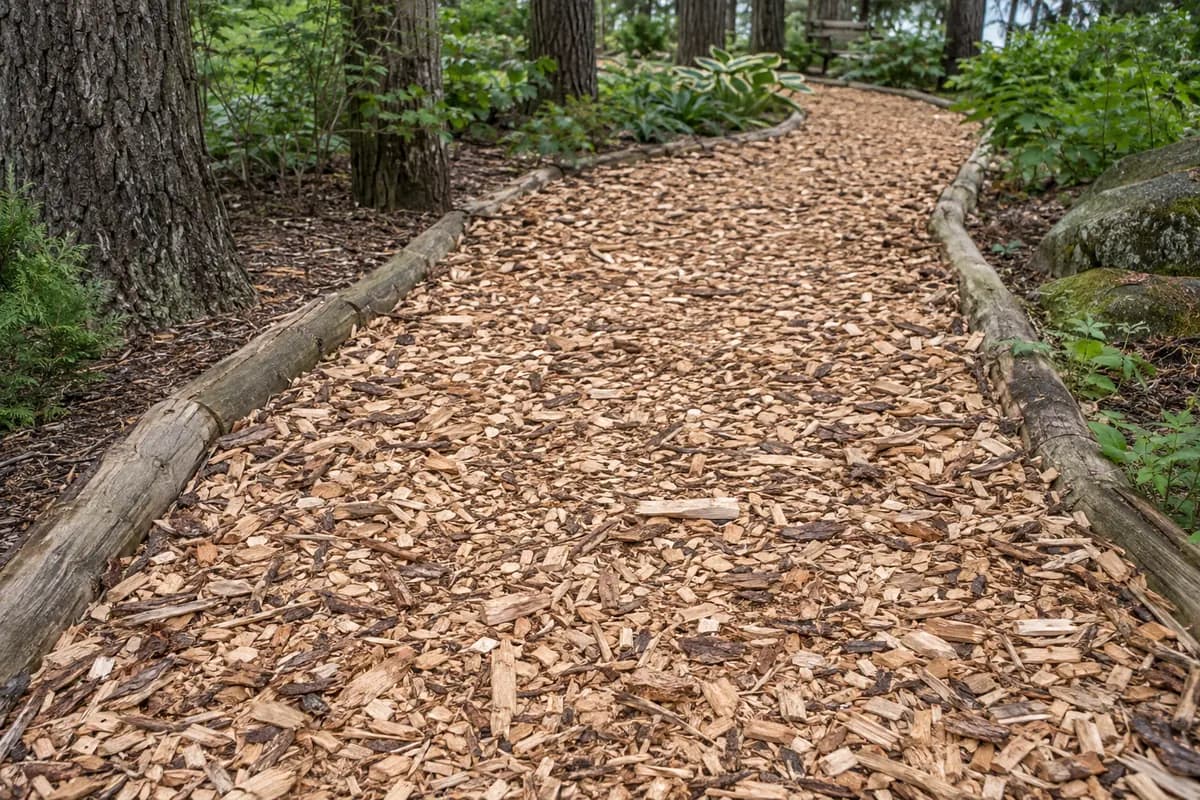
Wood Chips are chunks of tree wood and bark, ranging from 1 to 3 inches across, left in their natural color. Nothing is added to them. For a food garden, that plain, undyed state is reassuring. The chips break down into the same kind of organic matter a forest floor makes, and they leave nothing behind but soil.[1]
The coarse size is a strength between rows. Large pieces leave air gaps, so rain and hose water soak through quickly, and the chips do not mat into a crust. They stay open and springy underfoot, which makes them pleasant to walk on while you harvest beans or tie up tomatoes.[1]
Wood Chips are sold by the yard and weigh about 700 lb per cubic yard. They are the lightest material in this guide to move around, and a full wheelbarrow is easy to push down a garden path. That makes a yearly refresh quick work.[1]
Undyed chips also show you what is happening in the garden. As they age, they turn gray and soften, which tells you when the path needs a fresh layer. Slugs and other pests have fewer hiding spots in coarse, dry chips than in damp, fine mulch, so the paths stay cleaner around tender crops.[1]
Why Wood Chips fit a vegetable garden
The main job of mulch in a food garden is moisture control. Bare soil bakes and cracks in summer sun, and young roots dry out between waterings. A layer of chips shades the ground, so moisture stays in the root zone longer and plants grow more evenly. Tomatoes and peppers in particular do better when the soil stays steady instead of swinging between soaked and dry.[1]
Weed control is the second job. Paths and gaps between beds are where weeds take hold first. A thick layer of chips blocks light from weed seeds and smothers most small sprouts. The few that push through come out easily because the chips keep the soil loose below.[1]
Some gardeners worry that wood mulch steals nitrogen from vegetables. The effect is real but shallow. Fresh wood draws a little nitrogen right where it touches the soil surface, as microbes break it down. Leave the chips on top and do not dig them into the beds, and the roots below stay unaffected. A side dressing of compost around heavy feeders covers any gap.[1]
Chips also keep produce cleaner. Rain splash carries soil onto low leaves and fruit, and that soil can carry disease. A mulch layer stops the splash, so squash, lettuce and strawberries stay cleaner and healthier. At the end of the season, the chips in the paths have softened, and you can rake them into a compost pile.[1]
Raised beds benefit from chips too. Weeds grow worst in the space between raised beds, because nobody waters or weeds there. A thick layer of Wood Chips in those aisles keeps mud off your boots and stops grass from creeping into the beds. Lay cardboard under the chips first to smother existing turf.[1]
Worth considering
Brown Shredded Mulch is a finer option for use inside the beds, right around plants. The double shredded fibers settle close to stems and cover small gaps that chunky chips miss. It breaks down faster, so it feeds the soil sooner but needs more frequent topping up. Use it around rows of greens and herbs, and keep Wood Chips in the paths.[1]
Black Shredded Mulch and Red Mulch are dyed products made for ornamental beds. Their color is the point, and in a vegetable garden color does not grow food. Many growers prefer to keep dyed mulch in the flower beds by the house and use undyed material where they grow things to eat. We suggest the same.[1]
A simple split works well in most gardens. Wood Chips cover paths and the space around perennial crops such as berries and asparagus, and Brown Shredded Mulch goes around annual rows inside the beds. Each material sits where its size works best.[1]
Fruit trees and berry bushes at the edge of a vegetable garden are another good home for Wood Chips. A wide ring of chips around each trunk keeps the mower away from the bark, holds moisture in the root zone and slowly builds the kind of loose, dark soil these plants like. Keep the chips a short distance from the trunk itself so the bark stays dry.[1]
 From$4672 yd delivered
Black Shredded Mulch
Mulch and Wood- Size
- Double shredded
- Weight
- 800 lb/yd³
- Color
- Black
 From$4642 yd delivered
Brown Shredded Mulch
Mulch and Wood- Size
- Double shredded
- Weight
- 800 lb/yd³
- Color
- Brown
 From$4702 yd delivered
Red Mulch
Mulch and Wood- Size
- Double shredded
- Weight
- 800 lb/yd³
- Color
- Red
How much to order
Measure your garden paths and beds separately, because they need different depths. Multiply length by width for each area and add the totals for each material. The area calculator converts square feet to cubic yards.[1]
For paths, use a deep layer. At 4 inches, Wood Chips take about 1.23 cubic yards per 100 square feet, which blocks weeds well and stays springy underfoot. On a path with heavy weed pressure, 6 inches takes about 1.85 cubic yards per 100 square feet and smothers almost everything.[1]
Around plants inside the beds, a thinner layer is better. A 2 inch layer needs about 0.62 cubic yards per 100 square feet, and a 3 inch layer about 0.93 cubic yards. Spread it once seedlings are a few inches tall, so the soil has had time to warm before you cover it.[1]
Chips in paths break down and pack over a season or two. Plan a smaller yearly order to keep the layer thick. Many gardeners pile an extra load in a corner of the garden to have on hand through the season.[1]
Plan for the season as a whole. Spring is the busiest time to mulch, so order early enough to have the material on hand when seedlings are ready. Keep the pile on a tarp near the garden, turn it occasionally if it stays wet, and draw from it as each bed fills in.[1]
| Project size | 3 inch depth | 4 inch depth |
|---|---|---|
| 100 sq ft | 0.9 cu yd | 1.2 cu yd |
| 300 sq ft | 2.8 cu yd | 3.7 cu yd |
| 600 sq ft | 5.6 cu yd | 7.4 cu yd |
Top picks side by side
| Material | Spec | Fit and price |
|---|---|---|
| Wood ChipsTop pick | 1 to 3 inches, natural, 700 lb/yd³, by the yard | from $572 delivered, 2 yd |
| Black Shredded Mulch | Double shredded, black, 800 lb/yd³, by the yard | from $467 delivered, 2 yd |
| Brown Shredded Mulch | Double shredded, brown, 800 lb/yd³, by the yard | from $464 delivered, 2 yd |
| Red Mulch | Double shredded, red, 800 lb/yd³, by the yard | from $470 delivered, 2 yd |
Verdict
Wood Chips are the best mulch for a vegetable garden. The natural, undyed pieces from 1 to 3 inches hold moisture, block weeds and keep soil off your produce. Lay them thick in paths and around perennial crops, keep them on the surface rather than digging them in, and refresh them each year.[1]
Over the years, a garden mulched this way changes from the ground up. Paths that started as compacted lawn turn into soft, dark soil as the chips decay, and the beds gain organic matter from the finer mulch. Some gardeners shovel the oldest path material into the beds every few years and lay fresh chips in the paths, a simple cycle that keeps feeding the garden.[1]
Use Brown Shredded Mulch as a finer layer around annual rows inside the beds. Save Black Shredded Mulch and Red Mulch for the flower beds. For a food garden that stays moist, tidy and productive, undyed chips are the mulch we recommend.[1]
Get a delivered quote for Wood Chips
Tell us your project and we price Wood Chips delivered to your ZIP, no obligation.
Frequently Asked Questions
Are wood chips safe for vegetable gardens?
Yes. Wood Chips are natural, undyed wood and bark that break down into organic matter. Keep them on the soil surface rather than mixing them in, and they hold moisture and block weeds without harming your vegetables.
Do wood chips take nitrogen from vegetables?
Only a little, and only right at the surface where chips touch the soil. Roots below are not affected as long as you leave the chips on top. Dig them in and the effect grows, so keep them as a top layer and feed heavy feeders with compost.
Should I use dyed mulch in a vegetable garden?
We suggest undyed mulch where you grow food. Black Shredded Mulch and Red Mulch are made for ornamental beds, where color matters. Wood Chips and Brown Shredded Mulch are natural choices for vegetable rows and paths.
How thick should mulch be around vegetables?
About 2 to 3 inches around plants inside the beds. A 3 inch layer of Wood Chips takes about 0.93 cubic yards per 100 square feet. Paths can go deeper, to 4 inches or more, to smother weeds.
When should I mulch my vegetable garden?
Wait until the soil has warmed in spring and seedlings are a few inches tall. Mulching too early keeps the soil cold and can slow growth. Mulch the paths any time to keep weeds down.
Can I use shredded mulch instead of wood chips?
Yes, especially inside the beds. Brown Shredded Mulch is finer and fits snugly around plants. It breaks down faster, so it needs topping up sooner. Many gardeners use shredded mulch in beds and Wood Chips on paths.