
Best picks
Best Mulch for Flower Beds: 2026 Picks
Mulch keeps flower beds moist, cool and free of most weeds, and it frames the plants like a clean backdrop. The wrong mulch blows away, mats into a crust or competes with the blooms for attention. Our pick is Brown Shredded Mulch, a double shredded wood mulch in a natural brown. Here is why it wins, where the other three options shine and how much to order.
Brown Shredded Mulch
mulch · size Double shredded · 800 lb/yd³ · sold by the yard

Bottom line: Brown Shredded Mulch for mulch for flower beds
Our top pick: Brown Shredded Mulch
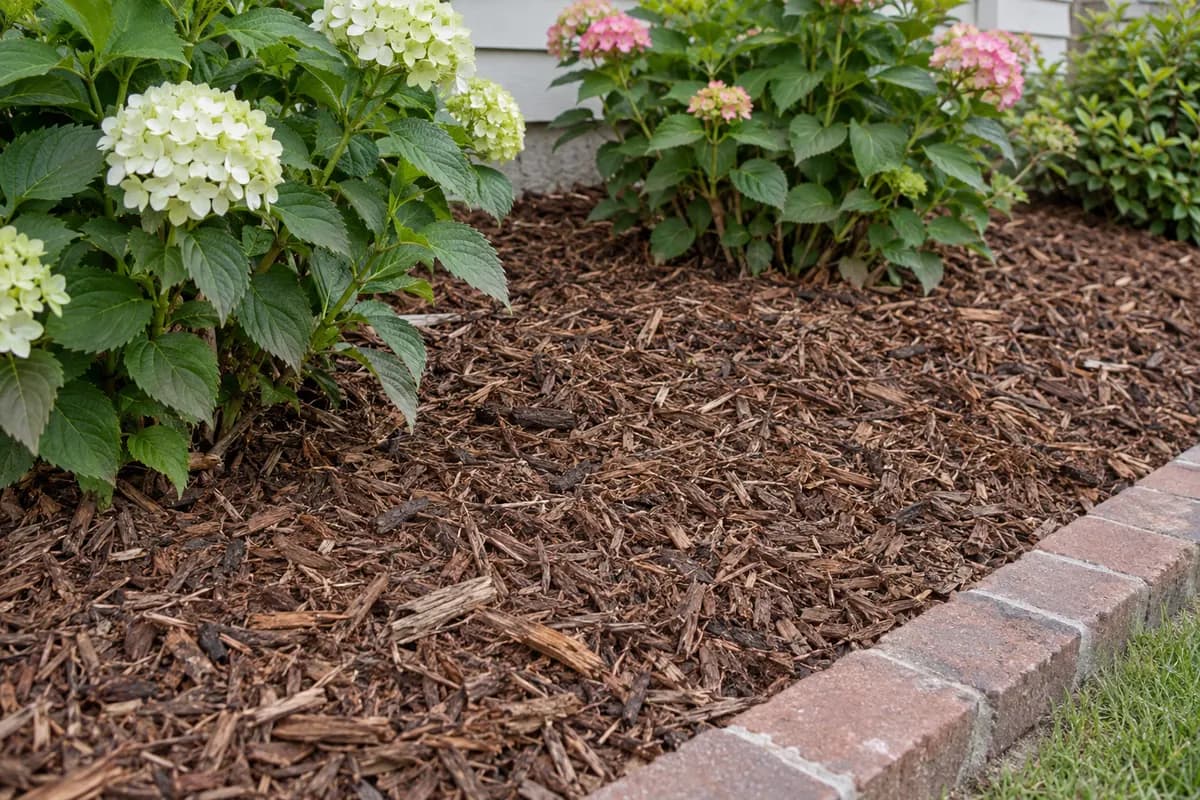
Brown Shredded Mulch is wood that has gone through the shredder twice. Double shredding turns bark and wood into fine, stringy fibers that knit together on the soil. That knitting matters in a flower bed. A woven mat stays in place on a gentle slope, sheds less in wind and rain and still lets water reach the roots.[1]
The brown color looks like rich forest soil. It sets off bright blooms without fighting them, and it blends with brick, stone and wood siding. Flowers in red, yellow or purple stand out cleanly against it.[1]
Brown Shredded Mulch is sold by the yard, a measure of volume. A cubic yard weighs only about 800 lb, so it is light to shovel and easy to tuck around stems with your hands. Even a large order spreads quickly with a wheelbarrow and a garden fork.[1]
Shredded wood is also forgiving of mistakes. If you spread too much in one spot, a rake moves it easily. If a plant needs to come out, the mulch pulls aside by hand and settles back once the hole is filled. That ease of handling makes it a good fit for beds that change from year to year.[1]
Why Brown Shredded Mulch fits flower beds
Flower beds need a mulch that holds moisture, blocks weeds, slowly feeds the soil and looks good from the sidewalk. Shredded wood does all four. The fibers shade the soil, so it stays damp longer between waterings. Weed seeds that land on top dry out before they reach the dirt, and those already in the soil struggle to push through.[1]
As the fibers break down, they add organic matter to the top of the bed. Earthworms pull bits of it down, and over a few seasons the soil turns darker and crumbly. That slow feeding suits perennials and shrubs that stay in place year after year, because the bed gets better without digging.[1]
Fine double shredded mulch also works close to delicate plants. You can spread it right up to annuals and small perennials without burying them under big chunks. Keep it a hand width back from the stems of shrubs and the crowns of flowers, though. Mulch piled against stems traps moisture and can invite rot and pests.[1]
Timing helps the mulch do its job. Spread it in spring after the soil warms and the first weeds are pulled, so it locks in moisture before summer heat. A light refresh in fall protects roots through the cold months. Each spring, rake the old layer to loosen any crust before adding a thin fresh layer on top.[1]
Edging keeps mulch in the bed where it belongs. A cut edge in the lawn, a strip of steel or a row of stones stops the fibers from washing onto paths and grass. Shredded mulch holds its edge well because the fibers tangle together, but a clear border still makes the bed look sharper and saves sweeping.[1]
Worth considering
Black Shredded Mulch gives a bold, modern look. The deep color makes green foliage and white or silver plants pop, and it suits contemporary homes with dark trim. It does fade in strong sun over a season, so expect to top it up to keep the color crisp. Pick it when contrast is the goal.[1]
Red Mulch is a strong accent. It brightens a bed in front of a gray or white house and adds color before plants fill in. It can clash with orange, pink or red flowers, so it works best around green shrubs, hostas and evergreens. Like any dyed mulch, it softens in tone as the season goes on.[1]
Wood Chips are coarser pieces that break down slowly. They last longer than shredded mulch and suit large shrub borders, tree rings and the back of deep beds where looks matter less. Around small flowers, the chunky pieces look rough and can bury seedlings, so they are a better fit for woody planting than for a front bed of annuals.[1]
Whatever the color, use one mulch across the front of the house. A single shade ties separate beds together into one design, while a patchwork of brown here and red there looks unplanned. Save the contrast for a single feature bed if you want variety.[1]
 From$4672 yd delivered
Black Shredded Mulch
Mulch and Wood- Size
- Double shredded
- Weight
- 800 lb/yd³
- Color
- Black
 From$4702 yd delivered
Red Mulch
Mulch and Wood- Size
- Double shredded
- Weight
- 800 lb/yd³
- Color
- Red
 From$5722 yd delivered
Wood Chips
Mulch and Wood- Size
- 1 to 3 inches
- Weight
- 700 lb/yd³
- Color
- Natural
How much to order
Measure each bed and multiply length by width for square feet. For curved beds, break the shape into rough rectangles and add them up. The area calculator turns that into cubic yards, or you can use the coverage figures below.[1]
For a new bed, a 3 inch layer is the usual target. Brown Shredded Mulch takes about 0.93 cubic yards per 100 square feet at that depth. That is enough to block light from weed seeds while still letting rain through to the roots.[1]
For a yearly refresh over an existing layer, 2 inches is plenty, at about 0.62 cubic yards per 100 square feet. Going deeper than 4 inches, which needs about 1.23 cubic yards per 100 square feet, can starve roots of air and keep the soil too wet. A 6 inch layer, at about 1.85 cubic yards, only makes sense on paths or bare areas where nothing grows.[1]
Mulch settles a bit after the first rain. Round your total up slightly, and keep a small pile for low spots and for beds you forgot to measure. A bulk load of shredded mulch is easy to store under a tarp for a few weeks while you work through the beds.[1]
Delivery day goes smoother with a plan. Pick a drop spot near the beds on a driveway or a tarp, since mulch can stain concrete slightly when wet. Spread the pile within a few days if you can, because a big heap left in the sun can heat up inside. Work bed by bed, starting farthest from the pile.[1]
| Project size | 3 inch depth | 4 inch depth |
|---|---|---|
| 100 sq ft | 0.9 cu yd | 1.2 cu yd |
| 300 sq ft | 2.8 cu yd | 3.7 cu yd |
| 600 sq ft | 5.6 cu yd | 7.4 cu yd |
Top picks side by side
| Material | Spec | Fit and price |
|---|---|---|
| Brown Shredded MulchTop pick | Double shredded, brown, 800 lb/yd³, by the yard | from $464 delivered, 2 yd |
| Black Shredded Mulch | Double shredded, black, 800 lb/yd³, by the yard | from $467 delivered, 2 yd |
| Red Mulch | Double shredded, red, 800 lb/yd³, by the yard | from $470 delivered, 2 yd |
| Wood Chips | 1 to 3 inches, natural, 700 lb/yd³, by the yard | from $572 delivered, 2 yd |
Verdict
Brown Shredded Mulch is the best all round mulch for flower beds. The double shredded fibers knit into a mat that stays put, the natural brown color flatters any bloom and the wood feeds the soil as it breaks down. Spread a 3 inch layer in a new bed, keep it back from stems and top it up each spring.[1]
Choose Black Shredded Mulch for bold contrast, Red Mulch for a bright accent around green plants, and Wood Chips for big shrub borders. For a classic flower bed that should look tidy and grow healthier each year, the natural brown shredded mulch is our pick.[1]
Get a delivered quote for Brown Shredded Mulch
Tell us your project and we price Brown Shredded Mulch delivered to your ZIP, no obligation.
Frequently Asked Questions
What color mulch looks best in flower beds?
Natural brown suits most beds because it looks like rich soil and lets blooms take center stage. Black gives strong contrast for modern homes, and red works as an accent around green shrubs. Brown Shredded Mulch is the safest choice for mixed flower colors.
How deep should mulch be in a flower bed?
About 3 inches for a new bed, which takes about 0.93 cubic yards of Brown Shredded Mulch per 100 square feet. Add 2 inches each year as a refresh. Avoid going much deeper, because thick mulch can keep roots too wet.
Is shredded mulch better than wood chips for flowers?
For flower beds, usually yes. Shredded mulch is finer, so it fits between small plants and knits together on the soil. Wood Chips are coarser and last longer, which suits trees and large shrubs better than delicate annuals.
Should I remove old mulch before adding new mulch?
Not usually. Old mulch breaks down and feeds the soil. Rake it to loosen any crust and pull weeds, then add a thinner fresh layer on top. Remove old mulch only if it has built up too deep or become moldy.
Can mulch touch the stems of my plants?
Keep it back a little. Mulch piled against stems or shrub trunks holds moisture there and can lead to rot and insect damage. Leave a small ring of bare soil around each stem and spread the mulch outward from there.
When is the best time to mulch flower beds?
Spring, after the soil warms and you have pulled the first weeds. Mulch then holds moisture through the summer. A light top up in fall helps protect roots in winter, especially for perennials that stay in the ground year after year.